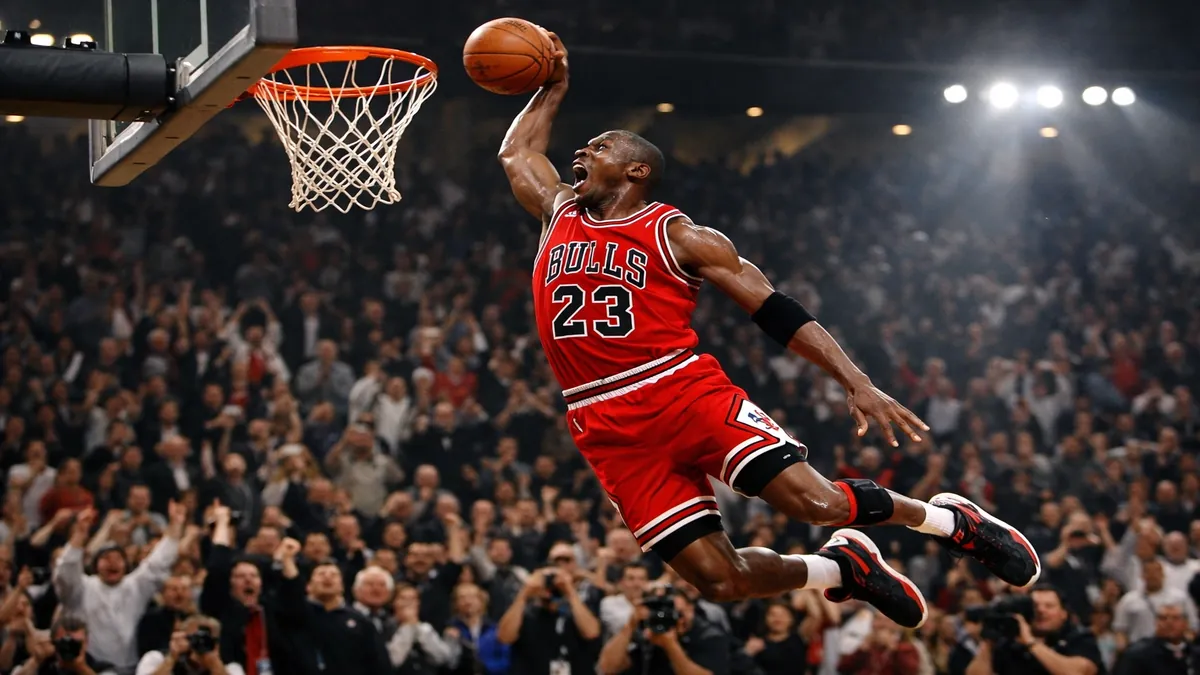
The Definitive Biography of Michael Jordan: The Greatest of All Time
Introduction: The Global Icon of Basketball
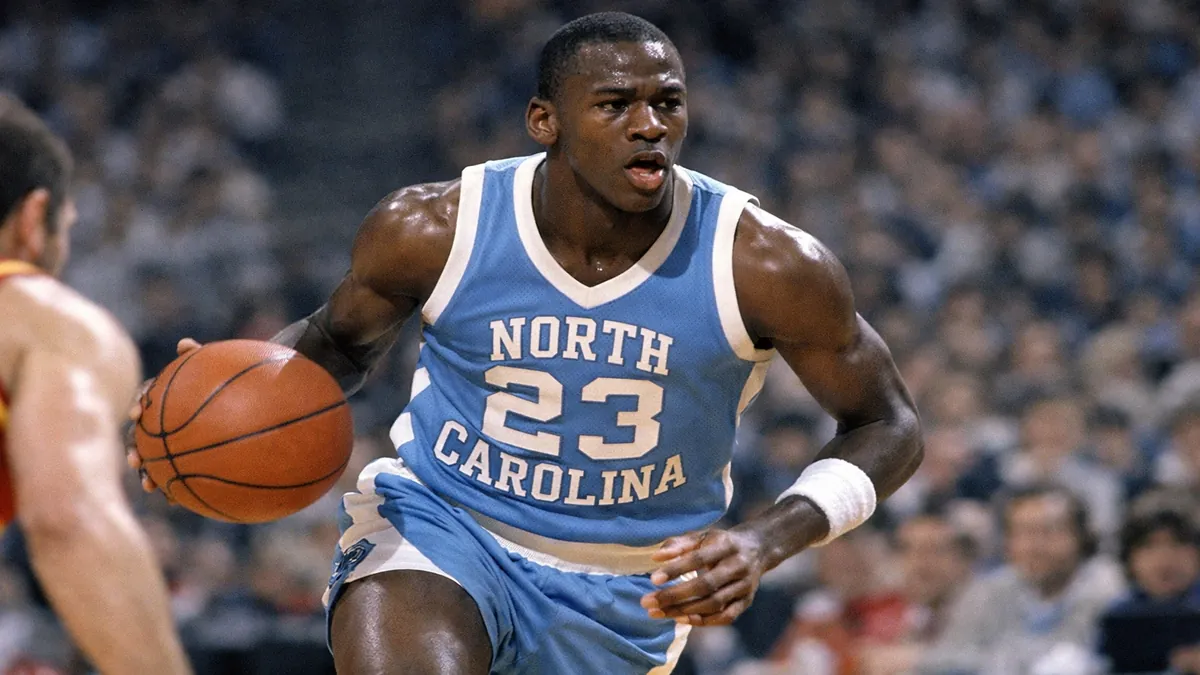
Michael Jeffrey Jordan, born on February 17, 1963, in Brooklyn, New York, is widely considered the greatest basketball player to ever step onto a court. His impact on the National Basketball Association (NBA) and global sports culture is immeasurable. Jordan's career, primarily with the Chicago Bulls, was defined by an unparalleled competitive drive, extraordinary athleticism, and a relentless pursuit of perfection. He didn't just win championships; he transformed the NBA into a multi-billion dollar global enterprise and became a cultural icon whose influence extends far beyond the hardwood. This biography explores the life and legacy of "His Airness," from his early struggles in North Carolina to his six NBA championships, his global business empire, and his enduring status as the benchmark for athletic greatness.
Early Life and the North Carolina Foundation
Although born in Brooklyn, Michael Jordan grew up in Wilmington, North Carolina, after his family moved there when he was a toddler. His parents, Deloris and James Jordan, instilled in him a strong work ethic and a competitive spirit. Michael was the fourth of five children, and his early years were marked by intense backyard battles with his older brother, Larry. These games were the crucible in which Michael's competitive fire was forged; he often lost to his stronger, older brother, which only fueled his desire to improve.
One of the most famous stories in sports history is Jordan being "cut" from his high school varsity team as a sophomore at Laney High School. While he wasn't technically cut—he was placed on the junior varsity team because the varsity squad needed more height—the perceived slight motivated him to train harder than anyone else. He grew four inches over the next year and became a high school standout, eventually earning a scholarship to the University of North Carolina at Chapel Hill. Under the legendary coach Dean Smith, Jordan developed the fundamental skills and discipline that would define his professional career. As a freshman in 1982, he hit the game-winning shot in the NCAA Championship game against Georgetown, a moment he later described as the turning point that gave him the confidence to become a star.
The 1984 NBA Draft and the Rise of a Star
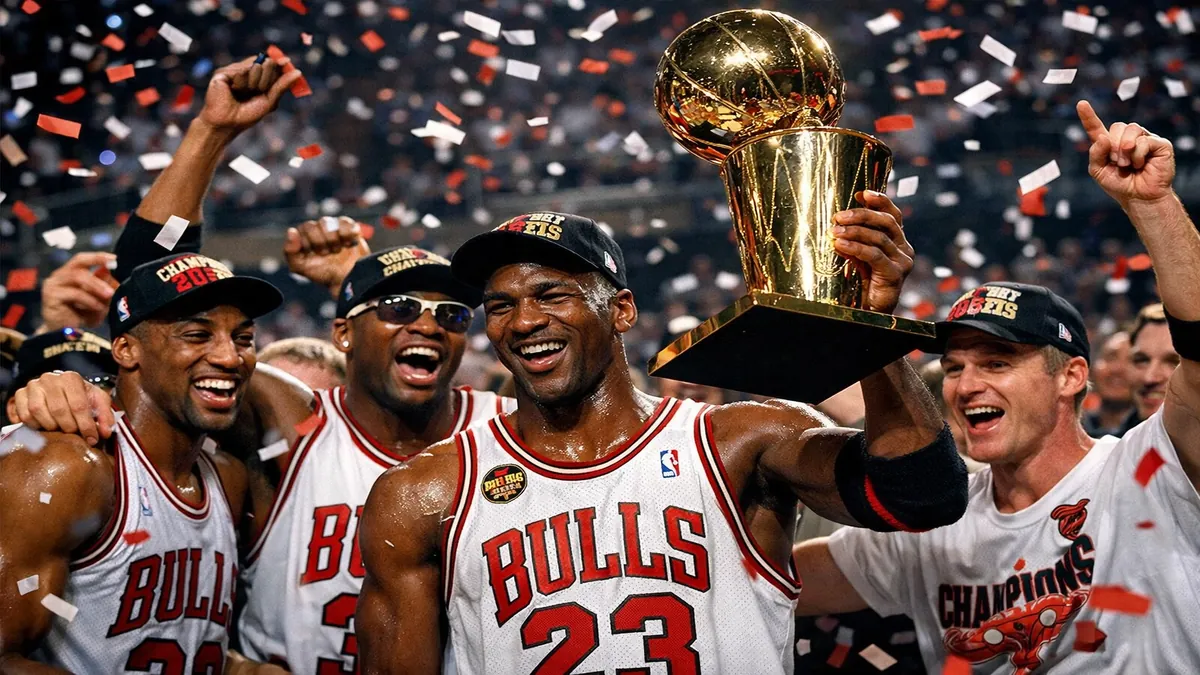
Michael Jordan entered the 1984 NBA Draft after his junior year at UNC. He was selected third overall by the Chicago Bulls, behind Hakeem Olajuwon (Houston Rockets) and Sam Bowie (Portland Trail Blazers). The Bulls were a struggling franchise at the time, but Jordan's arrival changed everything. In his rookie season (1984-85), he averaged 28.2 points per game, won the Rookie of the Year award, and was selected as an All-Star starter. His high-flying dunks and acrobatic finishes quickly earned him the nickname "Air Jordan" and made the Bulls a must-watch team.
Jordan's early years in the NBA were characterized by individual brilliance and a struggle to overcome the league's established powers, particularly the Boston Celtics and the Detroit Pistons. In 1986, after returning from a broken foot, he scored a playoff-record 63 points against the Celtics in the Boston Garden, prompting Larry Bird to famously remark, "I think it's just God disguised as Michael Jordan." Despite his scoring titles and individual accolades, Jordan faced criticism that he was a "selfish" player who couldn't lead a team to a championship. This narrative would only be silenced by the arrival of a new coach and a dedicated supporting cast.
The Phil Jackson Era and the First Three-Peat
The hiring of Phil Jackson as head coach in 1989 was the catalyst for the Bulls' transformation into a dynasty. Jackson implemented the "Triangle Offense," which emphasized ball movement and teamwork, forcing Jordan to trust his teammates more. Alongside a young Scottie Pippen and Horace Grant, Jordan led the Bulls to their first NBA championship in 1991, defeating Magic Johnson and the Los Angeles Lakers in five games. Jordan was overcome with emotion after the victory, finally silencing his critics and cementing his status as the league's premier player.
The Bulls followed their first title with two more in 1992 and 1993, completing the first "three-peat" since the 1960s Celtics. In 1992, they defeated the Portland Trail Blazers, and in 1993, they overcame Charles Barkley and the Phoenix Suns. Jordan was the Finals MVP in all three series, averaging over 30 points per game and delivering countless clutch performances. However, the immense pressure of fame and the tragic murder of his father in the summer of 1993 led to a shocking announcement: Michael Jordan was retiring from basketball at the age of 30 to pursue a career in professional baseball.
Retirement, Baseball, and the "I'm Back" Return
Jordan's foray into professional baseball was met with skepticism and intense media scrutiny. He signed a minor league contract with the Chicago White Sox organization and played for the Birmingham Barons. While his statistics were modest—averaging .202 with three home runs and 30 stolen games—his dedication to the craft and his willingness to start from the bottom earned the respect of his teammates and coaches. However, the 1994-95 MLB strike and a longing for the game he truly mastered led to his return to the NBA.
On March 18, 1995, Jordan sent a two-word fax that sent shockwaves through the sports world: "I'm back." He returned to the Bulls wearing number 45, as his iconic number 23 had been retired. Although he showed flashes of his former self, the Bulls were eliminated in the playoffs by the Orlando Magic. This loss motivated Jordan to embark on a legendary off-season training program, often referred to as the "Breakfast Club," where he and his teammates pushed themselves to new physical limits. The stage was set for the greatest single season in NBA history.
The Second Three-Peat and the 72-Win Season
The 1995-96 Chicago Bulls are widely considered the greatest team in NBA history. With the addition of rebounding specialist Dennis Rodman, the Bulls finished the regular season with a record-breaking 72-10 record. Jordan led the league in scoring for the eighth time and won his fourth MVP award. The Bulls dominated the playoffs, losing only three games on their way to a fourth championship, which they clinched on Father's Day against the Seattle SuperSonics. Jordan's emotional reaction in the locker room, dedicated to his late father, remains one of the most poignant moments in sports history.
The Bulls continued their dominance in 1997 and 1998, both times defeating the Utah Jazz in the Finals. The 1997 Finals featured the "Flu Game," where a severely ill Jordan scored 38 points to lead the Bulls to a crucial Game 5 victory. The 1998 Finals, known as "The Last Dance," concluded with Jordan's iconic game-winning shot over Bryon Russell in Game 6. This sixth championship and sixth Finals MVP cemented Jordan's legacy as the ultimate winner. Following the 1998 season, with the team's core being dismantled by management, Jordan retired for a second time.
Defensive Greatness: The Two-Way Titan
While Michael Jordan is most famous for his scoring, his defensive prowess was equally elite. He is one of the few players in history to win both the MVP and the Defensive Player of the Year (DPOY) in the same season, a feat he achieved in 1988. Jordan's defensive game was built on a combination of incredible lateral quickness, large hands, and an uncanny ability to anticipate his opponent's moves. He was a nine-time All-Defensive First Team selection, a record he shares with Gary Payton, Kevin Garnett, and Kobe Bryant.
Jordan's defensive statistics are staggering for a perimeter player. He averaged 2.35 steals per game for his career, ranking third all-time. In the 1987-88 season, he averaged a career-high 3.16 steals and 1.6 blocks per game, numbers that are typically reserved for elite defensive big men. His ability to shut down the opposing team's best player while carrying the offensive load for the Bulls was a key factor in their championship success. Jordan took as much pride in his defense as he did in his scoring, often using his defensive stops to fuel his transition offense and demoralize his opponents.
Table 1: Michael Jordan Career Averages & Defensive Stats
| Category | Regular Season | Playoffs | |
|---|---|---|---|
| Points Per Game (PPG) | 30.1 | 33.4 | |
| Rebounds Per Game (RPG) | 6.2 | 6.4 | |
| Assists Per Game (APG) | 5.3 | 5.7 | |
| Steals Per Game (SPG) | 2.35 | 2.10 | |
| Blocks Per Game (BPG) | 0.83 | 0.88 | |
| Field Goal % (FG%) | 49.7% | 48.7% | |
| Free Throw % (FT%) | 83.5% | 82.8% | |
| Games Played | 1,072 | 179 | |
| Category | Michael Jordan | LeBron James | |
| NBA Championships | 6 | 4 | |
| Finals Record | 6-0 | 4-6 | |
| NBA Finals MVPs | 6 | 4 | |
| NBA League MVPs | 5 | 4 | |
| Scoring Titles | 10 | 1 | |
| All-NBA First Team | 10 | 13 | |
| All-Defensive First Team | 9 | 5 | |
| Defensive Player of the Year | 1 | 0 | |
| Career Points | 32,292 | 40,474+ | |
| Career PPG | 30.1 | 27.1 | |
| Career RPG | 6.2 | 7.5 | |
| Career APG | 5.3 | 7.4 | |
| Career SPG | 2.3 | 1.5 | |
| Career BPG | 0.8 | 0.8 | |
| All-Star Selections | 14 | 20 | |
| Season | PPG | FG% | Key Achievement |
| 1987-88 | 35.0 | 53.5% | MVP, DPOY, Scoring Title, Steals Leader |
| 1990-91 | 31.5 | 53.9% | 1st NBA Championship, MVP, Finals MVP |
| 1991-92 | 30.1 | 51.9% | 2nd NBA Championship, MVP, Finals MVP |
| 1992-93 | 32.6 | 49.5% | 3rd NBA Championship, Finals MVP, 3-Peat |
| 1995-96 | 30.4 | 49.5% | 4th NBA Championship, 72-10 Record, MVP, Finals MVP |
| 1997-98 | 28.7 | 46.5% | 6th NBA Championship, MVP, Finals MVP, "Last Dance" |
Legacy and Cultural Impact
Michael Jordan's legacy extends far beyond the basketball court. He was the primary driver of the NBA's global expansion in the 1990s, turning the league into a worldwide phenomenon. His appearance with the "Dream Team" at the 1992 Barcelona Olympics is credited with inspiring a generation of international players who now dominate the NBA. Jordan's influence can be seen in the playing styles of countless stars who followed him, most notably Kobe Bryant, who meticulously modeled his game after Jordan's.
Jordan's cultural impact is also evident in his business ventures and his status as a global brand. He was the first athlete to become a billionaire, and his ownership of the Charlotte Hornets (which he sold in 2023 for approximately $3 billion) paved the way for other former players to enter the ranks of professional sports ownership. His "Jumpman" logo is a symbol of excellence and aspiration, and his story of overcoming failure to achieve greatness continues to inspire people in all walks of life. Michael Jordan remains the gold standard for athletic success, a singular figure whose name is synonymous with the very best that sports has to offer.
Conclusion: The Eternal King
In conclusion, Michael Jordan's biography is a story of unparalleled achievement and enduring influence. From his humble beginnings in North Carolina to his six NBA championships and his multi-billion dollar business empire, Jordan has consistently pushed the boundaries of what is possible. His combination of skill, athleticism, and competitive fire created a standard of excellence that may never be matched. While the debate over the "GOAT" will continue, Jordan's place in the pantheon of great athletes is secure. He is more than just a basketball player; he is a global icon, a business titan, and the eternal king of the hardwood. His legacy will continue to be studied, admired, and pursued by generations of athletes to come, ensuring that the name Michael Jordan will always be synonymous with greatness.