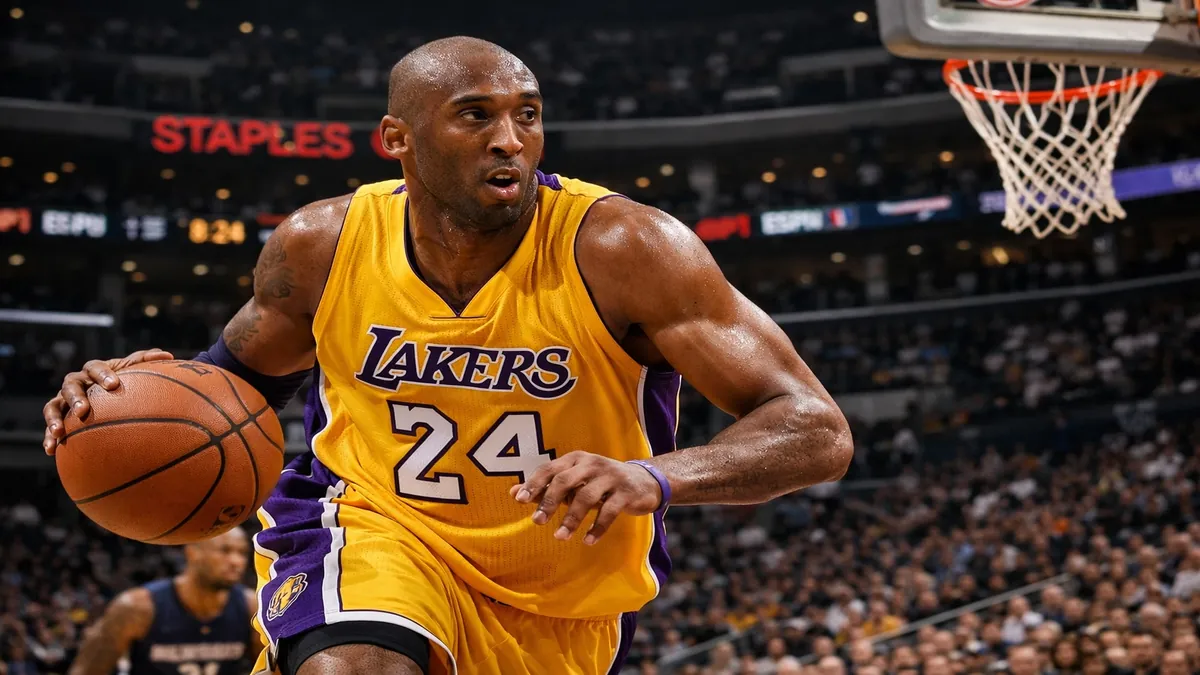
Kobe Bryant: The Mamba Mentality and a Legacy That Lives Forever
Kobe Bean Bryant, born August 23, 1978, in Philadelphia, Pennsylvania, was one of the most skilled, driven, and celebrated basketball players in NBA history. Over 20 seasons with the Los Angeles Lakers, Bryant won five NBA championships, two Finals MVP awards, and one regular-season MVP award. He scored 33,643 career points — third on the all-time list at the time of his retirement. More than any statistic, however, Kobe Bryant was defined by his mentality: a relentless, obsessive pursuit of greatness he called the "Mamba Mentality."
Early Life: Born Into Basketball
Kobe's father, Joe "Jellybean" Bryant, was an NBA player who played for the Philadelphia 76ers, San Diego Clippers, and Houston Rockets before continuing his career in Italy. Kobe spent much of his childhood in Italy, becoming fluent in Italian and developing his basketball game in European leagues during his father's playing years abroad.
Returning to the United States for high school, Kobe attended Lower Merion High School in Ardmore, Pennsylvania. His high school career was nothing short of spectacular — he averaged 30.8 points, 12 rebounds, 6.5 assists, and 4 steals per game as a senior. He led Lower Merion to a state championship and was named the top high school player in the country.
Rather than attending college, the 17-year-old Bryant declared for the 1996 NBA Draft — a decision that would change the league forever.
The 1996 Draft and Trade to the Lakers
Bryant was selected 13th overall by the Charlotte Hornets. On draft night, a prearranged trade sent him to the Los Angeles Lakers in exchange for center Vlade Divac. The Lakers, led by general manager Jerry West, had identified Bryant as a generational talent.
Bryant joined a Lakers team that already featured Shaquille O'Neal — a once-in-a-generation center whom the Lakers had signed as a free agent that same summer. The pairing of Bryant and O'Neal would become one of the most dominant — and tumultuous — partnerships in NBA history.
Shaq and Kobe: Dynasty and Dysfunction
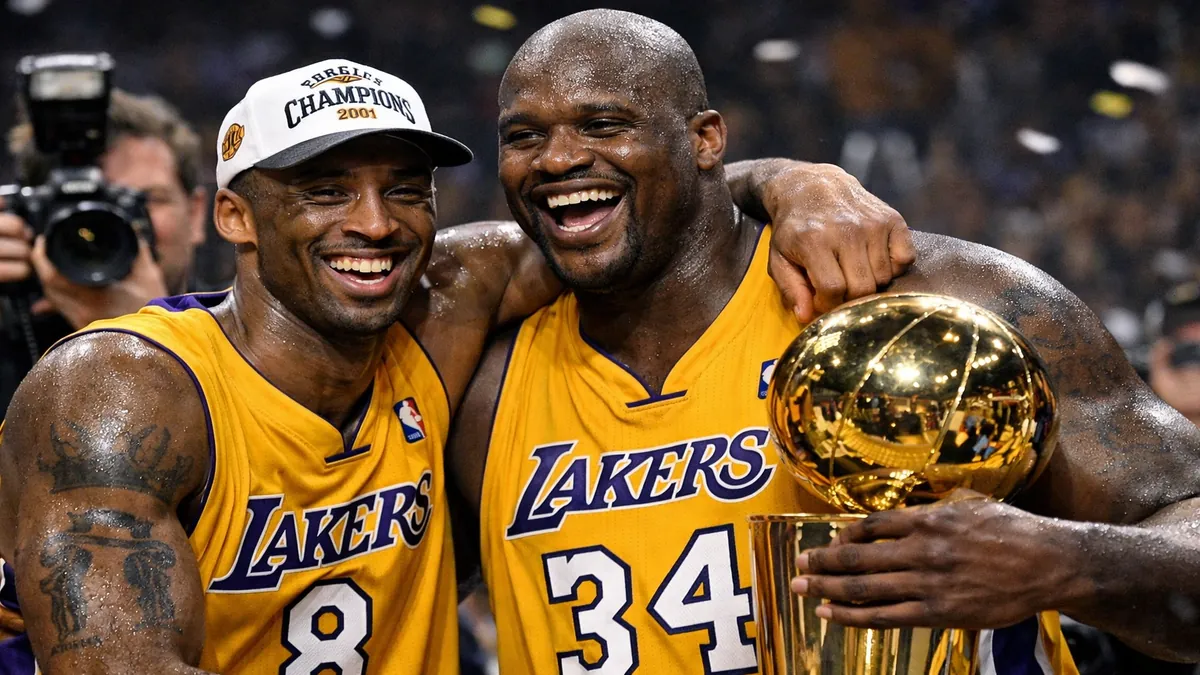
Despite their differences in personality and approach, Bryant and O'Neal formed an unstoppable force. With Phil Jackson arriving as head coach in 1999, the Lakers won three consecutive championships from 2000 to 2002:
- 2000: Lakers defeated the Indiana Pacers 4-2. O'Neal won Finals MVP.
- 2001: Lakers went 15-1 in the playoffs — the best postseason record in NBA history — and swept the Philadelphia 76ers 4-1. O'Neal won Finals MVP.
- 2002: Lakers defeated the New Jersey Nets 4-0. O'Neal won Finals MVP.
- 2009: Lakers defeated the Orlando Magic 4-1. Bryant won Finals MVP.
- 2010: Lakers defeated the Boston Celtics 4-3 in a classic seven-game series. Bryant won Finals MVP. The win was particularly sweet given the 2008 loss to the Celtics.
- Michael Jordan: The Greatest of All Time
- LeBron James Biography
- Los Angeles Lakers History
- NBA All-Time Scoring Records
- Stephen Curry Biography
- NBA.com, "Kobe Bryant Official Career Statistics," accessed 2024.
- Basketball Reference, "Kobe Bryant Player Page," accessed 2024.
- Lazenby, Roland. Showboat: The Life of Kobe Bryant. Little, Brown, 2016.
- ESPN, "Kobe Bryant Career Timeline," accessed 2024.
Bryant's role in these championships was critical, but he was clearly the second option to O'Neal. His competitive drive made this arrangement increasingly untenable. The two superstars clashed repeatedly over playing style, shot distribution, and leadership of the team.
In 2004, following a fourth Finals appearance that ended in defeat to the Detroit Pistons, O'Neal was traded to the Miami Heat. The Lakers dynasty appeared to be over.
The Solo Years: Scoring Machine
With O'Neal gone, Bryant became the undisputed centerpiece of the Lakers. The years from 2004 to 2008 represented some of the most breathtaking individual scoring performances in NBA history.
On January 22, 2006, Bryant scored 81 points against the Toronto Raptors — the second-highest single-game total in NBA history, behind only Wilt Chamberlain's 100-point game. The performance was jaw-dropping: Bryant made 28 of 46 field goal attempts and 18 of 20 free throws, outscoring the entire Raptors team through three quarters.
Bryant also scored 62 points in just three quarters against the Dallas Mavericks before sitting out the fourth in a blowout. He scored 50 or more points in four consecutive games in December 2005 — a feat accomplished only by Chamberlain.
2008 MVP and Back-to-Back Championships
In 2007-08, Bryant won his first and only regular-season MVP award. He averaged 28.3 points, 6.3 rebounds, and 5.4 assists, leading the Lakers to the best record in the Western Conference.
The 2008 Finals saw the Lakers fall to Paul Pierce and the Boston Celtics in six games. But the Lakers had acquired Pau Gasol mid-season — a skilled, versatile big man from Spain — and the foundation for a new dynasty was in place.
With Andrew Bynum developing at center, Gasol providing skilled frontcourt play, and Bryant at his peak, the Lakers won back-to-back championships:
Bryant's performance in the 2010 Finals Game 7 — 23 points, 15 rebounds, but a crucial 6-for-24 shooting performance — showed another dimension of his greatness: winning despite a poor shooting night through sheer will and clutch plays when it mattered.
Statistical Profile
| Category | Career Stats |
|---|---|
| Career Points | 33,643 (3rd all-time at retirement) |
| Career PPG | 25.0 |
| Career APG | 4.7 |
| Career RPG | 5.2 |
| NBA Championships | 5 |
| Finals MVP | 2 |
| Regular Season MVP | 1 (2008) |
| All-Star Appearances | 18 |
| Scoring Titles | 2 (2006, 2007) |
| All-NBA First Team | 11x |
| All-Defensive First Team | 9x |
The Mamba Mentality
Beyond statistics, Kobe Bryant's greatest contribution to basketball may be philosophical. The "Mamba Mentality" — a mindset of relentless improvement, zero complacency, and total commitment to the craft — became a framework adopted by athletes across all sports.
Bryant was famous for arriving at practice at 4 AM, for studying hours of film, for working on his footwork in the off-season, for returning from injuries faster than anyone thought possible. After tearing his Achilles tendon in April 2013, he walked to the free-throw line, made both shots, and then walked off the court — a moment that encapsulated everything about his character.
Retirement and Final Game
Kobe Bryant announced his retirement before the 2015-16 season. His final game on April 13, 2016, against the Utah Jazz was a storybook conclusion: Bryant scored 60 points — the most by any player in an NBA finale — shooting 22-for-50 from the field and making 10 of 12 free throws. The Lakers won 101-96. The crowd chanted "Kobe! Kobe!" for the entire fourth quarter.
Tragic Death and Eternal Legacy
On January 26, 2020, Kobe Bryant, his 13-year-old daughter Gianna, and seven others were killed when their helicopter crashed in Calabasas, California, during foggy conditions. The world went into mourning. Bryant was 41 years old.
The grief was global and profound. Vigils were held worldwide. NBA players wore his numbers. Arenas fell silent. Bryant was inducted into the Naismith Memorial Basketball Hall of Fame in 2020 — the same year as his death.
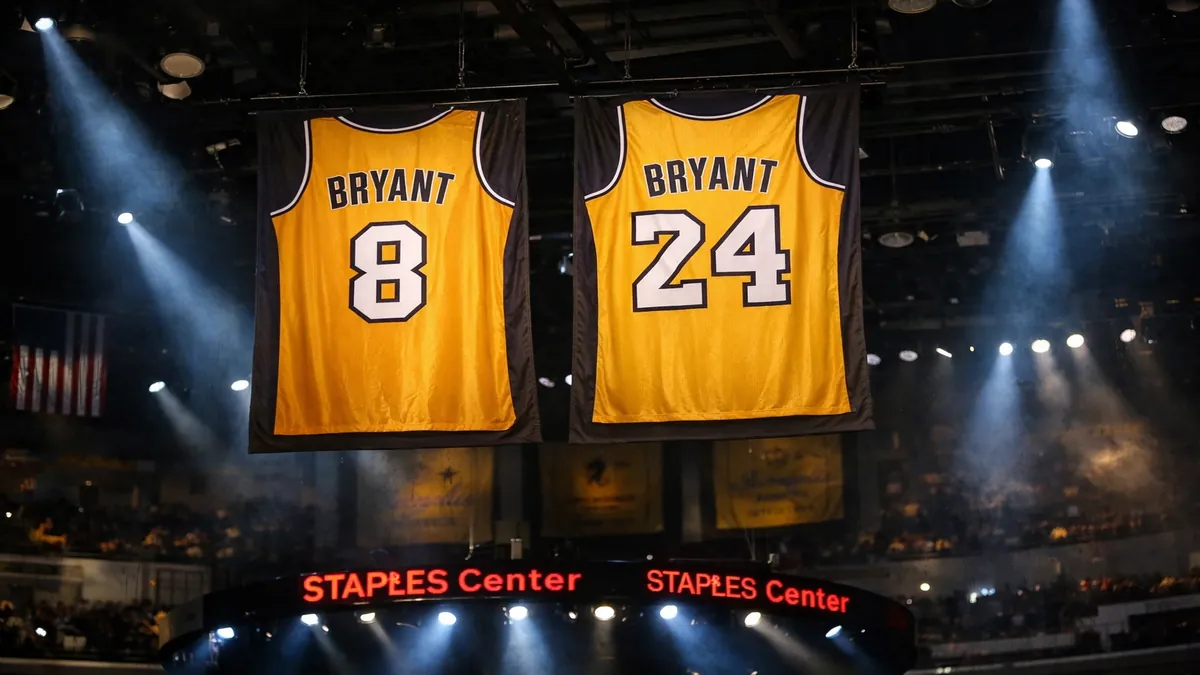
Both of his jersey numbers — No. 8 and No. 24 — hang retired in the Staples Center (now Crypto.com Arena) rafters. He remains the only player in Lakers history to have two numbers retired.
For context on where Kobe ranks among all-time greats, see our Michael Jordan Biography and LeBron James Biography.