The Slim Reaper: The Definitive Biography of Kevin Durant
Introduction: A Scoring Machine Like No Other
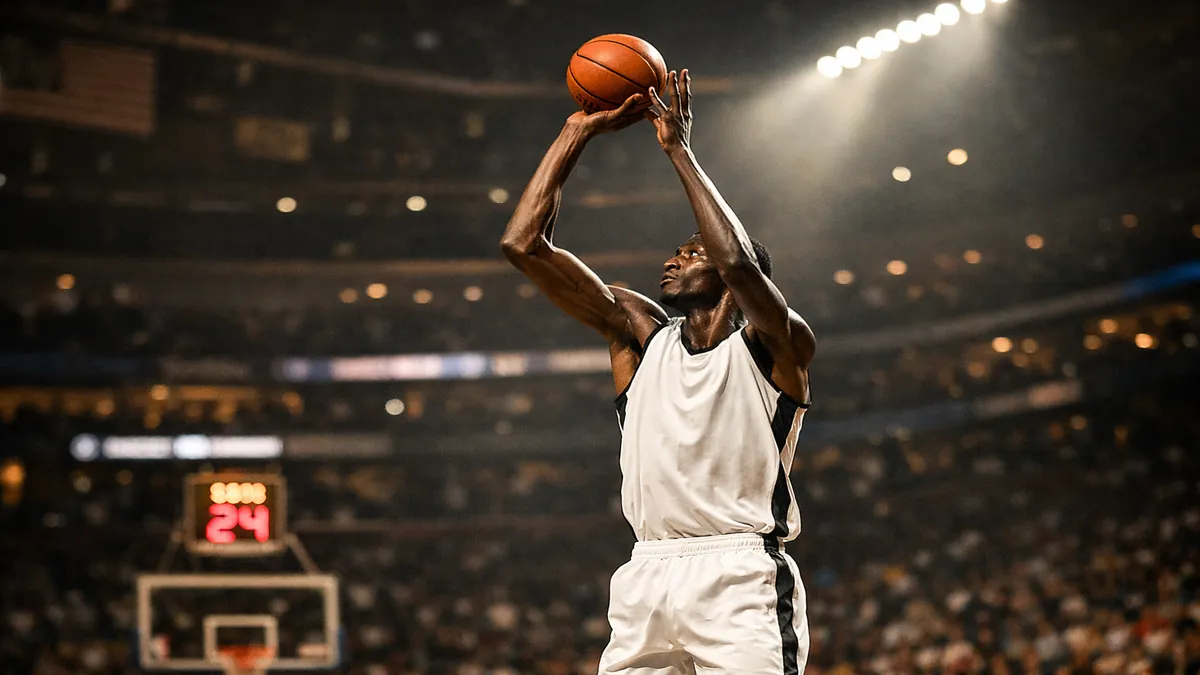
Kevin Durant, often referred to by his nicknames "KD" or "The Slim Reaper," stands as one of the most prolific and unique talents in the history of the National Basketball Association (NBA). Standing at nearly seven feet tall with the ball-handling skills and shooting touch of a point guard, Durant redefined what was possible for a player of his stature. His journey from the outskirts of Washington, D.C., to becoming a two-time NBA Champion, a league MVP, and one of the greatest scorers to ever lace up a pair of sneakers is a testament to relentless work ethic and an obsessive love for the game of basketball. This biography explores the multifaceted life of Kevin Durant, from his humble beginnings to his controversial career moves and his burgeoning business empire.
Growing Up in Prince George's County: The Foundation of a Star
Kevin Wayne Durant was born on September 29, 1988, in Washington, D.C., but he spent his formative years in Prince George's County, Maryland. This area, often referred to as "PG County," has a rich history of producing elite basketball talent, but for a young Durant, it was simply home. His childhood was marked by both struggle and the unwavering support of a tight-knit family. His father, Wayne Pratt, left the family when Kevin was just an infant, leaving his mother, Wanda Durant, to raise Kevin and his brother, Tony, as a single parent.
Wanda Durant, whom Kevin would later famously call "the real MVP," worked tirelessly to provide for her sons. She often worked multiple jobs, sometimes coming home late at night only to ensure her boys were fed and had what they needed for school and sports. The absence of his father in his early years was a significant challenge, but it also forged a deep bond between Kevin and his mother. Eventually, Wayne Pratt returned to Kevin's life when he was about 13 years old, and the two rebuilt their relationship, with Wayne often traveling with Kevin to basketball tournaments across the country.
Durant's basketball journey began at the Seat Pleasant Activity Center, where he met his first mentor and coach, Charles Craig. Craig was more than just a coach; he was a father figure who pushed Durant to develop his skills and maintain his discipline. Tragically, Craig was murdered at the age of 35, a loss that devastated Durant. In honor of his late mentor, Durant has worn the number 35 jersey throughout his entire basketball career, a constant reminder of the man who helped set him on his path to greatness.
The Texas Longhorns and the 2007 NBA Draft
After a stellar high school career that saw him play for prestigious programs like Oak Hill Academy and Montrose Christian School, Durant committed to the University of Texas. His lone season in Austin was nothing short of legendary. As a freshman, Durant averaged 25.8 points and 11.1 rebounds per game, becoming the first freshman in NCAA history to win any of the national Player of the Year awards. He swept the honors, winning the John R. Wooden Award and the Naismith College Player of the Year.
His dominance at the collegiate level made him a lock for a top pick in the 2007 NBA Draft. While there was some debate between Durant and Greg Oden, the Portland Trail Blazers ultimately selected Oden with the first overall pick, allowing the Seattle SuperSonics to draft Durant at number two. This decision would alter the course of NBA history. Durant immediately proved he belonged in the league, winning the Rookie of the Year award after averaging 20.3 points per game. However, the franchise's time in Seattle was short-lived, as the team relocated to Oklahoma City the following year, rebranding as the Thunder.
The Oklahoma City Years: Rise of a Contender
In Oklahoma City, Durant became the face of a young, exciting franchise. Alongside fellow draft picks Russell Westbrook and James Harden, Durant led the Thunder from the bottom of the standings to the pinnacle of the Western Conference. The partnership between Durant and Westbrook was particularly dynamic—a blend of Durant's smooth, effortless scoring and Westbrook's explosive, relentless energy.
The 2011-2012 season marked a turning point for the franchise. Durant led the league in scoring for the third consecutive year, and the Thunder stormed through the playoffs, defeating legendary teams like the Mavericks, Lakers, and Spurs to reach the NBA Finals. Although they ultimately lost to LeBron James and the Miami Heat in five games, it seemed certain that Durant and the Thunder were destined for multiple championships. However, the trade of James Harden to the Houston Rockets shortly after the Finals appearance began a series of "what-ifs" that would haunt the franchise for years.
The 2014 MVP Speech: "You the Real MVP"
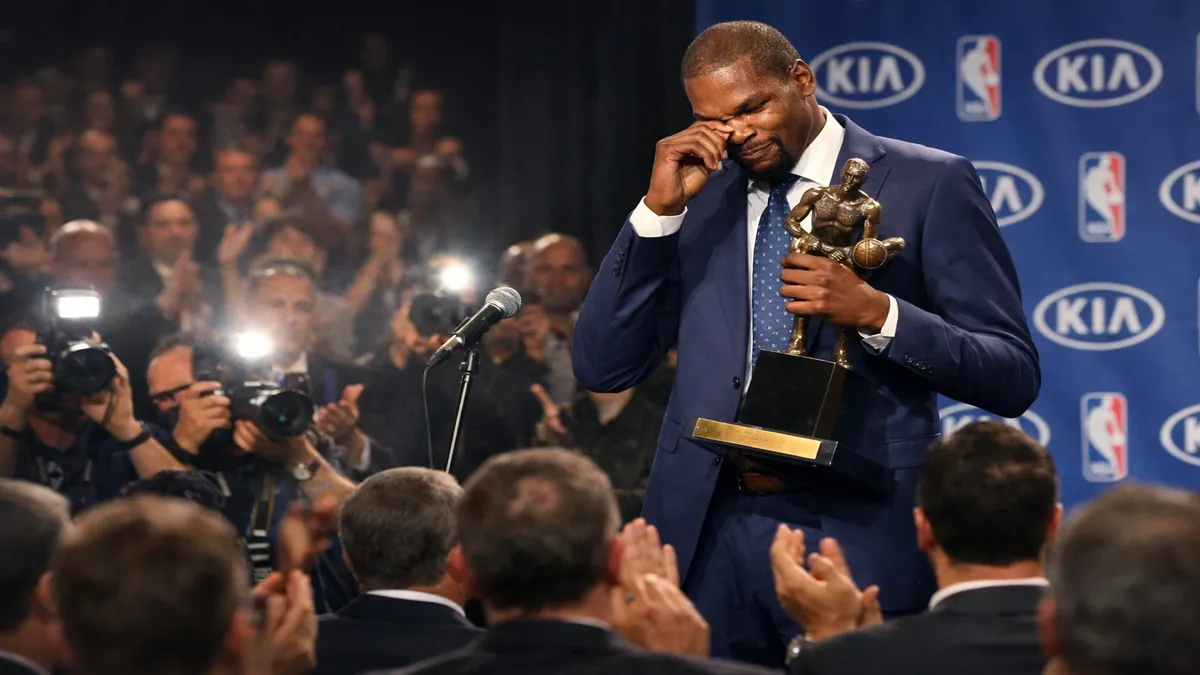
One of the most iconic moments of Durant's career occurred off the court. After a spectacular 2013-2014 season in which he averaged 32 points per game and led the Thunder to 59 wins despite Russell Westbrook missing significant time due to injury, Durant was named the NBA's Most Valuable Player. His acceptance speech remains one of the most emotional and memorable in sports history.
Durant spent over 25 minutes thanking his teammates, coaches, and staff individually, but the climax of the speech was his tribute to his mother, Wanda. With tears in his eyes, he recounted the hardships they faced—moving into their first apartment with no furniture, spending nights in the gym, and Wanda sacrificing her own meals to ensure her children ate. "You're the real MVP," he told her, a phrase that immediately went viral and redefined the public's perception of Durant as not just a superstar athlete, but a deeply grateful and grounded individual. The speech highlighted the human element of his success and solidified his status as a beloved figure in Oklahoma City and beyond.
The Warriors Decision: A Shift in the NBA Landscape
On July 4, 2016, Kevin Durant sent shockwaves through the sports world by announcing in The Players' Tribune that he would be signing with the Golden State Warriors. The move was arguably the most controversial free-agent decision in NBA history. The Warriors had just finished a record-breaking 73-9 season and had defeated Durant's Thunder in the Western Conference Finals after trailing 3-1.
Critics accused Durant of "ring chasing" and taking the "easy way out" by joining a team that was already a powerhouse. The backlash was immense, especially in Oklahoma City, where fans felt betrayed. However, from a basketball perspective, the move was a masterstroke. Durant sought a system that prioritized ball movement and spacing, and the Warriors offered exactly that. The "Hamptons Five" lineup—featuring Durant, Stephen Curry, Klay Thompson, Draymond Green, and Andre Iguodala—became one of the most unstoppable units in the history of the game. Durant's arrival turned a great team into an invincible one, forever changing how "super-teams" were viewed and constructed in the modern era.
Two Championships and Finals MVPs in the Bay Area
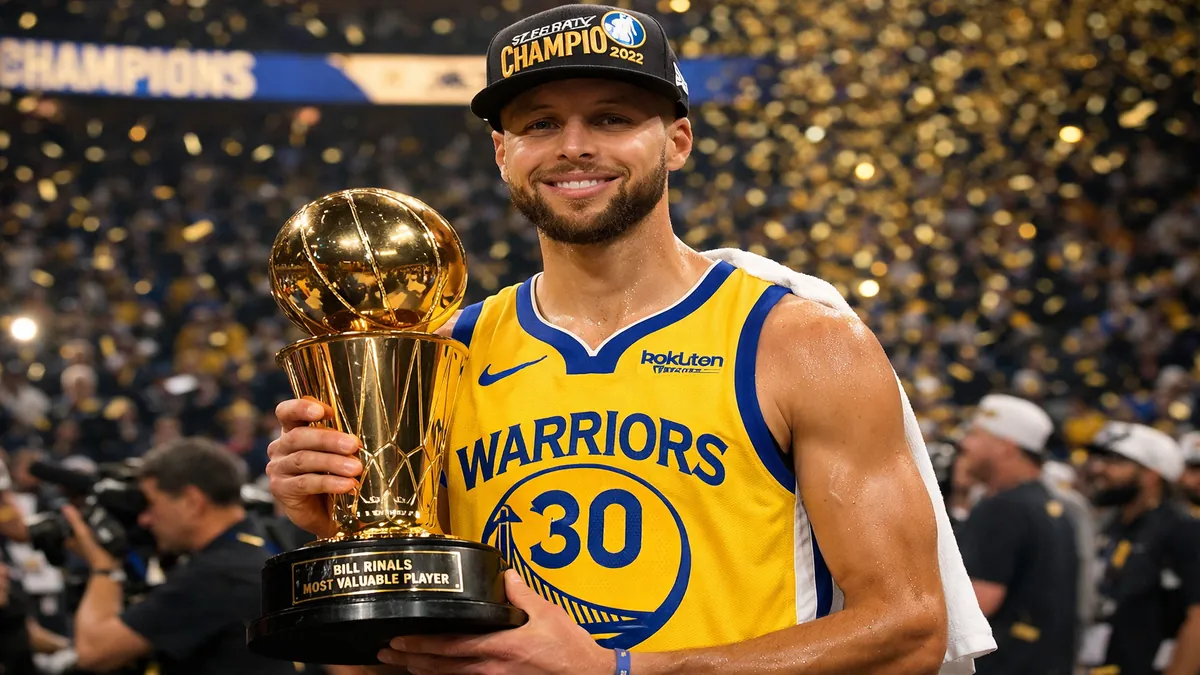
Durant's tenure with the Golden State Warriors was defined by ultimate success. In his first season, the Warriors went 16-1 in the playoffs, the best postseason record in NBA history. Durant was spectacular in the 2017 NBA Finals against LeBron James and the Cleveland Cavaliers, averaging 35.2 points, 8.2 rebounds, and 5.4 assists. He hit a legendary go-ahead three-pointer over LeBron in Game 3, a shot that many saw as a symbolic passing of the torch. Durant was named Finals MVP, finally securing the championship that had eluded him.
The following year, the Warriors repeated as champions, sweeping the Cavaliers in the 2018 Finals. Durant once again took home the Finals MVP trophy, joining an elite group of players to win the award in consecutive years. Despite the external noise and criticism, Durant's performance on the court was undeniable. He became a more complete player in Golden State, improving his defensive versatility and playmaking while remaining the most lethal scorer on the planet. However, internal tensions, most notably a public sideline argument with Draymond Green in late 2018, began to signal that his time in the Bay Area was drawing to a close.
The Achilles Injury and the Move to Brooklyn
The 2019 NBA Finals were a bittersweet conclusion to Durant's time with the Warriors. After missing several weeks with a calf strain, Durant returned for Game 5 against the Toronto Raptors in an attempt to save the Warriors' season. Tragically, he suffered a ruptured Achilles tendon early in the second quarter. The injury is one of the most feared in sports, often ending the careers of elite athletes or severely diminishing their abilities.
That summer, despite the injury, Durant signed with the Brooklyn Nets in a sign-and-trade deal, joining forces with his close friend Kyrie Irving. He spent the entire 2019-2020 season rehabilitating, a grueling process that tested his mental and physical fortitude. When he finally returned to the court in December 2020, he looked remarkably like his old self, defying the historical odds of Achilles recoveries. His time in Brooklyn was marked by flashes of brilliance—including a historic 49-point, 17-rebound, 10-assist performance in the 2021 playoffs—but was ultimately hampered by injuries to himself and his teammates, as well as off-court drama that eventually led to his trade to the Phoenix Suns in 2023.
Boardroom and the Business of KD
Beyond the basketball court, Kevin Durant has built a formidable business empire under his media and investment company, Boardroom. Founded alongside his long-time business partner Rich Kleiman, Boardroom focuses on the intersection of sports, business, and entertainment. The company produces original content, including the popular series "The Etch," and provides insights into the business dealings of athletes and executives.
Durant's investment portfolio is diverse and forward-thinking. Through his venture capital firm, 35V, he has invested in over 80 companies, including Postmates, Coinbase, and the professional soccer team Philadelphia Union. His approach to business mirrors his approach to basketball: he is a student of the game, constantly seeking knowledge and looking for the right opportunities to grow. Durant has become a blueprint for the modern athlete-entrepreneur, leveraging his platform and capital to build a legacy that will last long after he stops playing.
Career Statistics and Achievements
Kevin Durant's statistical profile is a testament to his consistency and dominance. He is a member of the elite 50-40-90 club (shooting at least 50% from the field, 40% from three-point range, and 90% from the free-throw line) and has won four scoring titles, a feat matched by only a handful of players in history.
Table 1: Kevin Durant Career Averages (as of 2024)
| Category | Statistic | ||
|---|---|---|---|
| Points Per Game (PPG) | 27.3 | ||
| Rebounds Per Game (RPG) | 7.0 | ||
| Assists Per Game (APG) | 4.4 | ||
| Field Goal Percentage (FG%) | 50.1% | ||
| Three-Point Percentage (3P%) | 38.7% | ||
| Free Throw Percentage (FT%) | 88.4% | ||
| Blocks Per Game (BPG) | 1.1 | ||
| Steals Per Game (SPG) | 1.1 | ||
| Team | Years | PPG | Key Achievement |
| Seattle/OKC | 2007–2016 | 27.4 | 2014 NBA MVP |
| Golden State | 2016–2019 | 25.8 | 2x NBA Champion, 2x Finals MVP |
| Brooklyn Nets | 2020–2023 | 29.0 | Historic 2021 Playoff Run |
| Phoenix Suns | 2023–Present | 27.0+ | Continued Elite Scoring |
| Player | Career PPG | NBA Titles | MVPs |
| Kevin Durant | 27.3 | 2 | 1 |
| LeBron James | 27.1 | 4 | 4 |
| Stephen Curry | 24.8 | 4 | 2 |
| James Harden | 24.1 | 0 | 1 |
Legacy: The Purest Scorer in History
As Kevin Durant enters the later stages of his career, his legacy is already secure as one of the top 15 players to ever play the game. He will be remembered as perhaps the most "unguardable" player in history—a man with the height of a center and the skill set of a guard who could score from anywhere on the court at any time. While his move to the Warriors will always be a point of debate among fans and analysts, his two Finals MVPs and his statistical brilliance across four different franchises speak for themselves.
Durant's impact extends beyond his scoring. He has been a vocal advocate for players' rights and has used his platform to speak on social issues and the mental health of athletes. His dedication to the craft of basketball is legendary; he is often described as a "basketball junkie" who would play in a local park just as readily as in an NBA arena. Whether he is winning gold medals with Team USA or building his business empire, Kevin Durant remains a singular figure in the world of sports—a complex, driven, and undeniably brilliant athlete who changed the game forever.