The Golden State Warriors Dynasty: The Three-Point Revolution
Introduction: The Modern Dynasty of the NBA
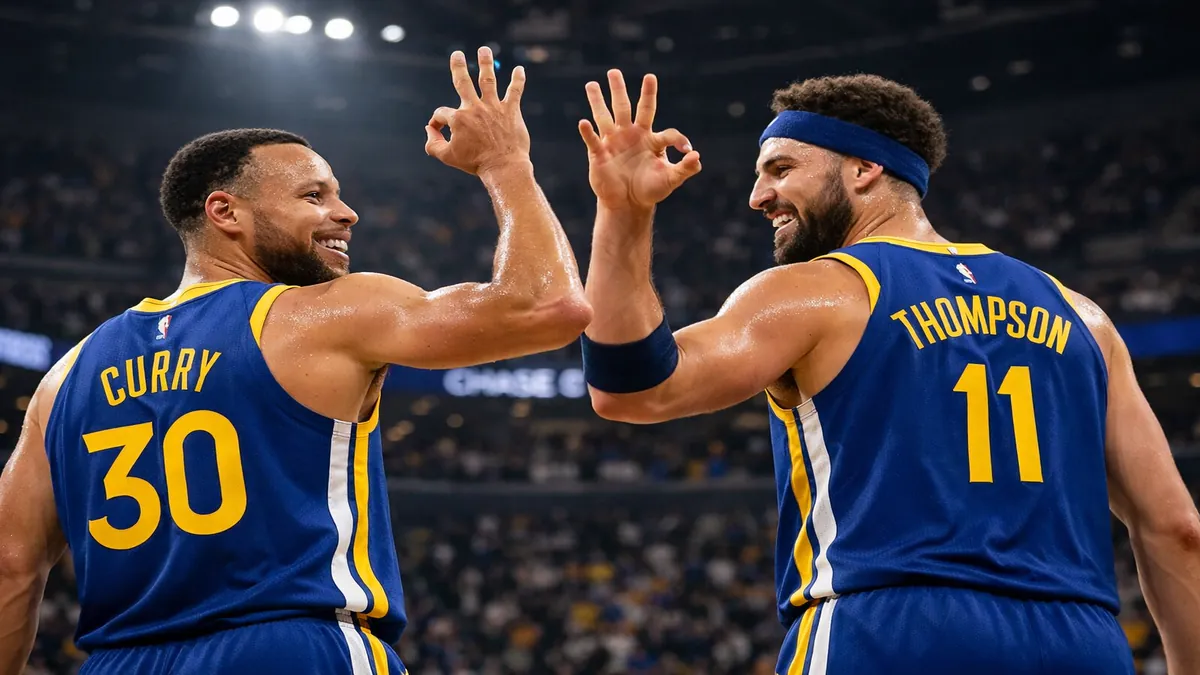
The Golden State Warriors dynasty of the 2010s and early 2020s is one of the most significant and transformative eras in the history of the National Basketball Association (NBA). Led by the "Splash Brothers"—Stephen Curry and Klay Thompson—and the defensive genius of Draymond Green, the Warriors fundamentally changed how basketball is played. Their emphasis on three-point shooting, ball movement, and "small-ball" lineups led to four NBA championships in eight years and a record-breaking 73-win season. This article explores the rise and sustained dominance of the Warriors dynasty, from its humble beginnings in the draft to its ultimate validation in 2022 and its lasting legacy on the sport.
How the Dynasty Was Built: Draft Gems and Vision
The foundation of the Warriors dynasty was built through a series of brilliant draft picks and a clear vision for the future. In 2009, the Warriors selected Stephen Curry with the seventh overall pick, a move that was initially met with skepticism due to his size and injury concerns. Two years later, they drafted Klay Thompson with the 11th pick, creating the most lethal shooting backcourt in history. The final piece of the core arrived in 2012, when the Warriors selected Draymond Green in the second round with the 35th pick. Green's defensive versatility and playmaking ability would become the engine that drove the team's unique system.
Under the leadership of general manager Bob Myers and owners Joe Lacob and Peter Guber, the Warriors also made key moves to surround their core with the right talent. They traded for veteran center Andrew Bogut and signed versatile forward Andre Iguodala. The hiring of Steve Kerr as head coach in 2014 was the final catalyst. Kerr implemented a motion offense that prioritized ball movement and spacing, allowing Curry and Thompson to maximize their shooting gravity. The Warriors were no longer just a young, exciting team; they were a revolutionary force ready to challenge the league's established powers.
2015 Championship: The Arrival of the Splash Brothers
The 2014-2015 season was the breakout year for the Warriors. They finished the regular season with a league-best 67-15 record, and Stephen Curry was named the NBA's Most Valuable Player. The Warriors' "Death Lineup"—featuring Curry, Thompson, Iguodala, Harrison Barnes, and Green at center—became the most unstoppable unit in the league. They reached the NBA Finals for the first time in 40 years, where they faced LeBron James and the Cleveland Cavaliers.
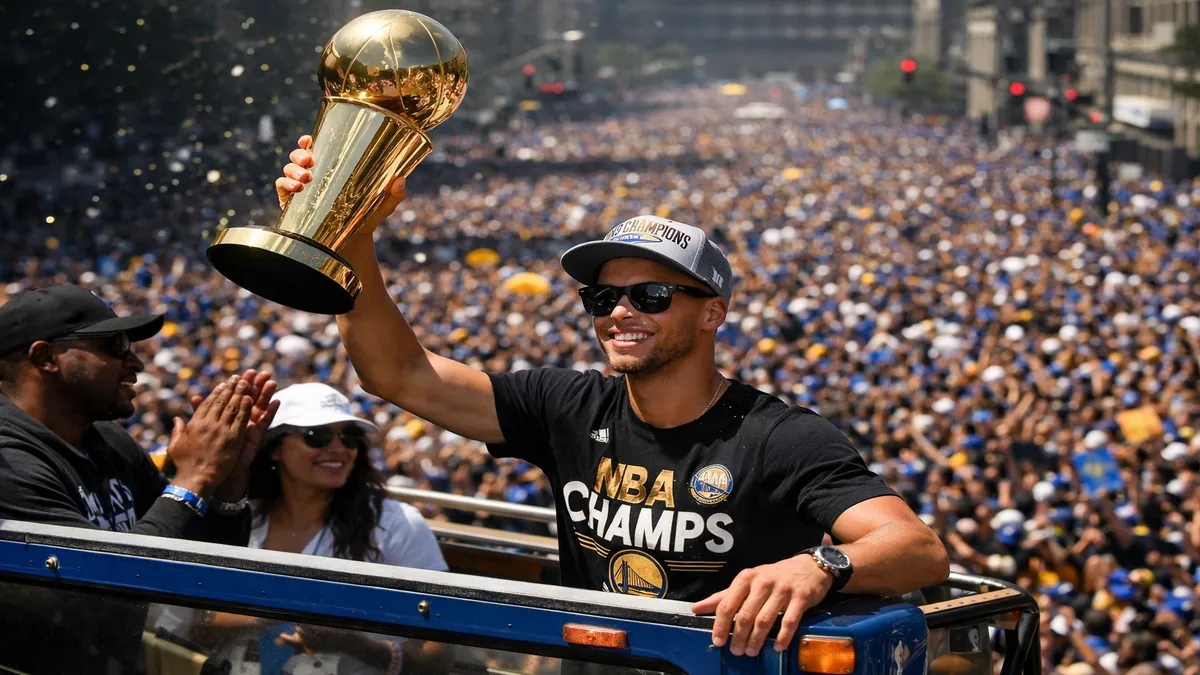
After trailing 2-1 in the series, Steve Kerr made the bold decision to start Andre Iguodala in place of Andrew Bogut, fully committing to the small-ball strategy. The move worked perfectly, as the Warriors won three straight games to clinch the championship. Iguodala was named Finals MVP for his defensive work on LeBron James and his timely scoring. This victory was the first validation of the Warriors' three-point-heavy system, proving that a "jump-shooting team" could indeed win a championship. The Splash Brothers had arrived, and the NBA would never be the same.
2016: The 73-Win Season and the Collapse
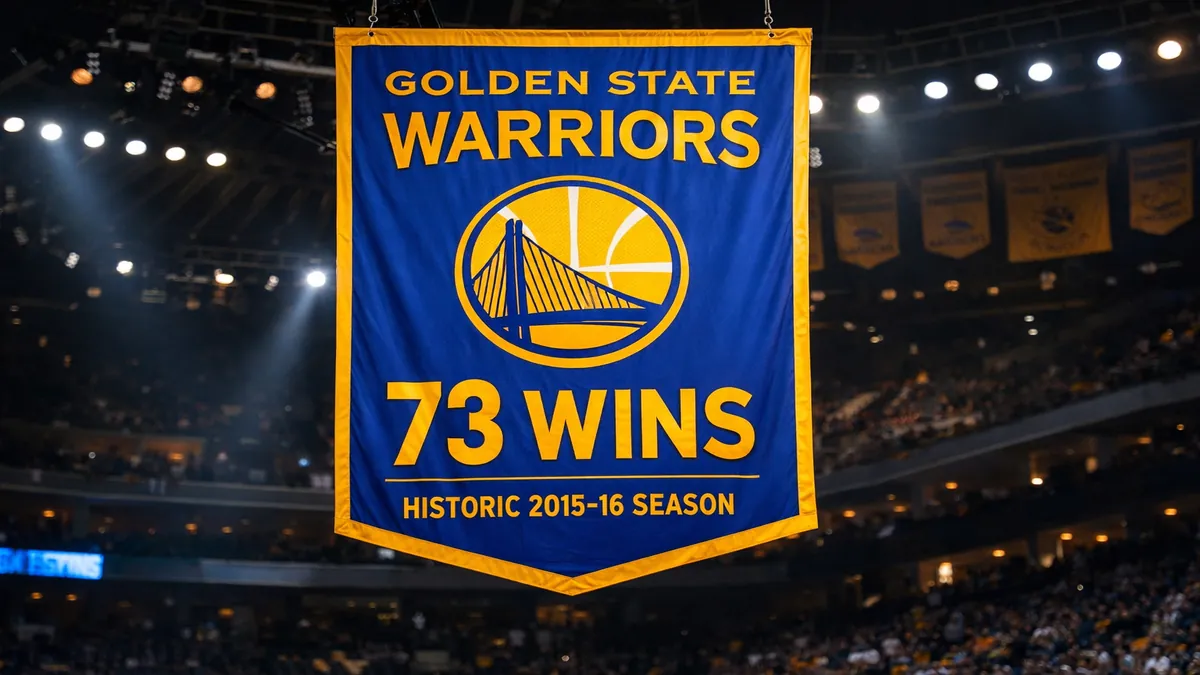
The 2015-2016 season was a historic pursuit of perfection. The Warriors began the season with a record-breaking 24-0 start and finished with a 73-9 record, surpassing the 1995-1996 Chicago Bulls for the best regular-season record in NBA history. Stephen Curry became the first-ever unanimous MVP, leading the league in scoring and making an almost unbelievable 402 three-pointers. The Warriors seemed invincible, storming through the first two rounds of the playoffs and overcoming a 3-1 deficit against the Oklahoma City Thunder in the Western Conference Finals.
However, the season ended in heartbreak. In the NBA Finals, the Warriors held a 3-1 lead over the Cleveland Cavaliers but were unable to close the series. A combination of Draymond Green's suspension in Game 5, injuries to Andrew Bogut and Stephen Curry, and a legendary performance by LeBron James led to the Warriors becoming the first team in Finals history to blow a 3-1 lead. The 73-win season, while historic, was overshadowed by the Game 7 loss. This collapse, however, set the stage for the most controversial and dominant move in free-agency history.
Table 1: The 73-Win Season Context (2015–2016)
| Category | Statistic | NBA Rank | ||
|---|---|---|---|---|
| Regular Season Record | 73-9 | #1 All-Time | ||
| Points Per Game | 114.9 | #1 in League | ||
| Three-Pointers Made | 1,077 | #1 in League | ||
| Stephen Curry 3PM | 402 | #1 All-Time | ||
| Net Rating | +11.6 | #1 in League | ||
| Home Record | 39-2 | #1 in League | ||
| Year | Opponent | Result | Finals MVP | Key Context |
| 2015 | Cleveland Cavaliers | 4-2 | Andre Iguodala | First title in 40 years |
| 2017 | Cleveland Cavaliers | 4-1 | Kevin Durant | 16-1 Playoff Record |
| 2018 | Cleveland Cavaliers | 4-0 | Kevin Durant | Back-to-Back Titles |
| 2022 | Boston Celtics | 4-2 | Stephen Curry | Dynasty Validated |
| Player | 2015 Finals | 2017 Finals | 2018 Finals | 2022 Finals |
| Stephen Curry | 26.0 PPG, 6.3 APG | 26.8 PPG, 9.4 APG | 27.5 PPG, 6.8 APG | 31.2 PPG, 5.0 APG |
| Klay Thompson | 15.8 PPG, 4.3 RPG | 16.4 PPG, 4.8 RPG | 16.0 PPG, 3.8 RPG | 17.0 PPG, 3.0 RPG |
| Draymond Green | 13.0 PPG, 8.3 RPG | 11.0 PPG, 10.2 RPG | 9.3 PPG, 6.0 RPG | 6.2 PPG, 8.0 RPG |
| Kevin Durant | N/A | 35.2 PPG, 8.2 RPG | 28.8 PPG, 10.8 RPG | N/A |
Statistical Legacy: The Three-Point Revolution
The statistical legacy of the Warriors dynasty is most evident in the league-wide explosion of three-point shooting. Before the Warriors' rise, the three-pointer was seen as a secondary weapon; now, it is the primary focus of every NBA offense. The Warriors hold numerous team records for three-pointers made in a season and a single game. Their "Death Lineup" and small-ball philosophy forced every other team in the league to adapt, leading to a faster, more perimeter-oriented game.
The Warriors also redefined the value of versatility. Draymond Green's ability to guard all five positions while serving as a primary playmaker from the power forward spot became the blueprint for the modern "point-forward." The team's emphasis on "Strength in Numbers"—a deep bench and selfless play—showed that a collection of high-IQ players could overcome more physically dominant opponents. The Warriors didn't just win games; they won the argument about how basketball should be played in the 21st century.
Legacy: The Greatest Team of the Modern Era
The Golden State Warriors dynasty will be remembered as the greatest team of the modern era. Their four championships, 73-win season, and 16-1 playoff run are marks of a level of dominance that few teams in history have ever reached. More importantly, they will be remembered for the joy and creativity they brought to the game. The sight of Stephen Curry hitting a 35-foot three-pointer or the Warriors' bench erupting after a beautiful passing sequence became the defining images of an era.
As the core of Curry, Thompson, and Green enters the final stages of their careers, their place in the history books is secure. They turned a struggling franchise into a global powerhouse and changed the game of basketball forever. Whether through their record-breaking statistics or their four championship rings, the Golden State Warriors dynasty is a $7 billion testament to the power of vision, skill, and the enduring brilliance of the three-point revolution. They are the modern gold standard for excellence in professional sports.