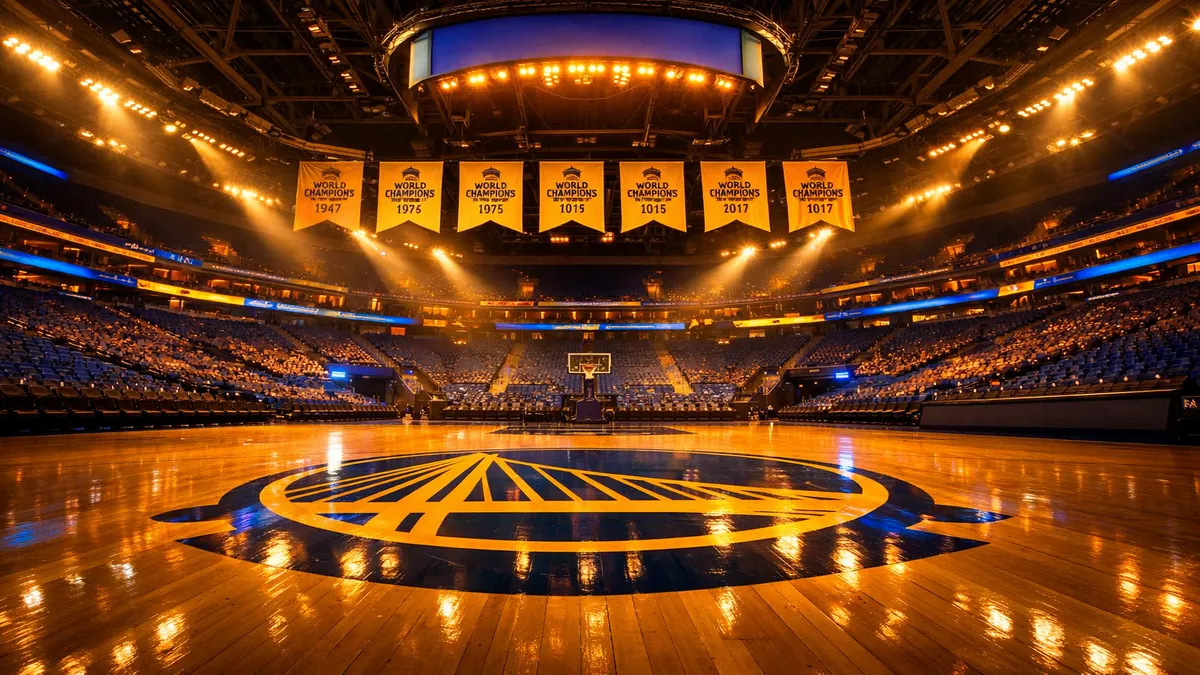
Golden State Warriors History: The Team That Changed How the World Plays
In the annals of basketball history, few teams have left an indelible mark quite like the Golden State Warriors of the 2010s. They didn't merely win championships; they orchestrated a revolution, fundamentally altering the way the game is played and perceived. Led by the transcendent shooting of Stephen Curry, the Warriors introduced a brand of basketball—dubbed "pace and space"—that prioritized three-point shooting, fluid ball movement, and defensive versatility to an unprecedented degree. This wasn't just a tactical adjustment; it was a paradigm shift that forced every other team in the league to adapt, forever changing offensive and defensive strategies across the NBA. Their story is one of innovation, disruption, and how a single, visionary team can redefine an entire sport.
This article will delve into the rich and transformative history of the Golden State Warriors, tracing their journey from their origins in Philadelphia to their dynastic run in the Bay Area. We will explore the pivotal moments and key figures that shaped their revolutionary style, from the emergence of the "Splash Brothers" to their record-breaking 73-9 season, the impact of Kevin Durant, and the strategic brilliance of the "Death Lineup." Through detailed analysis, historical context, and a breakdown of their unique contributions, we will illustrate how the Warriors became the team that changed how the world plays basketball, leaving a legacy that extends far beyond their trophy cabinet.
From Philadelphia to the Bay: Early History
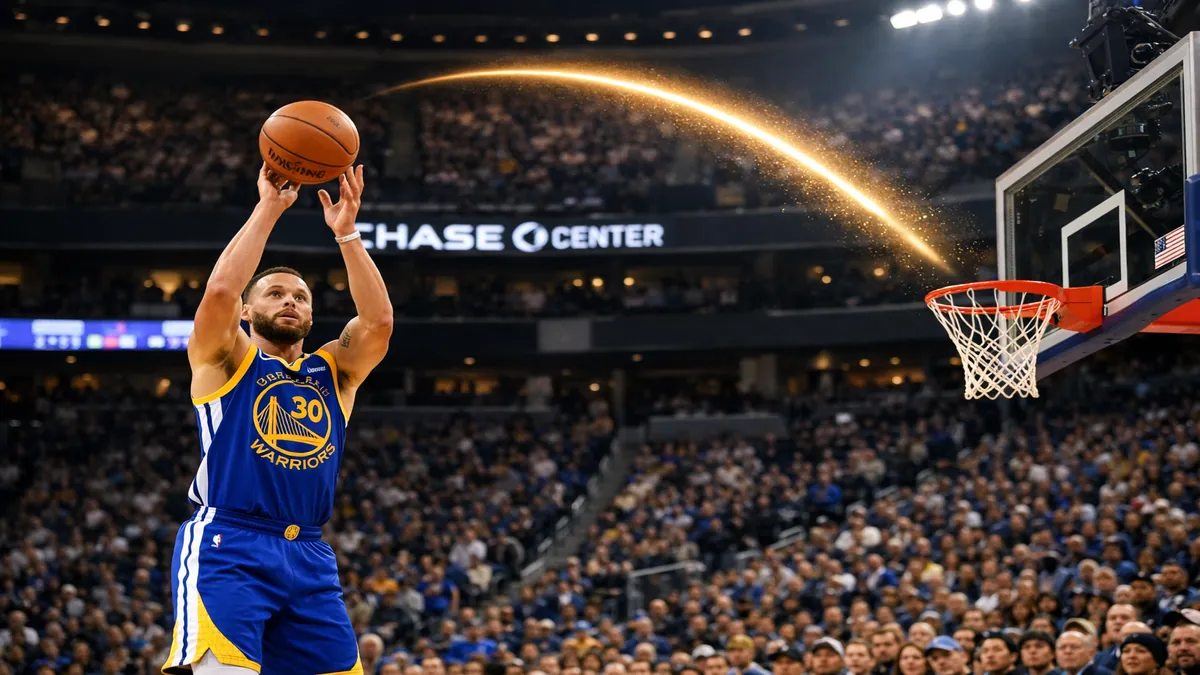
The Golden State Warriors franchise boasts a long and storied history that predates their modern-day dominance. Founded in 1946 as the Philadelphia Warriors, they were one of the original franchises of the Basketball Association of America (BAA), which later became the NBA. The Warriors won the inaugural BAA championship in 1947, led by Hall of Famer Joe Fulks.
The franchise continued to enjoy success in Philadelphia, most notably with Wilt Chamberlain, who famously scored 100 points in a single game as a Warrior in 1962. However, in 1962, the team relocated to San Francisco, becoming the San Francisco Warriors. They continued to feature star players like Rick Barry, who led them to the NBA Finals in 1967. In 1971, the team rebranded as the Golden State Warriors, reflecting their commitment to the entire Bay Area region.
Their first NBA championship in the Bay Area came in 1975, a Cinderella story led by Rick Barry, who famously swept the heavily favored Washington Bullets. This championship, however, was an outlier in an era that was largely characterized by inconsistency. The late 1970s and 1980s saw the Warriors struggle to find sustained success, often languishing at the bottom of the Western Conference. While they had flashes of brilliance with players like Run TMC (Tim Hardaway, Mitch Richmond, and Chris Mullin) in the early 1990s, the franchise remained largely in the shadows, waiting for its next golden era.
The "We Believe" Era: A Glimmer of Hope
After years of mediocrity, a glimmer of hope emerged in the mid-2000s. The 2006-07 season saw the Warriors, led by Baron Davis, Monta Ellis, and Stephen Jackson, make a surprising run to the playoffs as the 8th seed in the Western Conference. They faced the top-seeded Dallas Mavericks, who had a league-best 67-15 record and were heavily favored to win the championship.
What followed was one of the greatest upsets in NBA playoff history. The Warriors, under coach Don Nelson, played an up-tempo, unconventional style that exploited the Mavericks' weaknesses. They defeated Dallas in six games, becoming the first 8th seed to beat a 1st seed in a best-of-seven series. This era, affectionately known as the "We Believe" Warriors, captured the imagination of the Bay Area and showed the potential for a new, exciting brand of basketball.
While the "We Believe" era didn't result in a championship, it laid some foundational elements for the future. It demonstrated the power of a fast-paced, high-scoring offense and the importance of a passionate home crowd. More importantly, it showed the organization that a different approach to basketball could yield significant results, even against more traditional, dominant teams. It was a precursor to the revolution that was about to unfold.
The Rise of the Splash Brothers: A New Era Begins
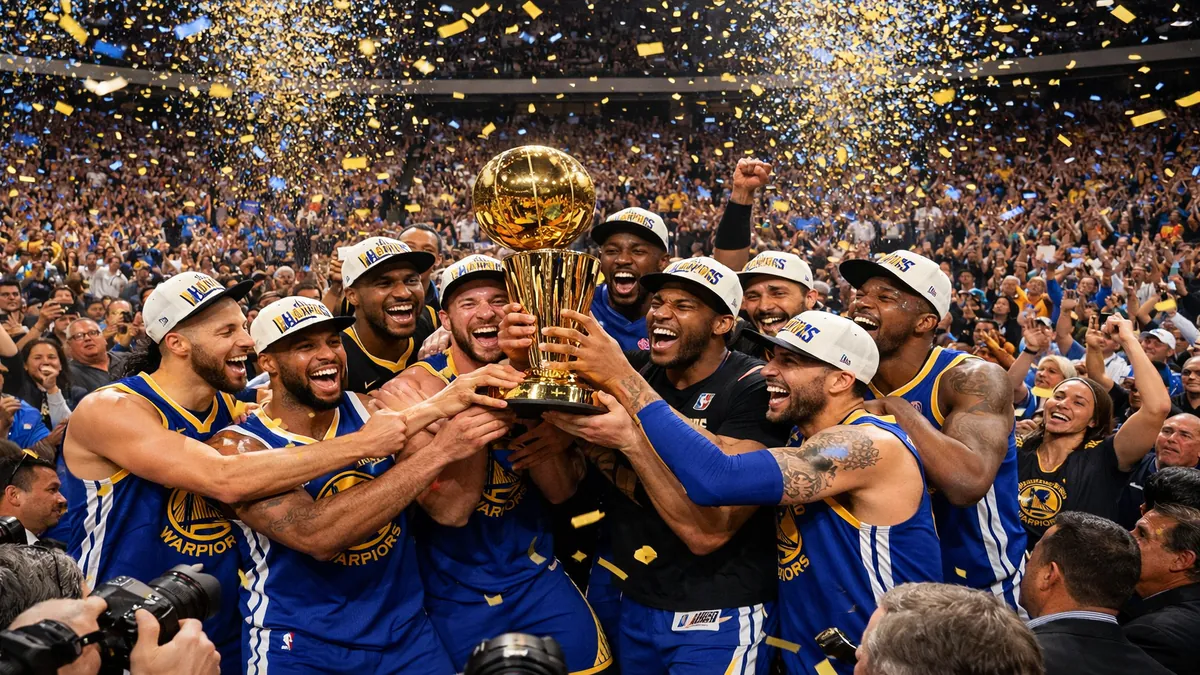
The true genesis of the Warriors' dynasty began with two pivotal draft picks: Stephen Curry in 2009 (7th overall) and Klay Thompson in 2011 (11th overall). Together, they would become known as the "Splash Brothers," the most prolific and devastating shooting backcourt in NBA history. Their ability to shoot from anywhere on the court, often off the dribble and with incredible accuracy, fundamentally changed the geometry of the game.
Stephen Curry, in particular, was a generational talent who redefined the art of three-point shooting. He wasn't just a great shooter; he was a revolutionary. His ability to pull up from well beyond the arc, often with a quick release, forced defenses to guard him from half-court. This created unprecedented spacing on the floor, opening up driving lanes and cutting opportunities for his teammates. Curry's impact was so profound that it became known as the "Curry effect"—the way his mere presence on the court warped opposing defenses.
Klay Thompson, with his picture-perfect catch-and-shoot form and relentless off-ball movement, perfectly complemented Curry. Together, they created a constant threat from deep, forcing defenses to make impossible choices. If you double-teamed Curry, Thompson would be open. If you stuck to Thompson, Curry would create his own shot. Their synergy was unparalleled, and their combined shooting prowess made the Warriors' offense virtually unguardable.
The "Splash Brothers" (Curry/Thompson) — How They Changed the Game
| Aspect | Traditional NBA Offense | Warriors "Splash Brothers" Offense |
|---|---|---|
| Primary Scoring | Post-ups, Mid-range | Three-point shooting |
| Spacing | Limited, often crowded paint | Maximized, stretched to half-court |
| Ball Movement | Often isolation-heavy | Fluid, rapid passing |
| Defensive Focus | Protecting the paint | Guarding the three-point line |
| Player Movement | Static, set plays | Constant, off-ball screens |
| Season | Warriors 3PA/Game | League Average 3PA/Game |
| 2009-10 | 19.0 | 18.1 |
| 2010-11 | 20.3 | 18.0 |
| 2011-12 | 20.0 | 18.9 |
| 2012-13 | 23.9 | 20.0 |
| 2013-14 | 25.6 | 22.0 |
| 2014-15 | 27.0 | 23.0 |
| 2015-16 | 31.6 | 24.1 |
| 2016-17 | 31.2 | 26.9 |
| 2017-18 | 28.9 | 29.0 |
| 2018-19 | 34.4 | 32.0 |
| 2019-20 | 34.1 | 34.1 |
The table above clearly illustrates how the Warriors were at the forefront of the three-point revolution. From 2012-13 onwards, they consistently attempted more three-pointers per game than the league average, pushing the boundaries of offensive strategy. Their 2015-16 season, in particular, saw a significant jump in three-point attempts, setting a new standard for offensive aggression from beyond the arc.
Despite their record-breaking regular season, the Warriors ultimately fell short in the NBA Finals, losing to LeBron James and the Cleveland Cavaliers in seven games after holding a 3-1 lead. This heartbreaking loss, however, would only fuel their desire for continued greatness and set the stage for the next chapter of their dynasty.
The Kevin Durant Era: Superteam and Sustained Excellence
The summer of 2016 saw another seismic shift in the NBA landscape, as Kevin Durant, one of the league's most prolific scorers, made the controversial decision to leave the Oklahoma City Thunder and join the Golden State Warriors. This move created a "superteam" that many believed was unfair, but it also elevated the Warriors to an unprecedented level of dominance.
With Durant joining Curry, Thompson, and Draymond Green, the Warriors became virtually unstoppable. They won back-to-back championships in 2017 and 2018, with Durant being named Finals MVP in both series. His ability to score from anywhere on the court, combined with his elite defensive versatility, made the Warriors an offensive and defensive juggernaut that overwhelmed opponents.
Kevin Durant's Impact on the Dynasty
Durant's arrival added another dimension to the Warriors' already potent offense. He provided a reliable isolation scorer who could get a bucket whenever the offense stalled. His length and shooting ability made the "Death Lineup" even more terrifying, as he could stretch the floor and create mismatches against any defender. Defensively, his long arms and shot-blocking ability further solidified the Warriors' already strong defense.
This era was marked by sustained excellence, as the Warriors reached three consecutive NBA Finals, winning two of them. While the departure of Durant in 2019 and subsequent injuries to Curry and Thompson temporarily derailed the dynasty, the Durant era solidified the Warriors' place as one of the greatest teams in NBA history.
The "Death Lineup" — Breakdown of Its Effectiveness
The "Death Lineup," typically consisting of Stephen Curry, Klay Thompson, Andre Iguodala, Draymond Green, and Kevin Durant (or Harrison Barnes before Durant), was the Warriors' ultimate weapon. This small-ball lineup was incredibly versatile, capable of switching on every screen, defending multiple positions, and creating offensive mismatches.
- Stephen Curry & Klay Thompson: Provided unparalleled three-point shooting and gravity, stretching the defense to its breaking point.
- Andre Iguodala: Elite perimeter defender, capable of guarding the opponent's best wing player, and a high-IQ playmaker.
- Draymond Green: The defensive anchor and primary playmaker. His ability to guard all five positions, facilitate offense from the high post, and communicate defensive schemes was invaluable.
- Kevin Durant: Added another elite scorer, shooter, and defender, making the lineup virtually unguardable and defensively impenetrable.
- The Three-Point Revolution: The Warriors, led by Stephen Curry, proved that a team could build its entire offense around the three-point shot and win championships. This led to a league-wide explosion in three-point attempts and a re-evaluation of offensive efficiency.
- Pace and Space: Their fast-paced, free-flowing offense, characterized by constant movement and elite spacing, became the blueprint for modern NBA offenses. Teams now prioritize players who can shoot, pass, and move without the ball.
- Positionless Basketball: The Warriors' success with small-ball lineups and versatile defenders like Draymond Green and Kevin Durant ushered in an era of positionless basketball, where players are valued for their skill sets rather than their traditional positions.
- Defensive Versatility: The ability to switch on every screen and guard multiple positions became a defensive imperative. Teams now seek out players who can defend across the board, mirroring the Warriors' defensive philosophy.
The effectiveness of this lineup stemmed from its ability to play at an incredibly fast pace, generate open three-pointers, and create turnovers on defense. It was a lineup that epitomized the Warriors' revolutionary style of play and their commitment to versatility.
Draymond Green's Defensive Versatility and Playmaking
While the offensive brilliance of the Splash Brothers and Kevin Durant often garnered the most attention, the unsung hero and emotional heartbeat of the Warriors' dynasty was Draymond Green. Green, a second-round pick in 2012, developed into one of the most unique and impactful players in NBA history. He was the defensive anchor, the primary playmaker from the power forward position, and the vocal leader of the team.
Green's defensive versatility was unparalleled. He could guard all five positions, from point guards to centers, with equal effectiveness. His ability to switch onto any player, disrupt passing lanes, and communicate defensive schemes made him the lynchpin of the Warriors' suffocating defense. He won the NBA Defensive Player of the Year award in 2017 and was consistently named to the All-Defensive First Team.
Offensively, Green was a revolutionary playmaker. He often initiated the offense from the high post, using his exceptional court vision to find cutting teammates or open shooters. His assist numbers were remarkably high for a non-guard, and his ability to facilitate offense allowed Curry and Thompson to focus on scoring. Green's unique skill set, combining defensive dominance with elite playmaking, made him an indispensable part of the Warriors' success.
The Legacy: How the Warriors Changed Basketball Forever
The Golden State Warriors' dynasty of the 2010s left an indelible mark on the NBA, fundamentally changing how the game is played and analyzed. Their influence can be seen in every corner of the league, from the increased emphasis on three-point shooting to the rise of positionless basketball and the importance of versatile defenders.
The Warriors' legacy is not just in their championships, but in the profound and lasting impact they had on the game itself. They pushed the boundaries of what was thought possible, demonstrating that innovation and a willingness to challenge conventional wisdom could lead to unprecedented success. Their era was a testament to the power of collective genius, individual brilliance, and a relentless pursuit of excellence.
As the NBA continues to evolve, the Golden State Warriors will forever be remembered as the team that changed how the world plays basketball. Their influence is woven into the fabric of the modern game, a testament to their revolutionary spirit and their enduring impact on the sport. The echoes of their "pace and space" offense and the splash of their three-pointers will continue to resonate for generations to come, solidifying their place as one of the most important and influential franchises in NBA history.