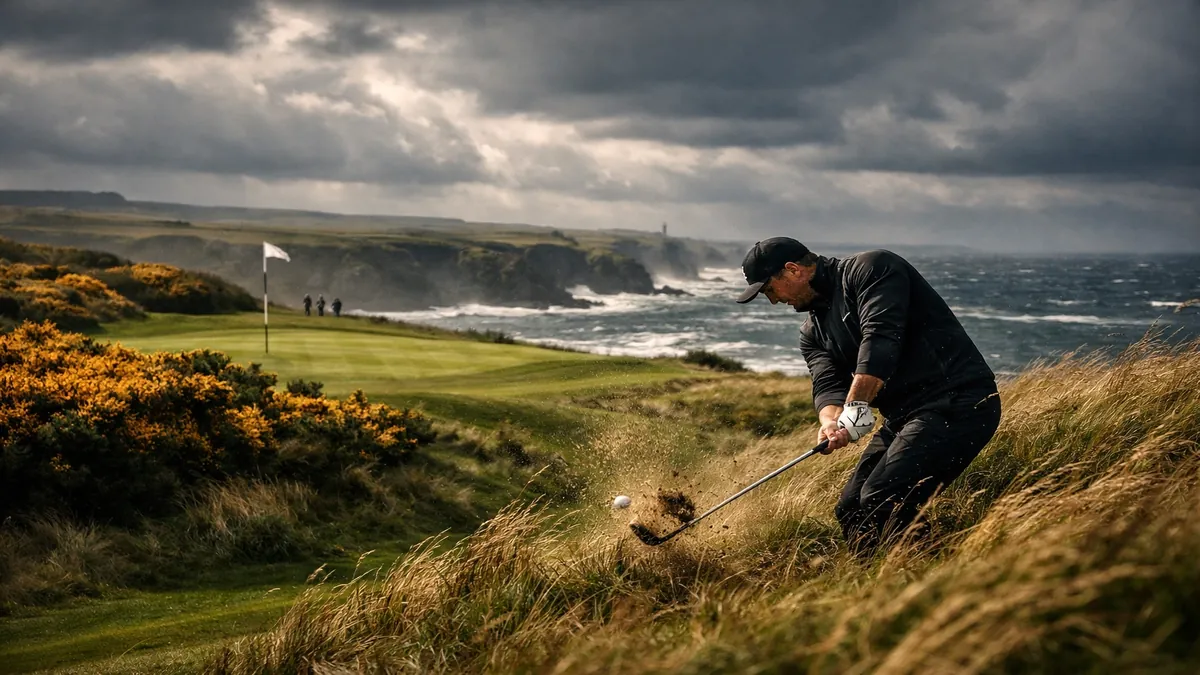
The Open Championship History
The Open Championship, often referred to as the British Open, holds the distinction of being the oldest golf tournament in the world, a testament to its profound history and enduring legacy. Established in 1860, this major championship is steeped in tradition, celebrated for its challenging links courses, and revered for the iconic Claret Jug awarded to its champion. From its humble beginnings at Prestwick Golf Club, The Open has evolved into a global spectacle, attracting the finest golfers from around the globe to test their mettle against the elements and the unique demands of coastal golf. Its rich history is a tapestry woven with legendary performances, dramatic finishes, and the unwavering spirit of competition that defines golf's original major.
The Genesis of Golf's Oldest Major

The history of The Open Championship began on October 17, 1860, at Prestwick Golf Club in Ayrshire, Scotland. The tournament was conceived to determine the
“Champion Golfer of the Year” following the death of Allan Robertson, widely considered the best golfer of his era. The inaugural event featured only eight professional golfers competing over three rounds of Prestwick’s 12-hole course. Willie Park Sr. emerged as the first champion, defeating Old Tom Morris by two strokes and earning the Challenge Belt, a red leather belt with a silver buckle, as his prize. This modest beginning laid the foundation for what would become one of the most prestigious events in sports.
In its early years, The Open was primarily a Scottish affair, dominated by local professionals. However, its reputation quickly grew, attracting players from across the United Kingdom. The tournament’s early success led to a decision in 1873 to replace the Challenge Belt, which had been permanently awarded to Young Tom Morris after his three consecutive victories, with the now-iconic Claret Jug. This trophy, officially known as the Golf Champion Trophy, has been presented to every Open champion since, becoming one of the most recognizable symbols in golf. The Royal and Ancient Golf Club of St Andrews (R&A) gradually took on a more prominent role in organizing the championship, eventually becoming its sole administrator, ensuring its continued growth and adherence to the highest standards of the game.
Evolution of a Championship: Venues and Format
Over its long and distinguished history, The Open Championship has maintained its unique character while adapting to the evolving landscape of professional golf. Unlike other major championships that often rotate between a wider array of courses, The Open is exclusively played on a select group of traditional links courses along the coasts of Scotland, England, and Northern Ireland. These courses, characterized by their undulating terrain, natural hazards, deep bunkers, and exposure to the elements, provide a distinct challenge that tests a golfer’s creativity, adaptability, and shot-making prowess. Iconic venues such as St Andrews (the “Home of Golf”), Royal Birkdale, Royal St George’s, and Carnoustie have become synonymous with the championship, each offering a unique blend of beauty and brutality.
The format of The Open has remained largely consistent, a 72-hole stroke play event played over four days. However, the championship has seen various adjustments to its qualification criteria and field size to ensure that the world’s best golfers have the opportunity to compete. The R&A’s commitment to preserving the links golf tradition, while also embracing modern advancements, has been crucial to The Open’s enduring appeal. The championship’s ability to produce compelling narratives, often influenced by the unpredictable weather conditions inherent to links golf, has cemented its reputation as one of the most exciting and authentic tests in the sport.
Iconic Traditions and Unforgettable Moments

The Open Championship is rich in traditions that underscore its deep roots in golf history. The presentation of the Claret Jug to the Champion Golfer of the Year is perhaps the most iconic, a moment of pure triumph and reverence. The R&A’s commitment to maintaining the unique character of links golf, often allowing the natural contours and hazards of the land to dictate play, is another cherished tradition. The championship’s atmosphere, often characterized by passionate and knowledgeable crowds, adds to its special allure, creating an environment where golf’s heritage is celebrated.
Throughout its history, The Open has been the stage for countless unforgettable moments. From the dominance of Old Tom Morris and Young Tom Morris in the early years, to the legendary duels between Jack Nicklaus and Tom Watson, the championship has consistently delivered drama. Watson’s five Open victories, often achieved in challenging conditions, showcased his mastery of links golf. Tiger Woods’s emotional victory at St Andrews in 2000, completing the career Grand Slam and setting a new scoring record, was a defining moment in his career and for the sport. Rory McIlroy’s triumph at Royal Liverpool in 2014, and Shane Lowry’s popular win at Royal Portrush in 2019, further highlight the championship’s ability to produce popular and deserving champions. These moments, often played out against the dramatic backdrop of the British coastline, contribute to The Open’s unparalleled status and enduring appeal.
Most Successful Players & Records
The Open Championship has a distinguished list of champions, with several players achieving multiple victories, cementing their place in golf history. The demanding nature of links golf makes repeat wins a rare and significant accomplishment, highlighting exceptional skill and adaptability to varying conditions.
Harry Vardon holds the record for the most Open Championship victories, with six titles (1896, 1898, 1899, 1903, 1911, 1914) [1]. His dominance spanned two decades, and his name is synonymous with the early era of professional golf. Five players share the distinction of having won The Open five times:
- James Braid (1901, 1905, 1906, 1908, 1910)
- J.H. Taylor (1894, 1895, 1900, 1909, 1913)
- Peter Thomson (1954, 1955, 1956, 1958, 1965)
- Tom Watson (1975, 1977, 1980, 1982, 1983)
- Old Tom Morris (1861, 1862, 1864, 1867)
Other notable multiple winners include Jack Nicklaus and Tiger Woods, both with three victories. Nicklaus’s wins in 1966, 1970, and 1978 showcased his ability to conquer links golf, while Woods’s triumphs in 2000, 2005, and 2006 demonstrated his mastery of all facets of the game.
In terms of scoring records, The Open has seen some remarkable performances despite the challenging conditions. The lowest 72-hole score in relation to par is 20-under-par 264, achieved by Henrik Stenson in 2016. The lowest single round score is 62, a feat accomplished by Branden Grace in 2017 at Royal Birkdale. These records highlight the incredible talent and precision required to excel on links courses, where strategic play and adaptability are paramount.
| Player | Open Wins | Years Won |
|---|---|---|
| Harry Vardon | 6 | 1896, 1898, 1899, 1903, 1911, 1914 |
| James Braid | 5 | 1901, 1905, 1906, 1908, 1910 |
| J.H. Taylor | 5 | 1894, 1895, 1900, 1909, 1913 |
| Peter Thomson | 5 | 1954, 1955, 1956, 1958, 1965 |
| Tom Watson | 5 | 1975, 1977, 1980, 1982, 1983 |
| Old Tom Morris | 4 | 1861, 1862, 1864, 1867 |
| Jack Nicklaus | 3 | 1966, 1970, 1978 |
| Tiger Woods | 3 | 2000, 2005, 2006 |
Legacy and Enduring Allure
The Open Championship’s legacy is deeply intertwined with the very fabric of golf. As the oldest major, it represents the sport’s heritage and its purest form, played on the rugged links courses where golf originated. Its enduring allure stems from a combination of factors: the unique challenge presented by the natural, often unpredictable, conditions of links golf; the rich tapestry of history and tradition that permeates every aspect of the event; and the consistent delivery of thrilling competition and iconic moments. The championship’s commitment to preserving the essence of golf, while embracing its global reach, has ensured its continued relevance and prestige.
The Open has played a crucial role in shaping the careers of golf’s greatest champions, often serving as a defining moment in their professional lives. The Claret Jug is not merely a trophy; it is a symbol of mastering the game in its most authentic setting, a testament to skill, resilience, and adaptability. The championship’s influence extends beyond the course, impacting golf course design, equipment innovation, and the overall appreciation for the sport’s rich past. It continues to inspire new generations of golfers and fans, maintaining its status as a beloved annual event that celebrates the true spirit of golf.
FAQ: The Open Championship
Q: When was the first Open Championship held?
A: The first Open Championship was held on October 17, 1860.
Q: What is the iconic trophy awarded to the winner of The Open?
A: The iconic trophy awarded to the winner is the Claret Jug, officially known as the Golf Champion Trophy.
Q: Which golfer holds the record for the most Open Championship wins?
A: Harry Vardon holds the record for the most Open Championship victories, with six wins.
Q: What type of courses are typically used for The Open Championship?
A: The Open Championship is exclusively played on traditional links courses along the coasts of Scotland, England, and Northern Ireland.
Q: What is the lowest single round score in The Open Championship history?
A: The lowest single round score is 62, achieved by Branden Grace in 2017.
References
[1] Fox Sports. "Open Championship winners list: British Open champions by year." Fox Sports, July 21, 2025. Available at: https://www.foxsports.com/stories/golf/open-championship-winners-list-british-open-champions-year