Shaquille O'Neal: The Most Dominant Ever
Introduction: The Diesel's Unstoppable Force
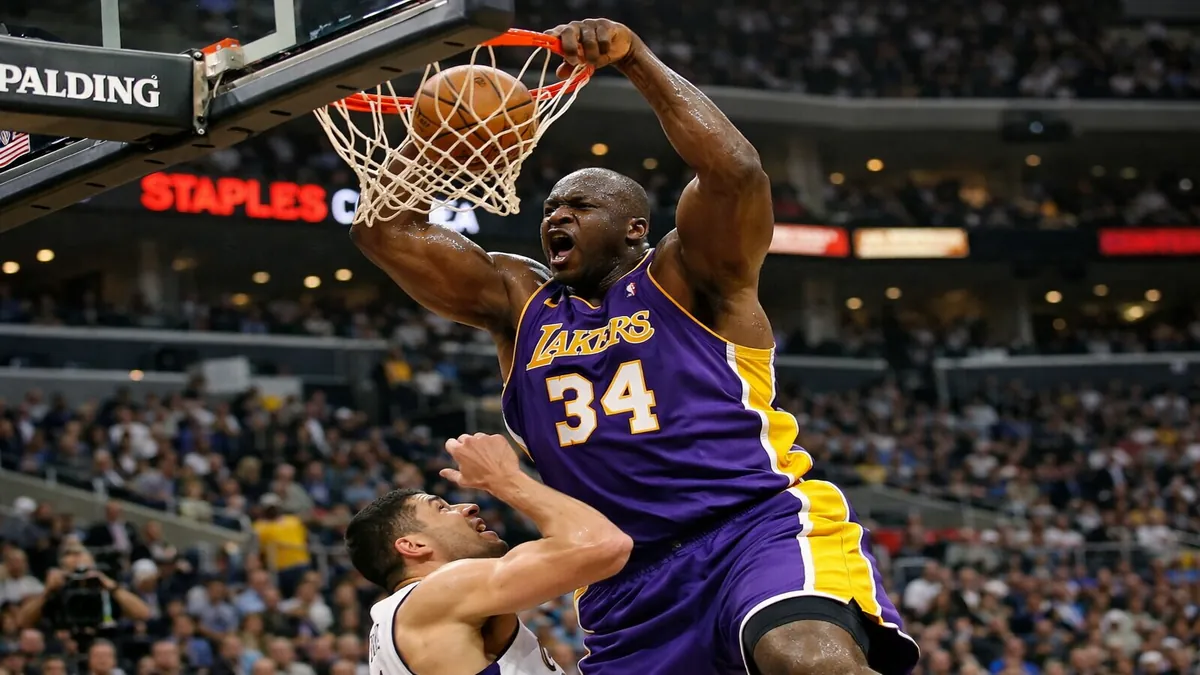
Shaquille Rashaun O'Neal, known simply as "Shaq," is one of the most physically imposing and charismatic figures in the history of the National Basketball Association (NBA). Standing at 7'1" and weighing over 325 pounds during his prime, O'Neal was a force of nature that redefined the center position. A four-time NBA champion, a three-time Finals MVP, and a 15-time All-Star, Shaq's combination of size, strength, and surprising agility made him virtually unguardable. This biography explores the life of the man who shattered backboards, dominated the paint, and became a global media icon, from his military upbringing to his legendary career and beyond.
Newark, New Jersey, and a Military Upbringing
Shaquille O'Neal was born on March 6, 1972, in Newark, New Jersey. His early life was shaped by the presence of his stepfather, Phillip A. Harrison, a career Army sergeant who married Shaq's mother, Lucille O'Neal, when Shaquille was still a young child. Harrison was a strict disciplinarian who provided the structure and guidance that Shaq needed to navigate a challenging environment. The family moved frequently due to Harrison's military assignments, spending time in Georgia and eventually West Germany, where Shaq first began to take basketball seriously.
Despite his massive size, Shaq was not always a natural athlete. He was often clumsy and self-conscious about his height, which reached 6'6" by the time he was 13 years old. However, his stepfather pushed him to use his physical gifts to his advantage, often telling him that he could be one of the greatest players to ever play the game. This military-style discipline and unwavering support from his family laid the foundation for Shaq's work ethic and his ability to handle the pressures of superstardom. He eventually returned to the United States for high school, leading Robert G. Cole High School in San Antonio, Texas, to a 68-1 record and a state championship over two seasons.
LSU and the 1992 NBA Draft: The Arrival of a Giant
O'Neal chose to play college basketball at Louisiana State University (LSU), where he became a two-time All-American and a two-time SEC Player of the Year. His dominance at the collegiate level was absolute; he led the nation in rebounding in 1991 and was a constant threat to block every shot that came near the rim. Shaq's time at LSU was marked by his incredible physical development and his growing reputation as a player who could literally break the equipment—he famously tore down a backboard during a game against New Jersey City University.
In 1992, Shaq declared for the NBA Draft and was selected with the first overall pick by the Orlando Magic. His arrival in the league was one of the most anticipated in history. He immediately lived up to the hype, winning the Rookie of the Year award after averaging 23.4 points, 13.9 rebounds, and 3.5 blocks per game. Shaq's impact was so immediate that he was voted as an All-Star starter in his rookie season, the first player to achieve that feat since Michael Jordan. The "Shaq Attack" had officially arrived, and the NBA would never be the same.
Orlando Magic: Raw Power and the 1995 Finals
In Orlando, Shaq quickly turned a young expansion team into a championship contender. Alongside fellow star Penny Hardaway, Shaq led the Magic to the NBA Finals in 1995, just his third season in the league. Along the way, the Magic defeated Michael Jordan's Chicago Bulls, the only team to beat Jordan in a playoff series during his six-championship run. While the Magic were ultimately swept in the Finals by Hakeem Olajuwon and the Houston Rockets, the experience proved that Shaq was already one of the elite players in the world.
Shaq's time in Orlando was characterized by his raw power and his growing celebrity status. He released rap albums, starred in movies like Kazaam, and became a global brand. However, tensions with the local media and a perceived lack of respect from the Magic's front office led to his departure in 1996. He signed a massive seven-year, $121 million contract with the Los Angeles Lakers, a move that would set the stage for one of the greatest dynasties in NBA history.
The Lakers Dynasty: A Three-Peat for the Ages
Shaq's tenure with the Los Angeles Lakers is the defining period of his career. After several years of playoff disappointments, the arrival of head coach Phil Jackson in 1999 provided the structure and leadership the team needed. Jackson implemented the "Triangle Offense," which maximized Shaq's dominance in the post and allowed him to become a more effective playmaker. The result was a period of dominance that the league had not seen since the 1960s Celtics.
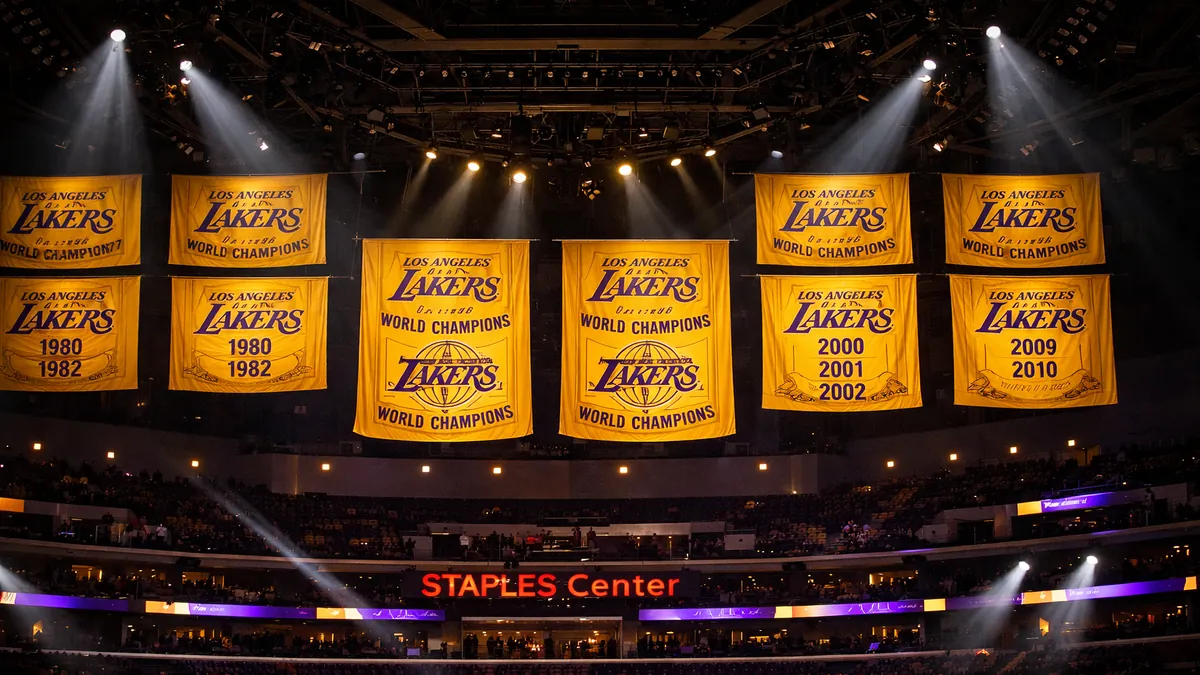
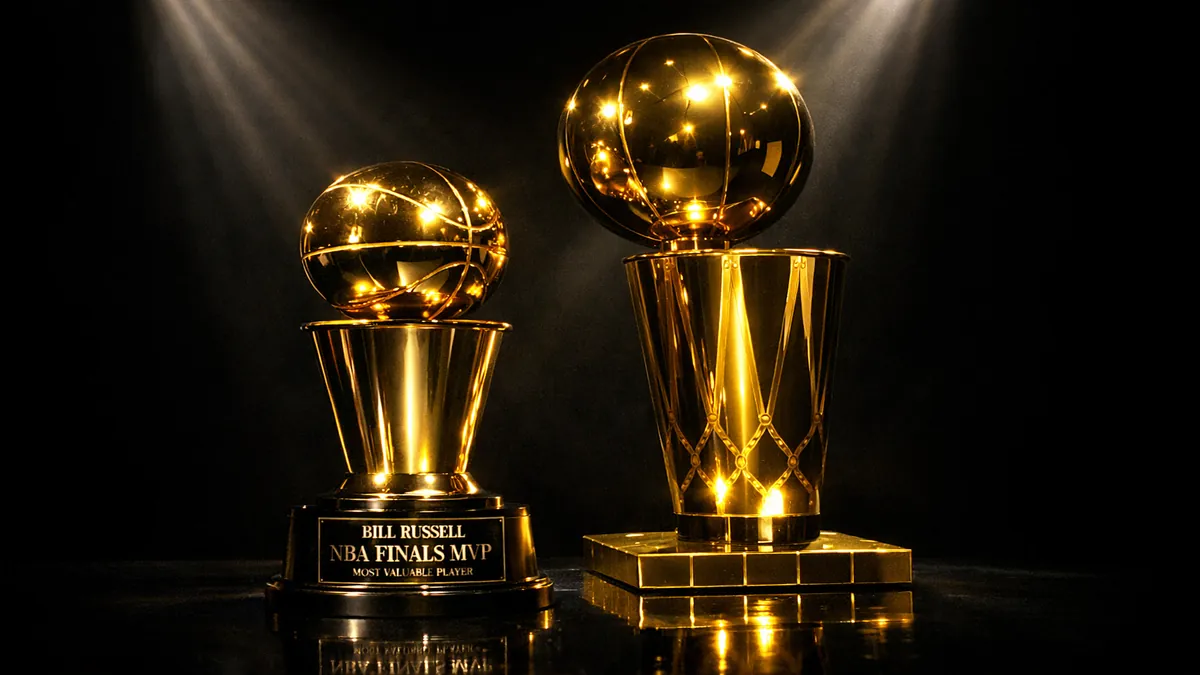
From 2000 to 2002, the Lakers won three consecutive NBA championships, a feat known as a "three-peat." Shaq was the undisputed centerpiece of this dynasty, winning the league MVP in 2000 and three consecutive Finals MVPs. His statistical output during these Finals runs was staggering: he averaged 38.0 points and 16.7 rebounds in the 2000 Finals, 33.0 points and 15.8 rebounds in 2001, and 36.3 points and 12.3 rebounds in 2002. No player in history has ever dominated a three-year stretch of the Finals with the same level of physical authority as Shaquille O'Neal.
The Shaq vs. Kobe Feud: A Deep Dive
While the Lakers were winning championships on the court, a fierce internal rivalry was brewing between Shaq and his young co-star, Kobe Bryant. The conflict was a clash of personalities and philosophies: Shaq was the fun-loving, gregarious veteran who valued team chemistry and enjoyed his celebrity status, while Kobe was the intense, obsessive young star who demanded perfection and often felt that Shaq's work ethic was lacking. The tension between the two was palpable, with public barbs and locker room disagreements becoming a regular occurrence.
Despite their personal differences, Shaq and Kobe formed the most lethal duo in NBA history. Their games complemented each other perfectly: Shaq's interior dominance forced double-teams that opened up space for Kobe's perimeter scoring. However, the feud eventually became unsustainable. After a loss to the Detroit Pistons in the 2004 Finals, the Lakers decided to move forward with Kobe, trading Shaq to the Miami Heat. While the two would eventually reconcile years later, the "what-if" of how many more titles they could have won together remains one of the great debates in NBA history.
The Miami Heat and the Fourth Ring
Shaq's move to the Miami Heat in 2004 was a major turning point for the franchise. He promised the city a championship, and he delivered. In Miami, Shaq took on a slightly different role, serving as the veteran mentor to a young superstar named Dwyane Wade. While Shaq was no longer the 30-point-per-game scorer he was in Los Angeles, his presence in the paint remained a massive deterrent for opposing offenses.
In 2006, the Heat reached the NBA Finals against the Dallas Mavericks. After trailing 2-0 in the series, the Heat won four straight games to clinch the title. Shaq averaged 13.7 points and 10.2 rebounds in the series, providing the interior presence that allowed Wade to dominate on the perimeter. This fourth championship solidified Shaq's legacy as a winner who could succeed in different environments and with different teammates. It was a triumphant moment for the Big Aristotle, proving that he still had enough left in the tank to reach the mountaintop one more time.
The Hack-a-Shaq Problem: The Free Throw Struggle
One of the few weaknesses in Shaq's game was his struggle at the free-throw line. Throughout his career, he shot just 52.7% from the stripe, a deficiency that led to the development of the "Hack-a-Shaq" strategy. Opposing coaches would intentionally foul Shaq to send him to the line, hoping that his poor shooting would limit the Lakers' offensive efficiency. The strategy was controversial and often made for ugly basketball, but it was one of the only ways to slow down the Diesel.
Shaq tried everything to fix his free-throw shooting, from changing his form to working with various shooting coaches, but the results remained inconsistent. He famously said, "I'm 40% at the line, but I'm 100% when it counts." While his free-throw struggles were a point of frustration for fans and teammates, they were also a testament to how dominant he was in every other aspect of the game. If Shaq had been an 80% free-throw shooter, he might have averaged 40 points per game and been even more unstoppable than he already was.
Post-NBA: TNT, DJ Diesel, and the Entrepreneur
Since retiring in 2011, Shaquille O'Neal has become one of the most successful and visible former athletes in the world. He joined the crew of Inside the NBA on TNT, where his chemistry with Ernie Johnson, Kenny Smith, and Charles Barkley has made the show a cultural phenomenon. Shaq's humor, insight, and occasional "Shaqtin' a Fool" segments have endeared him to a new generation of fans who never saw him play.
Beyond broadcasting, Shaq has built a massive business empire. He is a prolific investor, with stakes in companies like Google, Ring, and various restaurant franchises like Five Guys and Papa John's. He also performs as a world-renowned DJ under the name "DJ Diesel," playing at major music festivals like Tomorrowland and Lollapalooza. With a net worth estimated at over $400 million, Shaq has proven that his dominance extends far beyond the basketball court. He is a master of branding and a philanthropist who frequently gives back to the communities that supported him throughout his life.
Career Statistics and Achievements
Shaquille O'Neal's career is a collection of numbers that reflect his absolute dominance of the paint. He remains one of the most efficient scorers in history, leading the league in field goal percentage ten times.
Table 1: Shaquille O'Neal Career Averages
| Category | Statistic | ||||
|---|---|---|---|---|---|
| Points Per Game (PPG) | 23.7 | ||||
| Rebounds Per Game (RPG) | 10.9 | ||||
| Assists Per Game (APG) | 2.5 | ||||
| Blocks Per Game (BPG) | 2.3 | ||||
| Field Goal Percentage (FG%) | 58.2% | ||||
| Free Throw Percentage (FT%) | 52.7% | ||||
| Games Played | 1,207 | ||||
| Year | Opponent | PPG | RPG | BPG | Result |
| 2000 | Indiana Pacers | 38.0 | 16.7 | 2.7 | Won 4-2, Finals MVP |
| 2001 | Philadelphia 76ers | 33.0 | 15.8 | 3.4 | Won 4-1, Finals MVP |
| 2002 | New Jersey Nets | 36.3 | 12.3 | 2.8 | Won 4-0, Finals MVP |
| Player | Career PPG | Career RPG | NBA Titles | ||
| Shaquille O'Neal | 23.7 | 10.9 | 4 | ||
| Wilt Chamberlain | 30.1 | 22.9 | 2 | ||
| Kareem Abdul-Jabbar | 24.6 | 11.2 | 6 | ||
| Hakeem Olajuwon | 21.8 | 11.1 | 2 | ||
| David Robinson | 21.1 | 10.6 | 2 |
Legacy: The Most Dominant Ever
Shaquille O'Neal's legacy is one of pure, unadulterated dominance. He was a player who forced the NBA to change its rules, from the implementation of zone defense to the reinforcement of backboard supports. He will be remembered as the last of the truly dominant traditional centers, a player who could single-handedly control the outcome of a game through sheer physical will.
Beyond his stats and rings, Shaq's legacy is defined by his larger-than-life personality. He brought a sense of fun and entertainment to the NBA that made him one of the most beloved figures in sports history. Whether he was dancing with the Jabbawockeez at an All-Star Game or helping a family in need through his various charitable endeavors, Shaq always did things in a big way. He remains the "Big Aristotle," the "Diesel," and the "Most Dominant Ever"—a singular figure who left an indelible mark on the game of basketball and the world of entertainment.