PGA Championship History
The PGA Championship stands as one of professional golf's four major championships, a prestigious event organized by the Professional Golfers' Association of America. Often dubbed "Glory's Last Shot" due to its traditional placement as the final major of the season (though its schedule has shifted), the PGA Championship history is rich with dramatic finishes, legendary champions, and a unique evolution from match play to stroke play. Renowned for its challenging courses and the fierce competition it consistently delivers, the PGA Championship serves as a true test of a golfer's all-around game. It is a tournament where the world's best professionals vie for the coveted Wanamaker Trophy, etching their names into the annals of golf history and solidifying their place among the sport's elite.
The Genesis and Early Years: From Match Play to Stroke Play

The PGA Championship history began in October 1916 at Siwanoy Country Club in Bronxville, New York. The tournament was conceived by Rodman Wanamaker, a prominent department store magnate, who gathered leading golf professionals to discuss the formation of a national organization for professional golfers. This meeting led to the establishment of the Professional Golfers' Association of America (PGA of America) in February 1916, with the championship serving as its flagship event. The inaugural winner, Jim Barnes, received $500 and a diamond-studded medal, marking the beginning of a storied tradition.
For its first 41 years, from 1916 to 1957, the PGA Championship was contested as a match-play tournament. This format, where players compete head-to-head in a series of matches, provided intense drama and showcased individual skill in a direct confrontation. Legendary figures like Walter Hagen, who dominated the early years with five victories, and Gene Sarazen, a three-time champion, honed their competitive edge in this demanding format. The match-play era produced many memorable battles and established the championship's reputation for high-stakes golf. However, as golf's popularity grew and television coverage became more prevalent, the desire for a more consistent and easily understood scoring system led to a significant change.
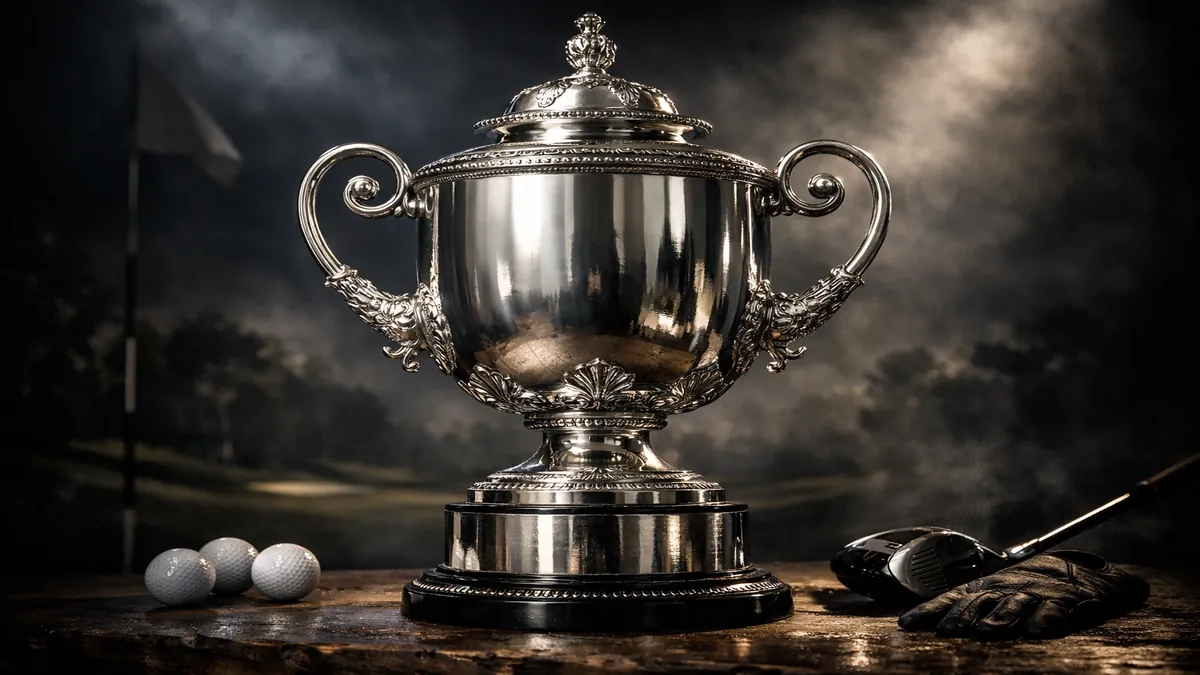
In 1958, the PGA Championship transitioned to its current 72-hole stroke-play format. This shift aligned it with the other major championships and allowed for a clearer comparison of performances across the entire field. The move to stroke play also opened the door for more players to contend and provided a more familiar structure for fans. This evolution was a pivotal moment in the tournament's history, modernizing its appeal while retaining its core identity as a major championship for professional golfers. The Wanamaker Trophy, named after its founder, has remained the symbol of victory throughout these changes, a constant reminder of the championship's rich heritage.
Evolution of a Major: Venues, Scheduling, and Global Reach
Throughout its PGA Championship history, the tournament has consistently sought to challenge the world's best golfers by rotating among some of the most demanding and iconic courses across the United States. Unlike The Masters, which is permanently held at Augusta National, or The Open, which stays on links courses, the PGA Championship embraces a diverse array of venues, from classic parkland layouts to modern championship designs. This rotation ensures that players must adapt their game to different conditions each year, making victory a testament to versatility and skill. Courses like Oak Hill, Southern Hills, Whistling Straits, and Valhalla have become synonymous with the championship, each contributing to its unique character and providing a stern test for the field.
The scheduling of the PGA Championship has also seen significant shifts. For many years, it was traditionally played in August, often as the final major of the season. This position earned it the moniker "Glory's Last Shot," adding an extra layer of drama to its conclusion. However, in 2019, the PGA Championship moved to May, positioning it as the second major of the year, following The Masters and preceding the U.S. Open and The Open Championship. This change was part of a broader realignment of the professional golf calendar, aimed at creating a more cohesive and impactful schedule for players and fans alike. The move to May has allowed the championship to carve out its own distinct identity within the major season, often benefiting from favorable weather conditions and increased media attention.
Beyond its domestic impact, the PGA Championship has also grown in global stature. While primarily featuring American professionals in its early years, the championship now attracts a truly international field, with players from every corner of the globe vying for the Wanamaker Trophy. This global reach reflects the increasing internationalization of professional golf and the PGA of America's commitment to showcasing the sport's best talent, regardless of nationality. The championship's consistent ability to produce compelling narratives and crown deserving champions has solidified its place as one of golf's most revered major tournaments.
Unforgettable Moments and Dramatic Finishes

The PGA Championship has been the stage for countless unforgettable moments and dramatic finishes, contributing significantly to its rich history. The tournament's format, whether match play or stroke play, has consistently delivered high-stakes golf that captivates audiences. From the early dominance of Walter Hagen, who won five titles in the match-play era, including four consecutively from 1924 to 1927, to the modern era's thrilling conclusions, the championship has a knack for producing compelling narratives.
One of the most iconic moments in recent memory was Tiger Woods's victory in 2000 at Valhalla Golf Club, where he battled Bob May in an epic three-hole playoff, sinking a clutch putt on the final hole to secure his third PGA Championship. This win was part of his historic "Tiger Slam," holding all four major championships simultaneously. Another memorable instance was Phil Mickelson's improbable victory in 2021 at Kiawah Island, where, at 50 years old, he became the oldest major champion in golf history, defying expectations and thrilling fans with his daring play. Rory McIlroy's dominant eight-shot victory in 2012 at Kiawah Island, and his hard-fought win in 2014 at Valhalla, further underscore the championship's ability to showcase the game's brightest stars at their best. These moments, often unfolding under immense pressure on some of golf's most challenging courses, have become integral to the fabric of the PGA Championship, defining careers and captivating generations of golf fans.
Most Successful Players & Records
The PGA Championship has a distinguished list of champions, with several players achieving multiple victories, cementing their place in golf history. The demanding nature of the championship makes repeat wins a significant accomplishment, highlighting exceptional skill and mental toughness.
Two players share the record for the most PGA Championship victories, each with five titles: Walter Hagen and Jack Nicklaus [1].
- Walter Hagen (1921, 1924, 1925, 1926, 1927): Hagen's five wins, including a remarkable four consecutive titles, established him as the dominant force of the match-play era.
- Jack Nicklaus (1963, 1971, 1973, 1975, 1980): The "Golden Bear" claimed his five PGA Championship titles across three decades, showcasing his longevity and consistent excellence, particularly in the stroke-play era.
Other notable multiple winners include Tiger Woods (1999, 2000, 2006, 2007), with four victories, and Gene Sarazen (1922, 1923, 1933), Sam Snead (1942, 1949, 1951), and Nick Price (1992, 1994), each with three titles. Woods's four wins underscore his era of dominance, particularly his back-to-back victories in 1999-2000 and 2006-2007.
In terms of scoring records, the PGA Championship has seen some remarkable performances. The lowest 72-hole score in relation to par is 20-under-par 264, achieved by Brooks Koepka in 2018. The lowest single round score is 63, a feat accomplished by numerous players, including Bruce Crampton (1975), Raymond Floyd (1982), Gary Player (1984), Vijay Singh (1993), Michael Bradley (1995), Brad Faxon (1995), Jose Maria Olazabal (2000), Mark O'Meara (2001), Thomas Bjorn (2005), Tiger Woods (2007), Steve Stricker (2011), Jason Dufner (2013), Hiroshi Iwata (2015), and Brooks Koepka (2018). These records highlight the incredible talent and precision required to excel in this major championship.
| Player | PGA Championship Wins | Years Won |
|---|---|---|
| Walter Hagen | 5 | 1921, 1924, 1925, 1926, 1927 |
| Jack Nicklaus | 5 | 1963, 1971, 1973, 1975, 1980 |
| Tiger Woods | 4 | 1999, 2000, 2006, 2007 |
| Gene Sarazen | 3 | 1922, 1923, 1933 |
| Sam Snead | 3 | 1942, 1949, 1951 |
| Nick Price | 3 | 1992, 1994 |
Legacy and Enduring Significance
The PGA Championship's legacy is one of continuous evolution and unwavering commitment to showcasing the pinnacle of professional golf. From its origins as a match-play event to its current status as a stroke-play major, it has consistently adapted to the changing landscape of the sport while maintaining its core identity. The championship's enduring significance lies in its role as a true test for the game's elite, often played on courses that demand both power and precision. It is a tournament where the best players in the world converge to compete for one of golf's most coveted prizes, the Wanamaker Trophy.
The PGA Championship has played a crucial role in shaping the careers of countless golfers, providing a platform for both established stars to solidify their legacies and for emerging talents to announce their arrival on the world stage. Its history is a testament to the growth and professionalization of golf, reflecting changes in equipment, course design, and player athleticism. The championship continues to be a highlight of the golfing calendar, a tournament where records are made and broken, and where the pursuit of excellence is celebrated above all else. It remains a powerful symbol of American professional golf, a championship that demands respect and rewards only the most deserving.
FAQ: PGA Championship
Q: When was the first PGA Championship held?
A: The first PGA Championship was held in October 1916.
Q: What is the trophy awarded to the winner of the PGA Championship?
A: The trophy awarded to the winner is the Wanamaker Trophy.
Q: Which golfers hold the record for the most PGA Championship wins?
A: Walter Hagen and Jack Nicklaus both hold the record with five wins each.
Q: What was the original format of the PGA Championship?
A: The PGA Championship was originally contested as a match-play tournament until 1957.
Q: When did the PGA Championship move to May in the golf calendar?
A: The PGA Championship moved to May in 2019 as part of a broader realignment of the professional golf calendar.
References
[1] ESPN. "Who has won the PGA Championship? All-time winners list." ESPN, May 18, 2025. Available at: https://www.espn.com/golf/story/_/id/45126481/who-won-pga-championship-all-winners-list