Every Champion Since 1947: The Complete History of NBA Glory
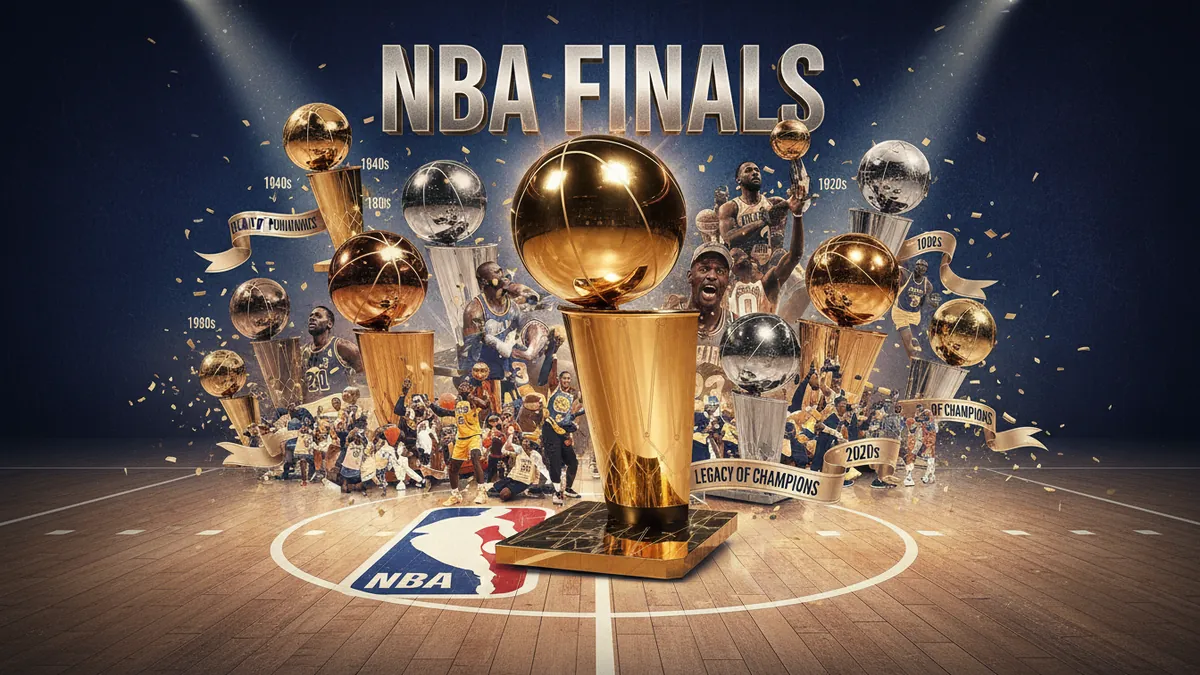
The NBA Finals represent the pinnacle of professional basketball, the culmination of a grueling season where two teams battle for the ultimate prize: the Larry O'Brien Championship Trophy. Since its inception in 1947, the Finals have been a stage for legendary performances, dramatic upsets, and the forging of dynasties that have left an indelible mark on sports history. This definitive reference article delves into the complete history of NBA glory, chronicling every champion, analyzing the most successful franchises, and highlighting the individual brilliance that has defined this iconic series. Understanding the NBA Finals is to understand the very essence of competitive basketball, a narrative of triumph, heartbreak, and the relentless pursuit of greatness.
From the early days of the Basketball Association of America (BAA) to the modern era of global superstars, the Finals have mirrored the growth and evolution of the league itself. Each championship tells a story, not just of a winning team, but of the era in which it was played, reflecting changes in strategy, player development, and the cultural landscape surrounding the sport. This comprehensive overview aims to be the go-to resource for anyone seeking a full historical perspective on the NBA's ultimate contest.
The Early Dynasties: Minneapolis and Boston (1947-1969)
The genesis of the NBA Finals predates the official renaming of the league to the National Basketball Association in 1949. The first championship series was held in 1947 under the BAA banner, with the Philadelphia Warriors defeating the Chicago Stags. However, the true dawn of dynasty in professional basketball began with the Minneapolis Lakers, led by the league's first dominant big man, George Mikan. The Lakers, under Mikan's imposing presence, captured five championships in six years between 1949 and 1954, establishing the league's first true dynasty. Mikan's ability to score, rebound, and intimidate opponents was unprecedented, and his Lakers teams laid the groundwork for what would become a recurring theme in NBA history: the dominance of a singular, transcendent talent.
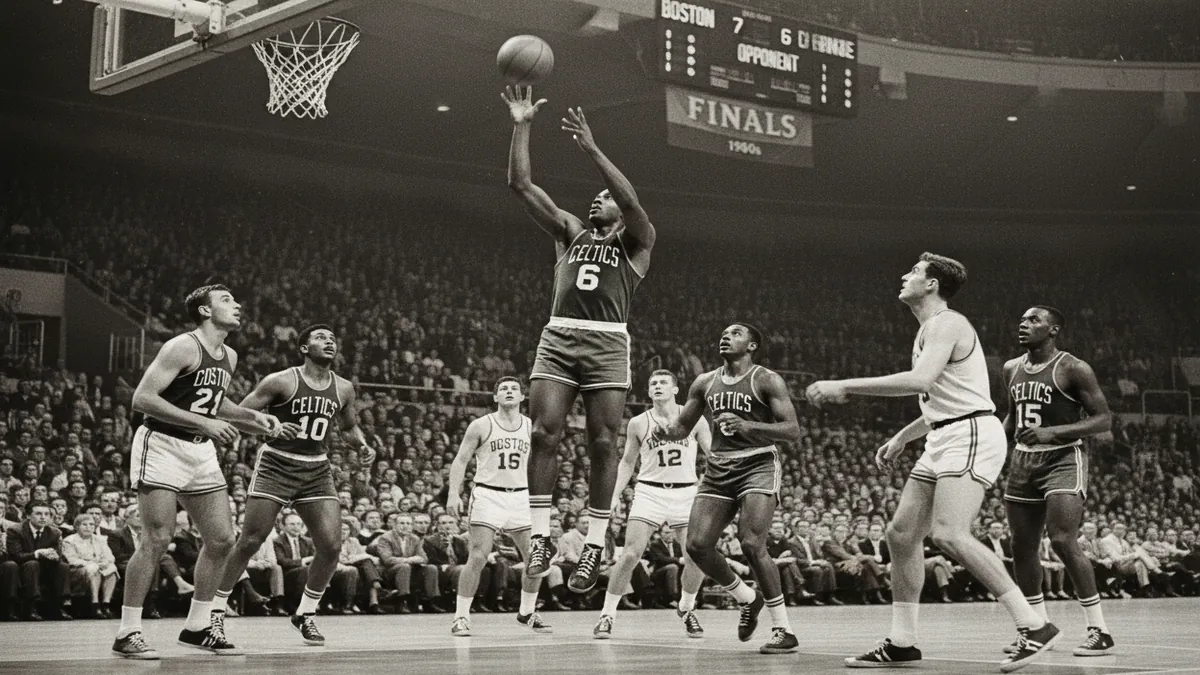
Following the Lakers' reign, the NBA entered an era that would be forever synonymous with unparalleled dominance: the Boston Celtics. From 1957 to 1969, the Celtics, under the guidance of legendary coach Red Auerbach and anchored by the defensive and rebounding prowess of Bill Russell, won an astonishing 11 championships in 13 seasons. This run included an unprecedented eight consecutive titles from 1959 to 1966, a feat that remains unmatched in professional sports. Russell, with his revolutionary shot-blocking and leadership, transformed the game, proving that defense and team play could be the ultimate keys to victory. The Celtics' dynasty was built on a foundation of unselfishness, strategic brilliance, and a deep roster of Hall of Fame talent, including Bob Cousy, John Havlicek, and Sam Jones. Their rivalry with Wilt Chamberlain's Philadelphia Warriors and later the Los Angeles Lakers defined the era, creating some of the most compelling narratives in sports history. The sheer mathematical improbability of their success makes this dynasty the gold standard against which all others are measured.
| Year | Champion | Runner-up | Series Score |
|---|---|---|---|
| 1947 | Philadelphia Warriors | Chicago Stags | 4-1 |
| 1948 | Baltimore Bullets | Philadelphia Warriors | 4-2 |
| 1949 | Minneapolis Lakers | Washington Capitols | 4-2 |
| 1950 | Minneapolis Lakers | Syracuse Nationals | 4-2 |
| 1951 | Rochester Royals | New York Knicks | 4-3 |
| 1952 | Minneapolis Lakers | New York Knicks | 4-3 |
| 1953 | Minneapolis Lakers | New York Knicks | 4-1 |
| 1954 | Minneapolis Lakers | Syracuse Nationals | 4-3 |
| 1955 | Syracuse Nationals | Fort Wayne Pistons | 4-3 |
| 1956 | Philadelphia Warriors | Fort Wayne Pistons | 4-1 |
| 1957 | Boston Celtics | St. Louis Hawks | 4-3 |
| 1958 | St. Louis Hawks | Boston Celtics | 4-2 |
| 1959 | Boston Celtics | Minneapolis Lakers | 4-0 |
| 1960 | Boston Celtics | St. Louis Hawks | 4-3 |
| 1961 | Boston Celtics | St. Louis Hawks | 4-1 |
| 1962 | Boston Celtics | Los Angeles Lakers | 4-3 |
| 1963 | Boston Celtics | Los Angeles Lakers | 4-2 |
| 1964 | Boston Celtics | San Francisco Warriors | 4-1 |
| 1965 | Boston Celtics | Los Angeles Lakers | 4-1 |
| 1966 | Boston Celtics | Los Angeles Lakers | 4-3 |
| 1967 | Philadelphia 76ers | San Francisco Warriors | 4-2 |
| 1968 | Boston Celtics | Los Angeles Lakers | 4-2 |
| 1969 | Boston Celtics | Los Angeles Lakers | 4-3 |
| Year | Champion | Runner-up | Series Score |
| 1980 | Los Angeles Lakers | Philadelphia 76ers | 4-2 |
| 1981 | Boston Celtics | Houston Rockets | 4-2 |
| 1982 | Los Angeles Lakers | Philadelphia 76ers | 4-2 |
| 1983 | Philadelphia 76ers | Los Angeles Lakers | 4-0 |
| 1984 | Boston Celtics | Los Angeles Lakers | 4-3 |
| 1985 | Los Angeles Lakers | Boston Celtics | 4-2 |
| 1986 | Boston Celtics | Houston Rockets | 4-2 |
| 1987 | Los Angeles Lakers | Boston Celtics | 4-2 |
| 1988 | Los Angeles Lakers | Detroit Pistons | 4-3 |
| 1989 | Detroit Pistons | Los Angeles Lakers | 4-0 |
| Year | Champion | Runner-up | Series Score |
| 1991 | Chicago Bulls | Los Angeles Lakers | 4-1 |
| 1992 | Chicago Bulls | Portland Trail Blazers | 4-2 |
| 1993 | Chicago Bulls | Phoenix Suns | 4-2 |
| 1994 | Houston Rockets | New York Knicks | 4-3 |
| 1995 | Houston Rockets | Orlando Magic | 4-0 |
| 1996 | Chicago Bulls | Seattle SuperSonics | 4-2 |
| 1997 | Chicago Bulls | Utah Jazz | 4-2 |
| 1998 | Chicago Bulls | Utah Jazz | 4-2 |
| Year | Champion | Runner-up | Series Score |
| 1999 | San Antonio Spurs | New York Knicks | 4-1 |
| 2000 | Los Angeles Lakers | Indiana Pacers | 4-2 |
| 2001 | Los Angeles Lakers | Philadelphia 76ers | 4-1 |
| 2002 | Los Angeles Lakers | New Jersey Nets | 4-0 |
| 2003 | San Antonio Spurs | New Jersey Nets | 4-2 |
| 2004 | Detroit Pistons | Los Angeles Lakers | 4-1 |
| 2005 | San Antonio Spurs | Detroit Pistons | 4-3 |
| 2006 | Miami Heat | Dallas Mavericks | 4-2 |
| 2007 | San Antonio Spurs | Cleveland Cavaliers | 4-0 |
| 2008 | Boston Celtics | Los Angeles Lakers | 4-2 |
| 2009 | Los Angeles Lakers | Orlando Magic | 4-1 |
| 2010 | Los Angeles Lakers | Boston Celtics | 4-3 |
| 2011 | Dallas Mavericks | Miami Heat | 4-2 |
| 2012 | Miami Heat | Oklahoma City Thunder | 4-1 |
| 2013 | Miami Heat | San Antonio Spurs | 4-3 |
| 2014 | San Antonio Spurs | Miami Heat | 4-1 |
| 2015 | Golden State Warriors | Cleveland Cavaliers | 4-2 |
| 2016 | Cleveland Cavaliers | Golden State Warriors | 4-3 |
| 2017 | Golden State Warriors | Cleveland Cavaliers | 4-1 |
| 2018 | Golden State Warriors | Cleveland Cavaliers | 4-0 |
| 2019 | Toronto Raptors | Golden State Warriors | 4-2 |
| 2020 | Los Angeles Lakers | Miami Heat | 4-2 |
| 2021 | Milwaukee Bucks | Phoenix Suns | 4-2 |
| 2022 | Golden State Warriors | Boston Celtics | 4-2 |
| 2023 | Denver Nuggets | Miami Heat | 4-1 |
| 2024 | Boston Celtics | Dallas Mavericks | 4-1 |
| Franchise | Championships | Finals Appearances | |
| Boston Celtics | 18 | 23 | |
| Los Angeles Lakers | 17 | 32 | |
| Golden State Warriors | 7 | 12 | |
| Chicago Bulls | 6 | 6 | |
| San Antonio Spurs | 5 | 6 | |
| Philadelphia 76ers | 3 | 9 | |
| Detroit Pistons | 3 | 7 | |
| Miami Heat | 3 | 7 | |
| New York Knicks | 2 | 8 | |
| Houston Rockets | 2 | 4 | |
| Milwaukee Bucks | 2 | 3 |
Beyond these two titans, other franchises have carved out their own significant places in Finals history. The Golden State Warriors have seen a resurgence in the modern era, adding multiple titles to their name and establishing a new dynasty built on revolutionary offensive principles. The Chicago Bulls of the 1990s, led by Michael Jordan, achieved a perfect 6-0 record in their Finals appearances, a remarkable feat of dominance. The San Antonio Spurs, with their quiet excellence and consistent team play, have also built a formidable championship pedigree. These teams, through different eras and with varying styles, have all contributed to the rich tapestry of NBA Finals history, demonstrating that there are multiple paths to sustained success at the highest level.
Greatest Individual Performances in Finals History
While team success is the ultimate goal, the NBA Finals also serve as a stage for individual brilliance, where players elevate their game to legendary status with performances that defy expectations and etch themselves into the collective memory of basketball fans. These are the moments when superstars shine brightest, carrying their teams on their shoulders and delivering clutch plays that determine the outcome of a championship series.
Michael Jordan's entire Finals career is a masterclass in individual dominance. His perfect 6-0 record, coupled with his six Finals MVP awards, speaks volumes. Beyond the statistics, it was his unwavering will to win, his ability to hit game-winning shots, and his defensive intensity that set him apart. The "Flu Game" in 1997, where he scored 38 points despite battling illness, is a prime example of his legendary toughness and determination. His performance in the 1998 Finals, culminating in the iconic steal and game-winning shot against the Utah Jazz, is widely considered one of the greatest individual closing acts in sports history.
LeBron James has delivered numerous iconic Finals performances, showcasing his unparalleled versatility and ability to impact every facet of the game. His 2016 Finals performance, leading the Cleveland Cavaliers back from a 3-1 deficit against the 73-9 Golden State Warriors, is arguably his most impressive. Averaging 29.7 points, 11.3 rebounds, 8.9 assists, 2.6 steals, and 2.3 blocks, he became the first player in Finals history to lead both teams in all five major statistical categories. His clutch block on Andre Iguodala in Game 7 and his overall leadership throughout that series cemented his legacy as one of the greatest Finals performers ever.
Dwyane Wade's 2006 Finals performance against the Dallas Mavericks is another legendary display of individual will. As a young superstar, Wade almost single-handedly carried the Miami Heat to their first championship, averaging 34.7 points, 7.8 rebounds, 3.8 assists, and 2.7 steals in the series, including an incredible stretch in the final four games. His fearless drives to the basket, clutch free throws, and relentless attacking style overwhelmed the Mavericks and announced his arrival as a true Finals legend.
Bill Russell, though playing in an era without a Finals MVP award, was the ultimate winner. His defensive dominance, rebounding prowess, and leadership were the driving forces behind the Boston Celtics' 11 championships. His ability to control the paint, alter shots, and ignite fast breaks was revolutionary. While his offensive numbers might not jump off the page compared to modern stars, his impact on winning was undeniable, making him arguably the greatest Finals performer in terms of team success.
Nikola Jokic's 2023 Finals performance for the Denver Nuggets was a statistical marvel, showcasing his unique blend of scoring, rebounding, and playmaking from the center position. Averaging 30.2 points, 14.0 rebounds, and 7.2 assists, he dominated the series against the Miami Heat, leading his team to their first NBA championship. His ability to control the game from the post, make impossible passes, and consistently deliver in clutch moments solidified his status as a generational talent and a deserving Finals MVP.
Ray Allen's corner three-pointer in Game 6 of the 2013 NBA Finals is perhaps the most dramatic single moment in Finals history. With the Miami Heat trailing by three points and seconds remaining, Allen's shot tied the game and forced overtime, ultimately leading to a Heat victory and their second consecutive championship. This shot, born out of perfect execution and Allen's legendary clutch shooting, is a testament to how a single play can alter the course of history and become an iconic symbol of the Finals.
These individual performances, whether a dominant series or a single iconic moment, are what make the NBA Finals so compelling. They are a reminder that while basketball is a team sport, it is often the brilliance of a single player that can elevate a team to championship glory and create lasting memories for fans around the world. The Finals stage is where legends are made, and these players, through their extraordinary efforts, have earned their place in the pantheon of NBA greatness.
The NBA Finals, from its nascent beginnings in 1947 to its current status as a global spectacle, has consistently delivered drama, excitement, and unforgettable moments. It is a series that not only crowns a champion but also shapes legacies, defines eras, and showcases the very best of professional basketball. The dynasties that have emerged, the individual performances that have captivated, and the rivalries that have fueled its narrative all contribute to its enduring appeal. As the league continues to evolve, the Finals will undoubtedly remain the ultimate proving ground, a stage where history is made and legends are forged, year after year. The journey through its history reveals a sport constantly reinventing itself, yet always returning to the core principles of competition, skill, and the relentless pursuit of glory. The stories of triumph and heartbreak, of individual brilliance and collective effort, are what make the NBA Finals a truly timeless event, a testament to the enduring power of sport.