Los Angeles Lakers History: 17 Championships and the Greatest Dynasty in NBA History
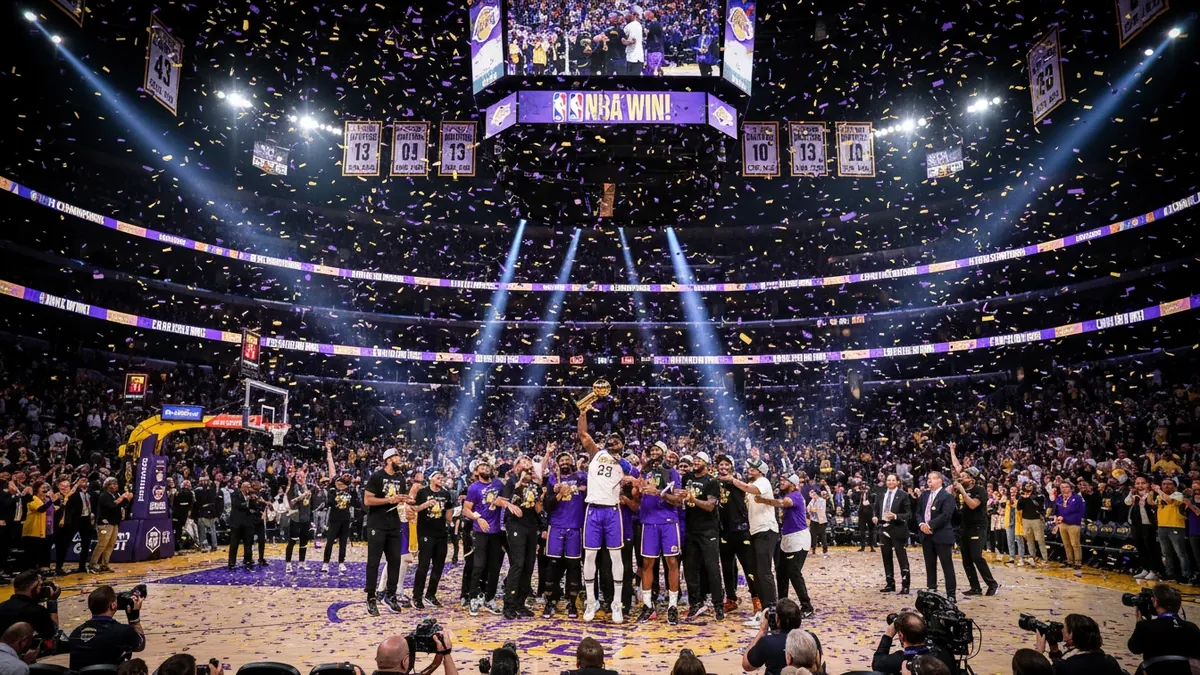
The Los Angeles Lakers are the most storied franchise in the history of professional basketball. With 17 NBA Championships — more than any franchise in the Western Conference and tied for the all-time record with the Boston Celtics — the Lakers have defined excellence across eight decades of professional basketball. From the frozen lakes of Minneapolis to the bright lights of Hollywood, from George Mikan to Kareem Abdul-Jabbar, from Magic Johnson to Shaquille O'Neal and Kobe Bryant, from LeBron James to Bronny James, the Lakers have always been where greatness lives.
The Minneapolis Lakers: The First Dynasty (1947–1960)
The franchise that would become the Los Angeles Lakers was born in Detroit in 1947 as the Detroit Gems, then relocated to Minneapolis, Minnesota, where it became the Minneapolis Lakers — a name inspired by the Minnesota state motto, "Land of 10,000 Lakes."
George Mikan: The First True Superstar
The Minneapolis Lakers built the first dynasty in professional basketball history. Their weapon was George Mikan, a 6'10" center from DePaul University who was so dominant that the NBA widened the lane from 6 feet to 12 feet specifically to limit his advantage near the basket. Mikan was the NBA's first true superstar — the first player whose presence alone sold tickets and defined a franchise.
Under head coach John Kundla, the Minneapolis Lakers won five NBA Championships between 1949 and 1954: 1949, 1950, 1952, 1953, and 1954. They were the first great dynasty in professional basketball, establishing that the game could be built around one transcendent big man.
When Mikan retired in 1956, the dynasty crumbled. The franchise struggled, attendance declined, and by 1960, the owners made the decision to relocate.
Moving to Los Angeles: A New Beginning (1960)
The Lakers moved to Los Angeles in 1960, making them the first major professional sports team on the West Coast. The timing was perfect — Los Angeles was booming, Hollywood glamour was at its peak, and the new franchise would benefit from a city that celebrated celebrity and spectacle.
The Heartbreak Years: West and Baylor
The early Los Angeles years were marked by excellence and heartbreak. The Lakers had Jerry West and Elgin Baylor — two of the most talented players of the era — but repeatedly fell short in the NBA Finals, losing to the Boston Celtics seven times in eight Finals appearances between 1962 and 1970. Jerry West's legacy was built on these heartbreaks as much as his brilliance, cementing him as the player whose silhouette became the NBA logo.
First Los Angeles Championship: 1972
The championship drought ended in 1972 with one of the greatest regular seasons in NBA history. Led by Jerry West, Gail Goodrich, and newly acquired center Wilt Chamberlain, the Lakers won 33 consecutive games — a record that stood for decades — and finished 69-13. They defeated the New York Knicks in five games to win the franchise's first Los Angeles championship.
The 1972 Laker team remains one of the greatest in NBA history, a perfect blend of veteran leadership and dominant athleticism.
The Showtime Era: Magic Johnson and Kareem Abdul-Jabbar (1979–1991)
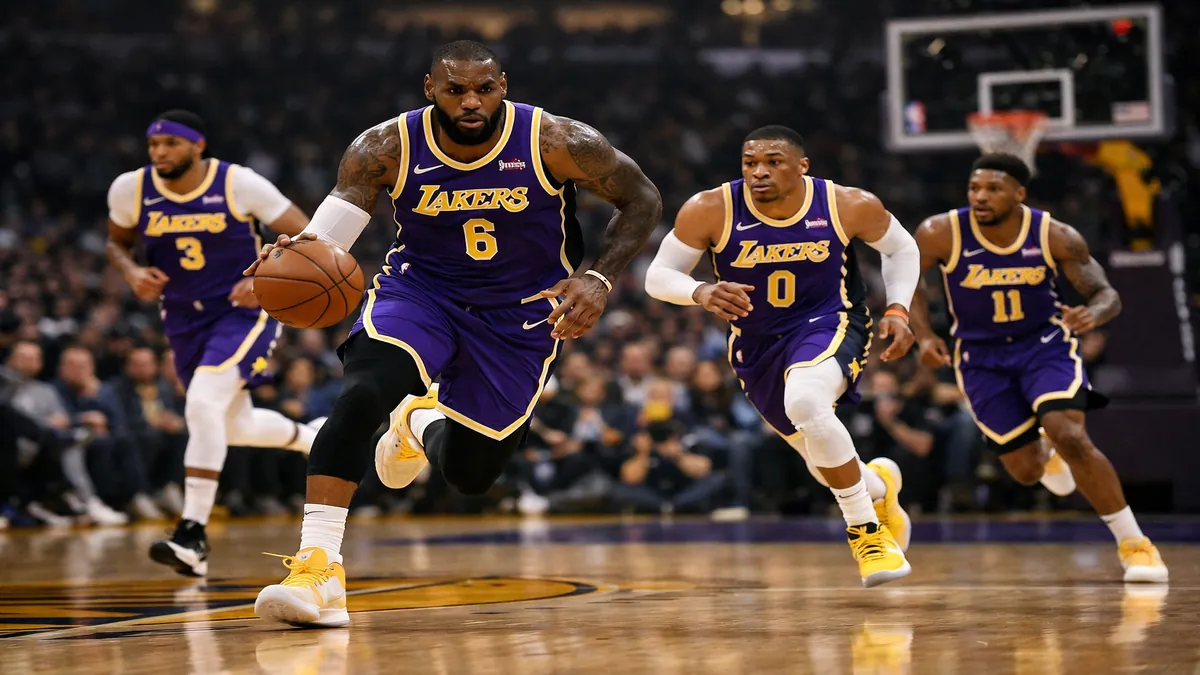
The greatest era in Los Angeles Lakers history began in 1979 with a single NBA Draft selection. The Lakers won the coin flip for the first overall pick and selected Earvin "Magic" Johnson from Michigan State University — a 6'9" point guard with the size of a forward, the passing vision of a maestro, and a smile that lit up arenas from coast to coast.
Combined with Kareem Abdul-Jabbar — the all-time NBA scoring leader and the most skilled center of his era — Magic Johnson created the most captivating team in professional sports history: the Showtime Lakers.
The Championships:
- 1980: Magic's iconic performance in Game 6 of the Finals against Philadelphia, filling in for the injured Kareem and scoring 42 points with 15 rebounds while playing center, remains the greatest individual championship-clinching performance in NBA history.
- 1982: Back to the Finals, back to victory over the 76ers.
- 1985: The long-awaited beating of the Boston Celtics in the Finals — "The Redemption" — in six games. Boston had beaten them four times in Finals. This was payback.
- 1987: Pat Riley's finest team wins again, defeating the Celtics in six games. Magic Johnson wins his third Finals MVP.
- 1988: Back-to-back championships for the last time in franchise history until 2010, defeating the Detroit Pistons.
- 1949 BAA Championship: Mikan led the Lakers to a 4-2 series win over the Washington Capitols.
- 1950 NBA Championship: The Lakers defeated the Syracuse Nationals in six games.
- 1952-1954 Three-Peat: The Lakers won three consecutive titles, defeating the New York Knicks twice and the Syracuse Nationals once.
- Key Players: Jerry West, Gail Goodrich, and Wilt Chamberlain were the stars of the team. West averaged 25.8 points and 9.7 assists, while Chamberlain averaged 14.8 points and 19.2 rebounds.
- The Finals: The Lakers finished the regular season with a 69-13 record and went on to defeat the New York Knicks in five games in the Finals. Wilt Chamberlain was named Finals MVP, securing the franchise's first championship in Los Angeles.
- 1985 "The Redemption": After losing to the Celtics in 1984, the Lakers defeated them in six games in 1985. This was the first time the Lakers had ever beaten the Celtics in the Finals.
- 1987 "The Junior Skyhook": In Game 4 of the 1987 Finals, Magic Johnson hit a "junior skyhook" over Kevin McHale and Robert Parish to win the game. The Lakers went on to win the series in six games.
- 1988 "Back-to-Back": The Lakers defeated the Pistons in a grueling seven-game series, becoming the first team since the 1969 Celtics to win back-to-back titles. James Worthy was named Finals MVP after recording a triple-double in Game 7.
- Shaq's Dominance: O'Neal averaged 33.0 points and 15.8 rebounds in the Finals, winning his second consecutive Finals MVP.
- Kobe's Rise: Bryant averaged 28.5 points, 7.3 rebounds, and 6.1 assists throughout the playoffs, establishing himself as one of the best players in the league.
- Game 7: In a low-scoring, defensive battle, the Lakers prevailed 83-79. Kobe Bryant struggled with his shot but grabbed 15 rebounds, while Pau Gasol recorded 19 points and 18 rebounds. The win gave the Lakers their 16th championship and settled the score with their greatest rival.
- The Finals: The Lakers defeated the Miami Heat in six games. LeBron James was named Finals MVP, becoming the first player to win the award with three different franchises. The title was a fitting tribute to Kobe Bryant, who had tragically passed away earlier that year.
- Hollywood Connection: The Lakers have always been the team of choice for Hollywood celebrities. Jack Nicholson, a fixture at courtside for decades, is the most famous example.
- The Laker Girls: Founded in 1979 by Jerry Buss, the Laker Girls are the most famous dance team in professional sports. They added a level of entertainment and glamour to the game that was previously unseen.
- #8 & #24: Kobe Bryant
- #13: Wilt Chamberlain
- #22: Elgin Baylor
- #25: Gail Goodrich
- #32: Magic Johnson
- #33: Kareem Abdul-Jabbar
- #34: Shaquille O'Neal
- #42: James Worthy
- #44: Jerry West
- #52: Jamaal Wilkes
- #99: George Mikan
Five championships in nine years. The Showtime Lakers drew 17,000 fans to the Forum in Inglewood every night, with celebrities in the first rows, the fast break running at full speed, and Magic Johnson orchestrating it all with a joy that made basketball feel like art.
The Quiet Years and the Kobe Bryant Draft (1991–1996)
After the Showtime era, the Lakers struggled. They drafted Kobe Bryant — a 17-year-old shooting guard straight from Lower Merion High School in Pennsylvania — 13th overall in 1996, then acquired him via trade from the Charlotte Hornets. In the same offseason, they signed Shaquille O'Neal, the most physically dominant player in the game.
The combination would win three championships. The Kobe-Shaq era was beginning.
Shaq and Kobe: Three-Peat (2000–2002)
Phil Jackson arrived as head coach in 1999 — eleven championship rings from his Chicago Bulls days — and immediately installed the triangle offense. The results were immediate and historic.
The Lakers won three consecutive NBA Championships: 2000, 2001, and 2002. The 2001 run was particularly dominant: the Lakers went 15-1 in the playoffs, the greatest postseason performance in NBA history. Shaquille O'Neal was named Finals MVP all three times.
The partnership between Shaq and Kobe — two players of enormous talent and equally enormous ego — was the dominant storyline in basketball for five years. Their relationship was famously contentious, but their basketball was legendary.
Kobe's Final Championships (2009–2010)
After Shaquille O'Neal was traded to Miami in 2004, the Lakers rebuilt. Pau Gasol arrived via trade from Memphis in 2008, and suddenly Kobe Bryant had a legitimate co-star. Phil Jackson returned for another tenure.
In 2009, the Lakers defeated the Orlando Magic to win the championship. In 2010, in the most emotionally charged Finals in decades, the Lakers defeated the Boston Celtics in seven games. Kobe Bryant won Finals MVP both years, finally getting the individual championship recognition he had earned but never quite had beside O'Neal.
Back-to-back. Kobe had his rings. The rivalry with Boston was settled in the Lakers' favor.
The Dark Years: Kobe's Decline and the Pre-LeBron Era (2011–2018)
Kobe Bryant's career ended in heartbreak. After multiple injuries — Achilles, knee, shoulder — he retired in April 2016 in one of the most theatrical farewell performances in sports history, scoring 60 points in his final game against Utah. He received a standing ovation at every arena that final season.
After Kobe's retirement, the Lakers spent years at the bottom of the standings, losing seasons by design in hopes of acquiring high draft picks. It was a period of irrelevance uncomfortable for a franchise of their stature.
LeBron James and the 17th Championship (2018–Present)
In 2018, LeBron James announced he was joining the Los Angeles Lakers. The franchise's most historic offseason also brought Anthony Davis via trade in 2019, forming what would become a championship partnership.
The COVID-19 pandemic interrupted the 2019-20 season, but the NBA resumed in a bubble environment in Orlando, Florida. The Lakers emerged from the bubble as champions — defeating the Miami Heat in six games. LeBron James won his fourth championship and his fourth Finals MVP, passing Kobe Bryant on the all-time scoring list in the process.
The 17th championship tied the franchise with the Boston Celtics for the all-time record. The purple and gold had proven, once again, that greatness flows through Staples Center.
The Legacy Continues: Bronny James and the Future
In 2024, Bronny James was drafted by the Lakers, joining his father LeBron James on the roster and making them the first father-son duo to play on the same NBA team. This historic moment adds another chapter to the most storied story in professional basketball.
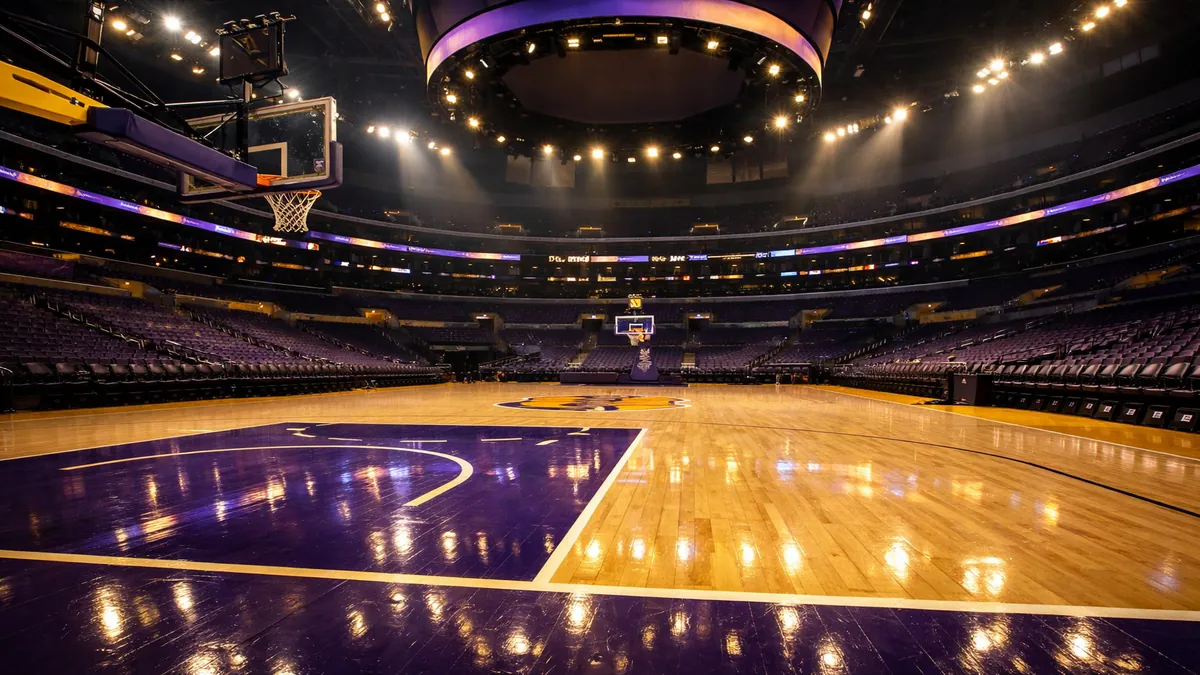
The Los Angeles Lakers remain one of the most valuable franchises in professional sports, worth an estimated $6+ billion as of 2025. The Staples Center — now the Crypto.com Arena — remains the most glamorous building in professional basketball.
Frequently Asked Questions (FAQ)
How many championships do the Lakers have?
As of 2026, the Los Angeles Lakers have 17 NBA championships, tied with the Boston Celtics for the most in NBA history.
Who is the Lakers' all-time leading scorer?
Kobe Bryant is the Lakers' all-time leading scorer with 33,643 points.
When did the Lakers move to Los Angeles?
The Lakers moved from Minneapolis to Los Angeles in 1960.
Who are the most famous Lakers players?
The most famous Lakers include Magic Johnson, Kareem Abdul-Jabbar, Kobe Bryant, Shaquille O'Neal, Jerry West, Wilt Chamberlain, and LeBron James.
Conclusion
The Los Angeles Lakers are not merely a basketball team. They are an institution — a symbol of excellence, glamour, and the relentless pursuit of greatness that defines professional sport at its finest. From the first dynasty in Minneapolis to the modern era in Los Angeles, the Lakers have consistently proven that they are the gold standard of professional basketball.
The Minneapolis Years: The First Dynasty in Depth
The Minneapolis Lakers were the first true dynasty in professional basketball. Between 1948 and 1954, they won five championships in six years, a feat that would not be matched until the Boston Celtics' dominance in the 1960s.
George Mikan's Dominance:
George Mikan was the centerpiece of this dynasty. He was the first player to truly dominate the game with his size and skill.
Mikan's impact was so great that the NBA had to change its rules to limit his dominance. The "Mikan Rule" widened the lane from 6 feet to 12 feet, forcing him to play further from the basket. Despite this, he remained the most dominant player of his era.
The 1971-72 Season: The 33-Game Win Streak
The 1971-72 season is one of the most legendary in Lakers history. Led by head coach Bill Sharman, the team set a record that still stands today: 33 consecutive victories.
The Streak:
The streak began on November 5, 1971, with a win over the Baltimore Bullets and didn't end until January 9, 1972, with a loss to the Milwaukee Bucks. During this period, the Lakers were virtually unbeatable, winning games by an average of 16 points.
The Showtime Era: Rivalries and Highlights
The Showtime era was defined by its fast-paced, high-scoring style of play and its intense rivalries with the Boston Celtics and the Detroit Pistons.
The Celtics Rivalry:
The 1980s was the decade of the Lakers-Celtics rivalry. Magic Johnson and Larry Bird were the faces of the NBA, and their teams met in the Finals three times (1984, 1985, 1987).
The Pistons Rivalry:
In the late 1980s, the Lakers faced the "Bad Boy" Detroit Pistons in back-to-back Finals (1988, 1989).
The Kobe-Shaq Era: The 2001 Playoff Run
The partnership between Shaquille O'Neal and Kobe Bryant produced one of the most dominant three-year stretches in NBA history. The 2001 playoff run was the pinnacle of this era.
The 15-1 Record:
In the 2001 playoffs, the Lakers went 15-1, the best postseason record in NBA history at the time. They swept the Portland Trail Blazers, Sacramento Kings, and San Antonio Spurs before defeating the Philadelphia 76ers in five games in the Finals.
The 2009-2010 Championships: Settling the Score
After the Shaq era, Kobe Bryant led the Lakers to two more championships in 2009 and 2010.
2010 Finals vs. Boston:
The 2010 Finals was a rematch of the 2008 Finals, which the Lakers had lost to the Celtics. The series went to a decisive Game 7 at the Staples Center.
The 2020 Bubble Championship: A Unique Challenge
The 2020 championship was won under the most unusual circumstances in NBA history. The season was suspended due to the COVID-19 pandemic and resumed in a "bubble" environment in Orlando.
The Challenges:
Players were isolated from their families and the outside world for over three months. The Lakers, led by LeBron James and Anthony Davis, navigated these challenges with focus and determination.
Cultural Impact: Hollywood and the Laker Girls
The Lakers are more than just a basketball team; they are a cultural phenomenon.
Retired Jerseys and Hall of Famers
The Lakers have retired the jerseys of some of the greatest players in NBA history:
The franchise has also seen numerous players and coaches inducted into the Naismith Memorial Basketball Hall of Fame, further solidifying its status as the gold standard of professional basketball.
Conclusion: The Gold Standard
The Los Angeles Lakers' history is a story of excellence, resilience, and the relentless pursuit of greatness. From the first dynasty in Minneapolis to the modern era in Los Angeles, the Lakers have consistently proven that they are the gold standard of professional basketball. Their legacy is not just the 17 championships or the legendary players, but the way they have inspired generations of fans and players to believe in the power of greatness.