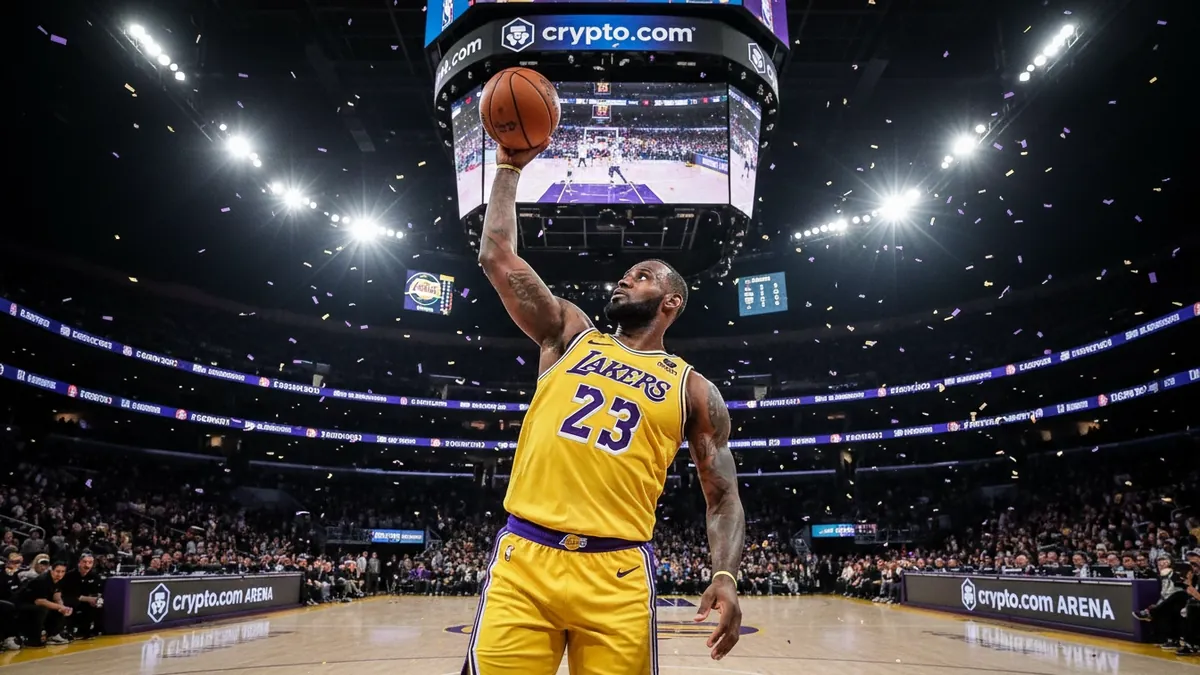
The King in the City of Angels: LeBron James and the Los Angeles Lakers Dynasty
Introduction: LeBron Joins Lakers July 2018
On July 1, 2018, the landscape of the National Basketball Association (NBA) was fundamentally altered when LeBron James, arguably the greatest player of his generation, announced he was signing a four-year, $154 million contract with the Los Angeles Lakers. The move was more than just a free-agency signing; it was a collision of two of the most powerful brands in sports history.
LeBron, fresh off eight consecutive NBA Finals appearances with the Miami Heat and Cleveland Cavaliers, was bringing his "King" persona to a franchise that had been mired in a six-year playoff drought. The expectations were astronomical: LeBron was tasked with restoring the Lakers to their former glory and adding to the franchise's 16 championship banners. This article explores LeBron's transformative tenure in Los Angeles, from the early struggles and the blockbuster trade for Anthony Davis to the historic 2020 Bubble Championship and the unprecedented father-son era with Bronny James.
Year 1 — Injury Derails the Hype
LeBron's first season in Los Angeles (2018-2019) began with immense hype but ultimately ended in disappointment. The Lakers' roster was a mix of young talent—including Brandon Ingram, Lonzo Ball, and Kyle Kuzma—and a group of veterans signed to one-year deals. Despite the lack of a second superstar, the Lakers showed promise early on, climbing to the fourth seed in the Western Conference by Christmas Day. However, during a marquee matchup against the Golden State Warriors on December 25, LeBron suffered a significant groin injury that would sideline him for 17 games, the longest absence of his career to that point.
Without their leader, the young Lakers struggled to maintain their momentum, falling out of the playoff race. The season was further complicated by public trade rumors involving Anthony Davis, which reportedly fractured team chemistry. LeBron eventually returned, but he was clearly not at 100%, and the Lakers missed the playoffs for the sixth consecutive year. For the first time in 14 seasons, LeBron James was not part of the postseason. While the year was a statistical success for LeBron personally—averaging 27.4 points, 8.5 rebounds, and 8.3 assists—it served as a stark reminder that even the King needed a co-star to compete in the grueling Western Conference. The failure of Year 1 set the stage for a massive front-office overhaul and a franchise-altering trade.
AD Trade — Building a Contender
Recognizing that LeBron's championship window was limited, the Lakers' front office, led by Rob Pelinka, made a bold move in the summer of 2019. On June 15, the Lakers agreed to a blockbuster trade with the New Orleans Pelicans to acquire superstar big man Anthony Davis. In exchange, the Lakers sent away their young core—Lonzo Ball, Brandon Ingram, and Josh Hart—along with three first-round draft picks. The trade was a massive gamble, but it immediately paired LeBron with the most talented teammate of his career. Davis, a perennial All-Star and defensive anchor, provided the perfect interior complement to LeBron's perimeter playmaking.
With the duo of LeBron and AD, the Lakers' identity shifted overnight. They became a defensive-minded juggernaut, surrounding their stars with veteran role players like Dwight Howard, Rajon Rondo, Danny Green, and Avery Bradley. The chemistry between LeBron and Davis was instantaneous; LeBron transitioned into a full-time point guard role, leading the league in assists for the first time in his career (10.2 APG), while Davis dominated the paint on both ends. By the midpoint of the 2019-2020 season, the Lakers were the top seed in the West and looked like the clear favorites for the title. However, the world was about to change in ways no one could have predicted, testing the team's resolve both on and off the court.
2020 Bubble Championship: A Title Like No Other
The 2019-2020 NBA season was interrupted by the COVID-19 pandemic in March 2020, leading to a four-month hiatus. When the league returned in July, it did so in a "bubble" environment at Walt Disney World in Orlando, Florida. The Lakers, already grieving the tragic loss of franchise icon Kobe Bryant in January, entered the bubble with a singular focus: winning the championship in Kobe's honor. The bubble presented unique challenges—isolation from family, no home-court advantage, and the mental toll of a confined environment—but LeBron James, ever the professional, thrived in the controlled setting.
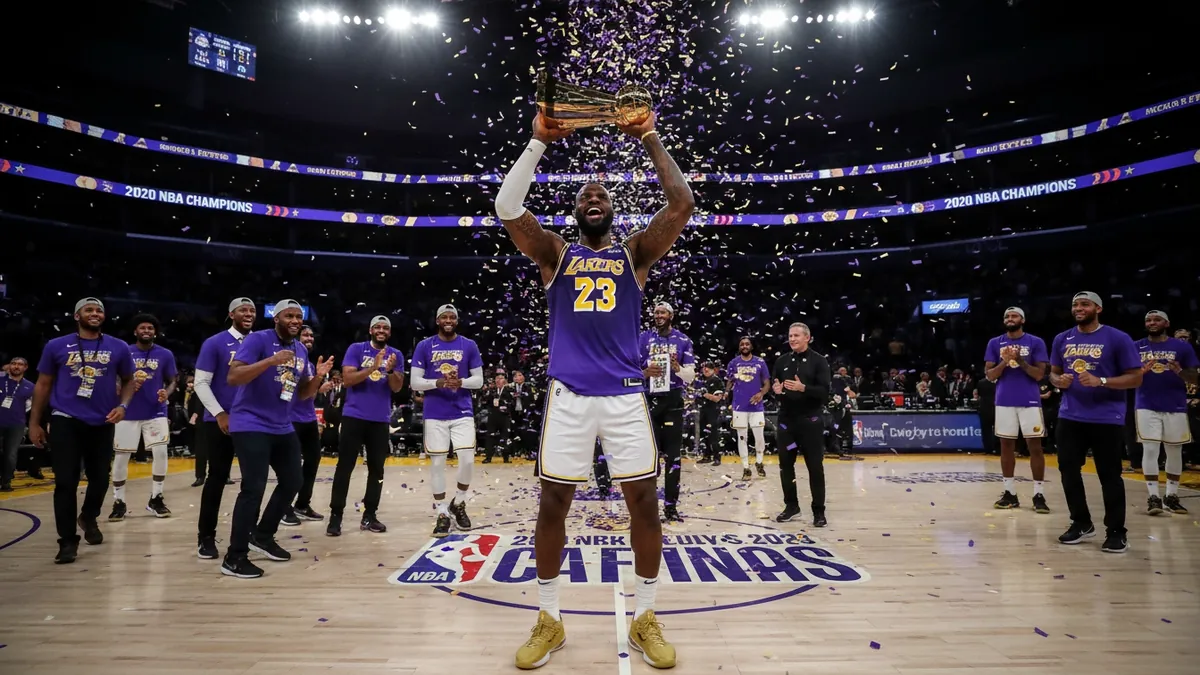
The Lakers' path through the playoffs was a display of absolute dominance. They defeated the Portland Trail Blazers, Houston Rockets, and Denver Nuggets, each in five games, to reach the NBA Finals. In the Finals, they faced the resilient Miami Heat, led by Jimmy Butler. LeBron was masterful throughout the series, averaging 29.8 points, 11.8 rebounds, and 8.5 assists while shooting 59% from the field. In the clinching Game 6, LeBron recorded a triple-double (28 points, 14 rebounds, 10 assists) to secure a 106-93 victory and the Lakers' 17th NBA championship. LeBron was named Finals MVP for the fourth time, becoming the first player in history to win the award with three different franchises. The "Bubble Title" was a testament to the Lakers' mental toughness and LeBron's enduring greatness, providing a moment of joy for a city and a franchise that had endured a year of profound loss.
Table 1: 2020 Lakers Playoff Stats per Round
| Round | Opponent | Result | LeBron PPG | LeBron RPG | LeBron APG | AD PPG |
|---|---|---|---|---|---|---|
| 1st Round | Portland Trail Blazers | 4-1 | 27.4 | 10.2 | 10.2 | 29.8 |
| Conference Semis | Houston Rockets | 4-1 | 25.8 | 10.4 | 7.4 | 25.4 |
| Conference Finals | Denver Nuggets | 4-1 | 27.0 | 10.4 | 9.0 | 31.2 |
| NBA Finals | Miami Heat | 4-2 | 29.8 | 11.8 | 8.5 | 25.0 |
| Total Playoffs | Overall | 16-5 | 27.6 | 10.8 | 8.8 | 27.7 |
| Year | Team | Opponent | Result | Finals MVP | Key Stat | |
| 2012 | Miami Heat | OKC Thunder | 4-1 | LeBron James | 28.6 PPG, 10.2 RPG, 7.4 APG | |
| 2013 | Miami Heat | SA Spurs | 4-3 | LeBron James | 25.3 PPG, 10.9 RPG, 7.0 APG | |
| 2016 | Cleveland Cavaliers | GS Warriors | 4-3 | LeBron James | 29.7 PPG, 11.3 RPG, 8.9 APG | |
| 2020 | LA Lakers | Miami Heat | 4-2 | LeBron James | 29.8 PPG, 11.8 RPG, 8.5 APG |
Bronny James — The Father & Son Era
The most recent and perhaps most personal chapter of LeBron's Lakers tenure began in 2024. For years, LeBron had publicly expressed his desire to play alongside his eldest son, Bronny James, in the NBA. That dream became a reality when the Los Angeles Lakers selected Bronny with the 55th overall pick in the 2024 NBA Draft. The selection made LeBron and Bronny the first father-son duo to play in the NBA at the same time, and eventually, the first to play on the same team. This "Father & Son Era" has added a unique emotional layer to LeBron's final years in the league.
While Bronny's role on the team is that of a developing young player, the significance of their partnership transcends the box score. For LeBron, playing with his son is the ultimate culmination of his legendary career, a feat of longevity and family legacy that may never be repeated. The duo's first minutes together on the court were a historic moment for the NBA, captured by cameras and celebrated by fans worldwide. As LeBron enters his 22nd season and beyond, his focus has shifted from just winning championships to mentoring the next generation, starting with his own son. The Father & Son era is a fitting final act for a player who has always prioritized family and legacy, ensuring that the James name will remain synonymous with the Lakers for years to come.
Comparing LeBron's 4 Championships: Where Does 2020 Rank?
When evaluating LeBron's four NBA championships, the 2020 title with the Lakers holds a special place due to its unique circumstances. His first two titles with the Miami Heat (2012, 2013) were about validation and proving he could win on the biggest stage. The 2016 championship with the Cleveland Cavaliers is widely considered his greatest achievement, as he led his hometown team back from a 3-1 deficit against a 73-win Warriors team. However, the 2020 championship is often ranked as his most mentally taxing and emotionally significant victory.
The 2020 title required LeBron to lead a team through the grief of losing Kobe Bryant, the uncertainty of a global pandemic, and the isolation of the NBA bubble. Statistically, his performance in the 2020 Finals was among his most efficient, as he dominated a younger Miami Heat team with his size and basketball IQ. While it lacked the "hometown hero" narrative of 2016, the 2020 championship solidified LeBron's status as a player who could win in any environment and with any supporting cast. It was the title that proved he could still be the best player on a championship team in his late 30s, further cementing his case in the GOAT debate. Each of his four rings tells a different story of his evolution as a player and a leader, but the 2020 ring is the one that brought the King his crown in the City of Angels.
Legacy: The Eternal King of the Lakers
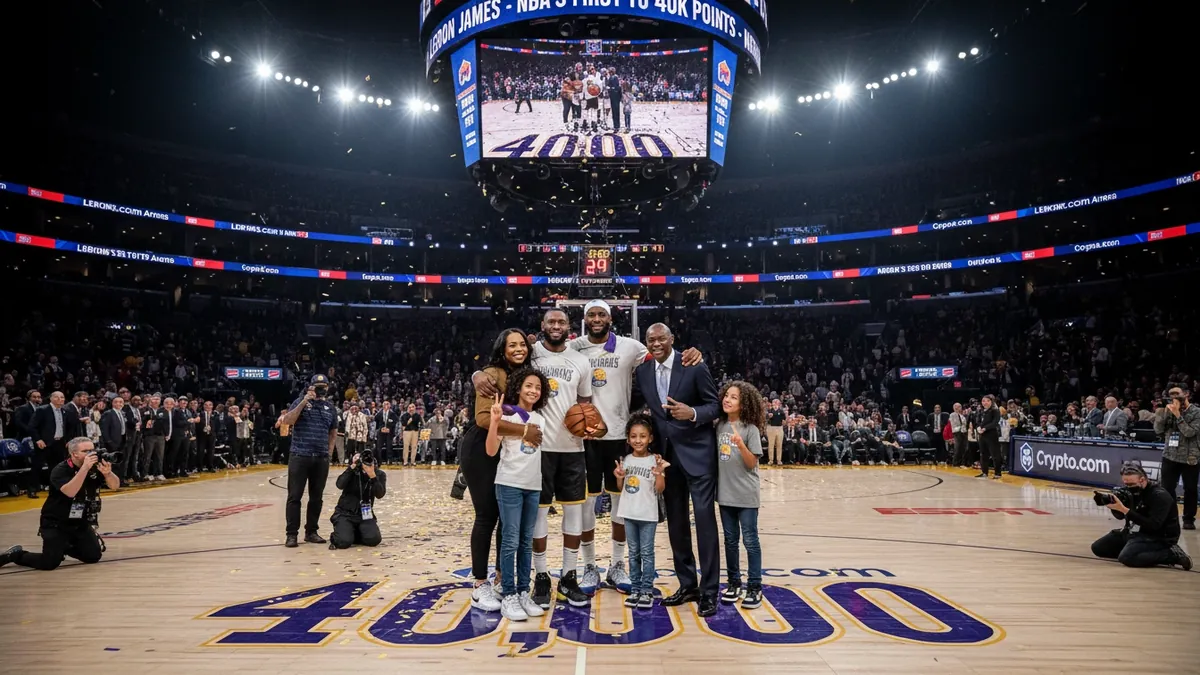
As LeBron James approaches the end of his illustrious career, his impact on the Los Angeles Lakers and the NBA as a whole is undeniable. He came to Los Angeles with the weight of a franchise's expectations on his shoulders and delivered a championship that will be remembered for generations. He has broken records that were once thought to be unbreakable and has maintained a level of excellence that defies the laws of aging. His tenure in Los Angeles has been a masterclass in leadership, adaptability, and the pursuit of greatness.
Whether he wins another championship or not, LeBron's place in Lakers history is secure. He restored the pride of the purple and gold and provided fans with some of the most memorable moments in the franchise's recent history. From the bubble in Orlando to the historic father-son moments with Bronny, LeBron's Lakers journey has been a spectacle of historic proportions. He is the King, and his reign in Los Angeles has been a $154 million testament to the power of a legend. As the sun begins to set on his playing days, the legacy of LeBron James will continue to shine brightly in the rafters of the arena he helped revitalize, a permanent reminder of the time when the greatest player in the world called Los Angeles home.