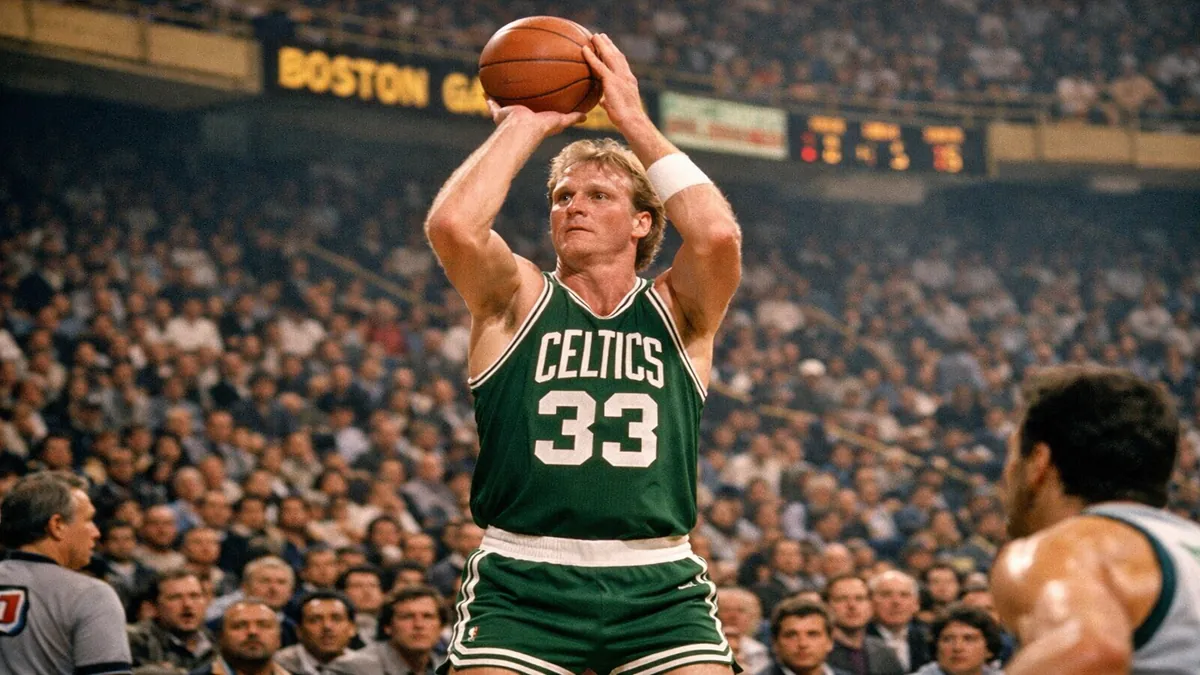
Larry Bird: The Hick from French Lick
Introduction: The Legend of Larry Legend
Larry Joe Bird, often referred to as "Larry Legend" or "The Hick from French Lick," is one of the most iconic and influential figures in the history of the National Basketball Association (NBA). A three-time NBA champion, a three-time league MVP, and a 12-time All-Star, Bird's impact on the game was profound. His arrival in the NBA in 1979, alongside his rival Magic Johnson, is widely credited with revitalizing a league that was struggling with low attendance and poor television ratings. Bird's combination of exceptional shooting, elite passing, and a legendary competitive fire made him a force of nature on the court. This biography explores the life of the man who turned a small-town Indiana upbringing into a global legacy of basketball excellence.
French Lick, Indiana: The Hardscrabble Roots
Larry Bird was born on December 7, 1956, in West Baden Springs, Indiana, and raised in the nearby town of French Lick. His childhood was marked by severe economic hardship. His father, Joe Bird, was a Korean War veteran who struggled with alcoholism and unemployment, while his mother, Georgia, worked multiple jobs to keep the family afloat. The Birds lived in a small, crowded house, and Larry often wore hand-me-down clothes and shoes that were too small for his growing feet.
Tragedy struck the family when Larry was 18 years old. His parents had divorced, and his father, unable to cope with his financial and personal struggles, committed suicide. This event had a profound impact on Larry, further fueling his stoic nature and his drive to succeed. Basketball became his sanctuary. He spent hours practicing on a dirt court behind his house, often shooting until long after the sun had set. At Springs Valley High School, he became a local sensation, averaging 31 points and 21 rebounds as a senior. Despite his success, Bird remained humble and deeply connected to his roots, a trait that would define his public persona throughout his career.
The Indiana State Years and the 1979 Final Four
Bird's path to college basketball was not a straight line. He initially enrolled at Indiana University to play for the legendary Bob Knight, but the transition from a small town to a large university was overwhelming. He dropped out after just 24 days and returned to French Lick, where he worked as a garbage truck driver for the city. It was during this time that Bill Hodges, the assistant coach at Indiana State University, convinced Bird to give college basketball another try.
At Indiana State, Bird transformed a modest program into a national powerhouse. In his senior season (1978-1979), he led the Sycamores to an undefeated record and a spot in the NCAA Championship game. The opponent was Michigan State, led by a charismatic point guard named Earvin "Magic" Johnson. The game, which Michigan State won 75-64, remains the most-watched college basketball game in history. While Bird was devastated by the loss, the matchup ignited a rivalry that would carry over into the NBA and change the sport forever. Bird finished his college career as a two-time All-American and the 1979 National Player of the Year.
The Boston Celtics Dynasty: Three Rings in the 80s
The Boston Celtics had drafted Bird as a junior eligible in 1978, but he chose to return to Indiana State for his senior year. When he finally joined the Celtics in 1979, he immediately transformed a 29-win team into a 61-win powerhouse. He won the Rookie of the Year award, narrowly beating out Magic Johnson.
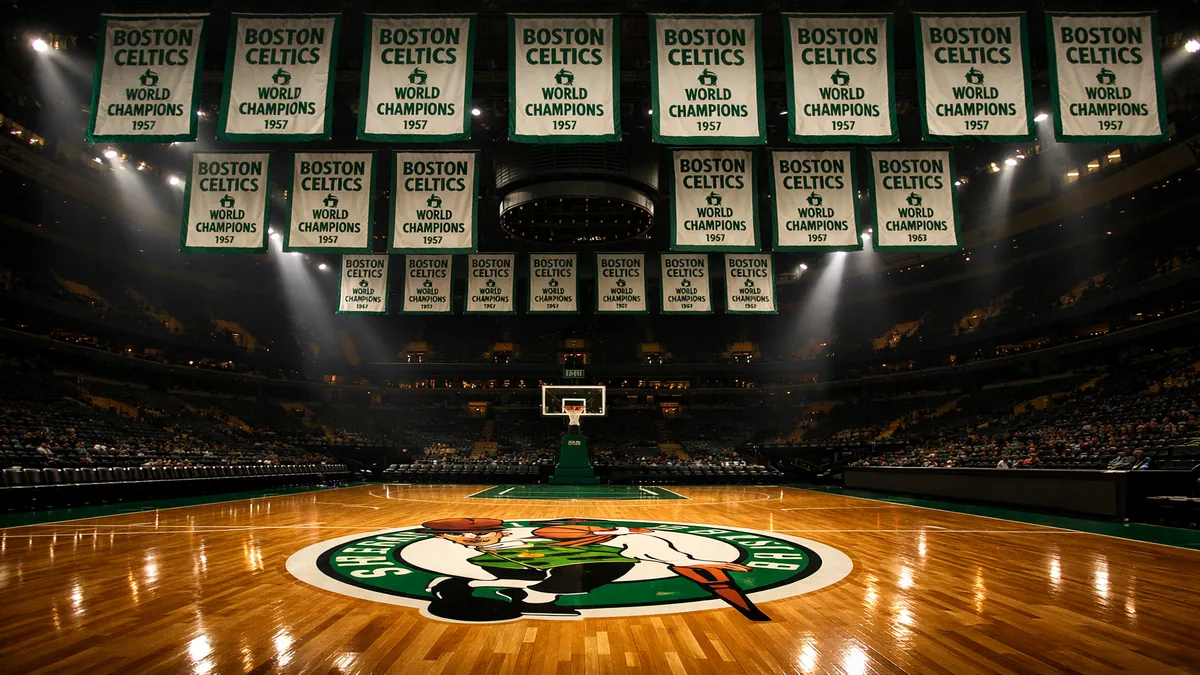
The 1980s became the decade of the Celtics. Under the leadership of Red Auerbach and later coach K.C. Jones, the Celtics built a dynasty around Bird and the legendary "Big Three" frontcourt, which included Kevin McHale and Robert Parish. Bird led the Celtics to three NBA championships in 1981, 1984, and 1986. The 1986 team, in particular, is often cited as one of the greatest in NBA history, finishing with a 67-15 record and an incredible 40-1 record at home. Bird was the heart and soul of these teams, a player who could dominate a game without even scoring, thanks to his elite rebounding and visionary passing.
Bird vs. Magic: The Greatest Rivalry in Sports
The rivalry between Larry Bird and Magic Johnson is the most significant in the history of the NBA. It was a clash of styles, personalities, and coasts. Bird's Celtics represented the gritty, blue-collar tradition of the East Coast, while Magic's Lakers embodied the glitz and glamour of "Showtime" in Los Angeles. Throughout the 1980s, either the Celtics or the Lakers appeared in every single NBA Finals, and the two teams met three times for the championship (1984, 1985, and 1987).
While they were fierce competitors on the court, Bird and Magic developed a deep mutual respect and eventual friendship off it. Their rivalry pushed both players to reach new heights of excellence. Bird once famously said that the first thing he did every morning was check the box score to see how Magic had played the night before. This constant competition elevated the entire league, turning the NBA into a global phenomenon. Their relationship was immortalized in a famous Converse commercial filmed at Bird's home in French Lick, a moment that signaled the beginning of their lifelong bond.
The Legendary Trash Talker: Stories from the Court
Despite his quiet, unassuming appearance, Larry Bird was one of the most prolific and effective trash talkers in NBA history. He didn't just talk to get under an opponent's skin; he talked to let them know exactly how he was going to beat them. One of the most famous stories involves a game against the Xavier McDaniel and the Seattle SuperSonics. With the game on the line, Bird told McDaniel exactly where he was going to stand, what move he was going to make, and that he was going to hit the game-winning shot in his face. Bird did exactly that, then turned to McDaniel and said, "I didn't mean to leave two seconds on the clock."
Another legendary moment occurred during the 1986 Three-Point Contest. Before the competition began, Bird walked into the locker room and asked his fellow competitors, "So, who's coming in second?" He then went out and won the contest while wearing his warm-up jacket. Bird's trash talk was backed up by an incredible level of skill and confidence, making it one of the most intimidating aspects of his game. He was a master of psychological warfare, using his words as effectively as his jump shot to dismantle his opponents.
Three-Point Mastery and the Consecutive Wins
Larry Bird was a pioneer of the three-point shot, a weapon that was still relatively new to the NBA during his prime. While he didn't take as many threes as modern players, he was incredibly accurate and possessed a "clutch" gene that made him lethal in pressure situations. His dominance in the Three-Point Contest is a testament to his shooting prowess. He won the first three editions of the contest (1986, 1987, and 1988), a feat that solidified his reputation as the best pure shooter of his era.
His most famous three-point performance came in the 1988 contest. In the final round against Dale Ellis, Bird needed to hit his final shot to win. As the ball left his hand, he famously raised his index finger in the air and began walking away before the ball even went through the net. It was a moment of pure confidence and skill that remains one of the most iconic images in NBA history. Bird's ability to hit big shots in big moments was a hallmark of his career, earning him the respect of teammates and rivals alike.
Back Problems and Retirement at 35
Tragically, Larry Bird's career was cut short by chronic back problems. The issues began in 1985 when he injured his back while shoveling gravel to build a driveway for his mother. Despite the pain, he continued to play at an elite level for several more years, but the injury eventually took its toll. By the late 1980s, Bird was often seen lying on the floor in front of the Celtics' bench during games to alleviate the pressure on his spine.
He retired in 1992 at the age of 35, shortly after winning a gold medal as a member of the original "Dream Team" at the Barcelona Olympics. His retirement marked the end of an era for the Celtics and the NBA. Despite the physical limitations of his final years, Bird's statistical output remained impressive, a testament to his incredible basketball IQ and sheer willpower. He finished his career with averages of 24.3 points, 10.0 rebounds, and 6.3 assists per game, numbers that reflect his status as one of the most complete players to ever play the game.
Coaching and Executive Career: A Second Act
After his playing days, Bird proved that his basketball genius translated to the sidelines and the front office. In 1997, he was named the head coach of the Indiana Pacers, despite having no prior coaching experience. In his first season, he led the Pacers to a 58-24 record and was named the NBA Coach of the Year. He took the Pacers to the NBA Finals in 2000, where they pushed the Shaq-and-Kobe Lakers to six games.
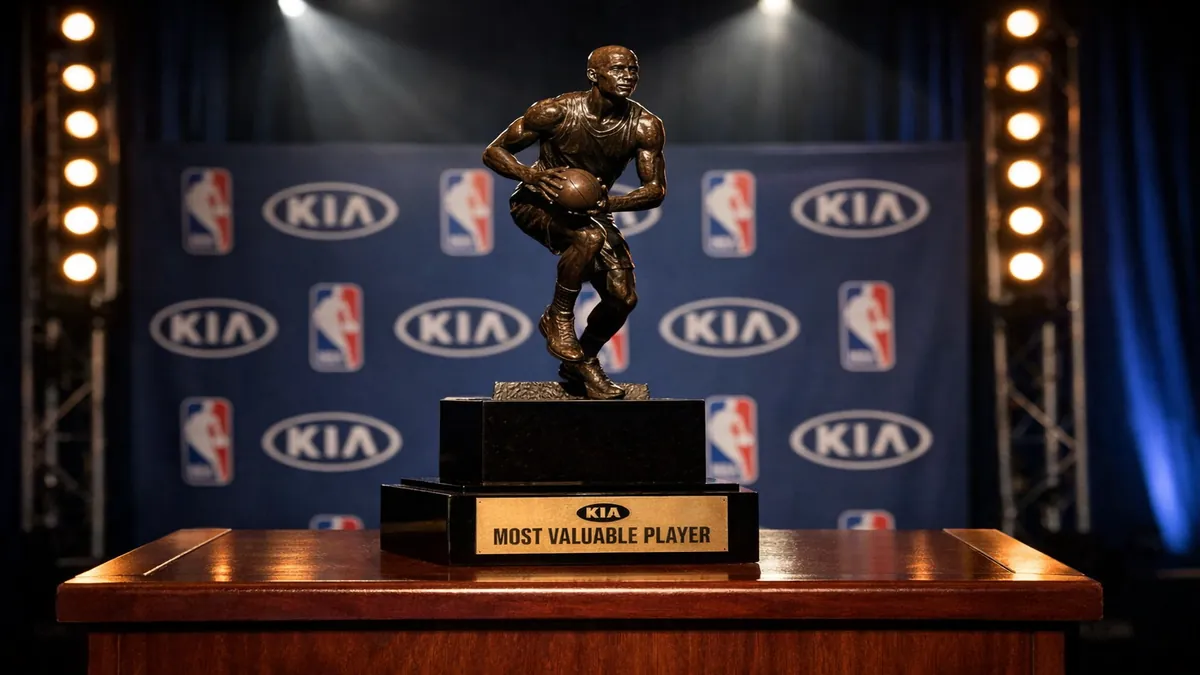
Bird later transitioned into an executive role, serving as the Pacers' President of Basketball Operations. In 2012, he was named the NBA Executive of the Year, making him the only person in NBA history to win the MVP, Coach of the Year, and Executive of the Year awards. His success in these roles further solidified his legacy as one of the greatest minds in the history of the sport. Whether as a player, coach, or executive, Larry Bird's commitment to excellence and his deep understanding of the game remained constant.
Career Statistics and Achievements
Larry Bird's career is a masterclass in versatility. He was a member of the 50-40-90 club and remains one of the few players to average a double-double for his entire career while also providing elite playmaking.
Table 1: Larry Bird Career Averages
| Category | Statistic | ||
|---|---|---|---|
| Points Per Game (PPG) | 24.3 | ||
| Rebounds Per Game (RPG) | 10.0 | ||
| Assists Per Game (APG) | 6.3 | ||
| Field Goal Percentage (FG%) | 49.6% | ||
| Three-Point Percentage (3P%) | 37.6% | ||
| Free Throw Percentage (FT%) | 88.6% | ||
| Steals Per Game (SPG) | 1.7 | ||
| Year | Opponent | Result | Bird's Key Stats |
| 1981 | Houston Rockets | 4-2 | 15.3 PPG, 15.3 RPG, 7.0 APG |
| 1984 | Los Angeles Lakers | 4-3 | 27.4 PPG, 14.0 RPG, Finals MVP |
| 1986 | Houston Rockets | 4-2 | 24.0 PPG, 9.7 RPG, 9.5 APG, Finals MVP |
| Category | Larry Bird | Magic Johnson | |
| Games Played | 18 | 18 | |
| Wins | 7 | 11 | |
| Points Per Game | 21.7 | 19.4 | |
| Rebounds Per Game | 10.9 | 6.2 | |
| Assists Per Game | 6.2 | 11.5 |
Legacy: The Ultimate Competitor
Larry Bird's legacy is one of grit, intelligence, and an unyielding desire to win. He was a player who maximized every ounce of his talent, overcoming physical limitations and personal tragedy to reach the pinnacle of his sport. He will be remembered as one of the greatest shooters and passers the game has ever seen, but perhaps more importantly, as a player who made everyone around him better.
His impact on the NBA cannot be overstated. Along with Magic Johnson, he brought the league into the modern era, setting the stage for the global explosion of basketball in the 1990s and beyond. Whether he was diving for a loose ball on the parquet floor of the Boston Garden or hitting a game-winning three-pointer in the face of a defender, Larry Bird played the game with a level of passion and precision that will never be forgotten. He remains the gold standard for what it means to be a Celtic and a true legend of the game.