Kareem Abdul-Jabbar: The Captain of Consistency
Introduction: The Most Decorated Career in History

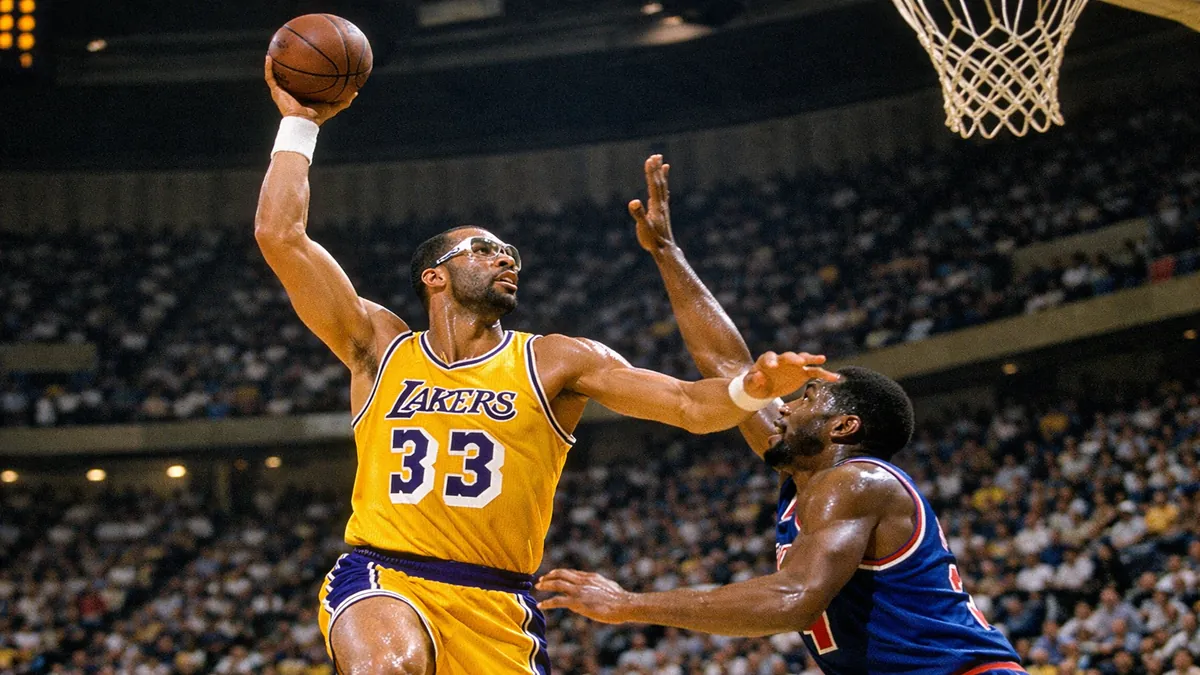
Kareem Abdul-Jabbar, born Ferdinand Lewis Alcindor Jr., is arguably the most accomplished basketball player to ever step onto a court. From his high school days in New York City to his legendary career with the Milwaukee Bucks and Los Angeles Lakers, Abdul-Jabbar's resume is a staggering collection of records and accolades. A six-time NBA champion, a record six-time league MVP, and the man who held the all-time scoring record for nearly four decades, Kareem's impact on the game is immeasurable. This biography explores the life of the man known for the most unstoppable shot in basketball history—the skyhook—and his journey as an athlete, intellectual, and activist.
Early Life in Harlem: Ferdinand Lewis Alcindor Jr.
Ferdinand Lewis Alcindor Jr. was born on April 16, 1947, in New York City. He was the only child of Cora Lillian and Ferdinand Lewis Alcindor Sr., a transit police officer and jazz musician. Growing up in Harlem, Lew was always the tallest kid in his class, reaching 5'8" by age nine and 6'8" by the time he entered high school. His height was both a blessing and a burden, as he often felt self-conscious and isolated from his peers.
He attended Power Memorial Academy, where he led the basketball team to three consecutive New York City Catholic championships and a 71-game winning streak. His dominance was so absolute that he was dubbed "the tower from Power." During these formative years, Lew was also deeply influenced by the burgeoning Civil Rights Movement. He witnessed the Harlem riot of 1964 and began to develop a keen awareness of racial injustice in America. This intellectual awakening would eventually lead him to convert to Islam and change his name to Kareem Abdul-Jabbar, which means "noble servant of the Almighty."
The UCLA Dynasty: Three Years of Perfection
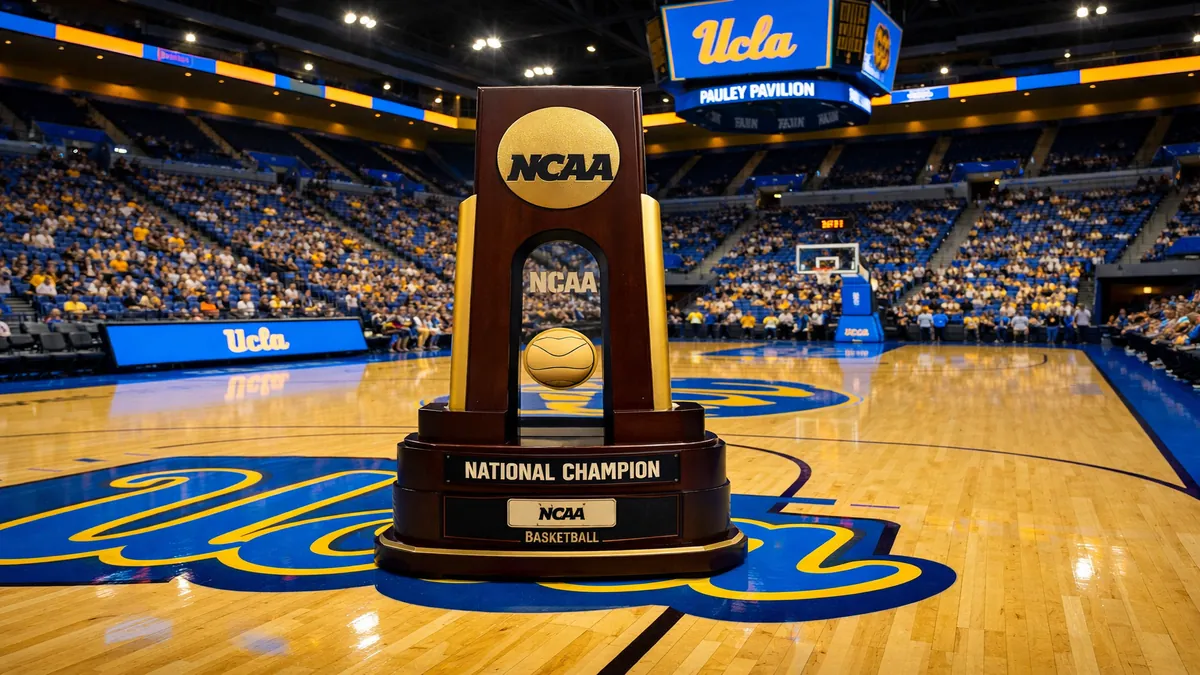
In 1965, Alcindor enrolled at UCLA to play for the legendary coach John Wooden. His impact was immediate and profound. In his first game for the freshman team, he scored 31 points and grabbed 21 rebounds, leading the freshmen to a victory over the varsity team, which was the defending national champion. Because freshmen were not allowed to play on the varsity team at the time, the world had to wait a year to see him on the big stage.
Once he joined the varsity squad, UCLA became an unstoppable force. Alcindor led the Bruins to three consecutive NCAA championships from 1967 to 1969. He was named the tournament's Most Outstanding Player all three years, a feat that has never been repeated. His dominance was so great that the NCAA actually banned the slam dunk in 1967 in an attempt to neutralize his height and athleticism. Instead of slowing him down, the "Alcindor Rule" forced him to develop other aspects of his game, most notably the shot that would become his signature: the skyhook.
The Skyhook: The Most Unstoppable Shot Ever
The skyhook is widely considered the most lethal weapon in the history of basketball. It was a shot that combined grace, power, and mathematical precision. Unlike a traditional jump shot or hook shot, the skyhook involved Kareem extending his arm fully and releasing the ball at the apex of his jump, often while moving away from the basket. Because of his 7'2" frame and incredible wingspan, the ball was released at a height that made it virtually impossible for any defender to block.
Kareem began developing the shot in grade school, but it was during the dunk-ban era at UCLA that he perfected it. He could shoot it with either hand, though his right-handed skyhook was his primary weapon. Throughout his 20-year NBA career, only a handful of players ever managed to block the shot, and even then, it was usually from behind or due to a rare lapse in Kareem's timing. The skyhook allowed Kareem to remain a dominant scorer well into his 40s, as it relied more on technique and reach than on raw vertical leap. To this day, no other player has been able to replicate the shot with the same level of consistency and effectiveness.
The Milwaukee Bucks and the 1971 Championship
The Milwaukee Bucks, a second-year expansion team, selected Alcindor with the first overall pick in the 1969 NBA Draft. He immediately transformed the franchise, winning the Rookie of the Year award and leading the Bucks to a 56-26 record. The following season, the Bucks traded for legendary point guard Oscar Robertson, creating one of the most formidable duos in league history.
In the 1970-1971 season, the Bucks dominated the NBA, finishing with a 66-16 record. They swept the Baltimore Bullets in the NBA Finals, and Alcindor was named both the league MVP and the Finals MVP. Shortly after winning the title, he officially changed his name to Kareem Abdul-Jabbar. While he continued to play at an elite level in Milwaukee, winning two more MVPs, he eventually requested a trade to a larger market that better suited his cultural and social interests. In 1975, he was traded to the Los Angeles Lakers, a move that would define the second half of his career.
The Lakers and the Showtime Era
In Los Angeles, Kareem became the cornerstone of a franchise that would dominate the 1980s. While his first few years with the Lakers were statistically brilliant—including two more MVP awards—the team struggled to win championships until the arrival of Magic Johnson in 1979. The partnership between the veteran "Captain" and the charismatic rookie point guard was the perfect blend of experience and youthful energy.
Kareem was the steadying force of the "Showtime" Lakers. While Magic led the fast break, Kareem provided the half-court scoring and defensive presence that made the team complete. He won five more championships with the Lakers, including a memorable 1985 Finals performance against the Boston Celtics, where at age 38, he was named Finals MVP. His longevity was unprecedented; he played 20 seasons, made 19 All-Star teams, and remained a starter on a championship-contending team until his retirement in 1989 at the age of 42.
The All-Time Scoring Record: 38,387 Points
On April 5, 1984, in a game against the Utah Jazz, Kareem Abdul-Jabbar hit a skyhook that pushed his career point total past Wilt Chamberlain's 31,419. He became the NBA's all-time leading scorer, a title he would hold for 39 years. By the time he retired in 1989, he had amassed 38,387 points. This record was long considered one of the most "unbreakable" in sports, requiring both elite scoring ability and extraordinary durability.
Kareem's record stood until February 7, 2023, when LeBron James finally surpassed it. The fact that it took nearly four decades and a player of LeBron's caliber to break the record is a testament to Kareem's greatness. Throughout his career, Kareem averaged 24.6 points per game while shooting 55.9% from the field. He wasn't just a volume scorer; he was one of the most efficient offensive players in history, using his skyhook to dismantle defenses with surgical precision.
The Author and Activist: A Legacy Beyond Basketball
Kareem Abdul-Jabbar has always been more than just an athlete. He is a prolific author, a social critic, and a dedicated activist. Since his retirement, he has written over a dozen books, including his autobiography Giant Steps, historical works like On the Shoulders of Giants, and even a series of mystery novels featuring Sherlock Holmes' brother, Mycroft. He has been a regular columnist for Time magazine and The Hollywood Reporter, writing on topics ranging from race and religion to politics and popular culture.
His activism dates back to his college days when he participated in the 1967 Cleveland Summit to support Muhammad Ali's refusal to be inducted into the U.S. Army. He also boycotted the 1968 Olympics to protest the treatment of African Americans in the United States. In 2016, President Barack Obama awarded him the Presidential Medal of Freedom, the nation's highest civilian honor, for his contributions to both sports and social justice. Kareem's intellectual depth and commitment to his principles have made him one of the most respected voices in American public life.
Career Statistics and Achievements
Kareem Abdul-Jabbar's statistical profile is a mountain of achievements that few can hope to climb. His six MVP awards remain an NBA record, and his longevity is reflected in his 19 All-Star selections.
Table 1: Kareem Abdul-Jabbar Career Averages
| Category | Statistic | |||
|---|---|---|---|---|
| Points Per Game (PPG) | 24.6 | |||
| Rebounds Per Game (RPG) | 11.2 | |||
| Assists Per Game (APG) | 3.6 | |||
| Blocks Per Game (BPG) | 2.6 (since 1973) | |||
| Field Goal Percentage (FG%) | 55.9% | |||
| Free Throw Percentage (FT%) | 72.1% | |||
| Games Played | 1,560 | |||
| Year | Team | PPG | RPG | Key Context |
| 1971 | Milwaukee Bucks | 31.7 | 16.0 | Won NBA Championship |
| 1972 | Milwaukee Bucks | 34.8 | 16.6 | Career high PPG |
| 1974 | Milwaukee Bucks | 27.0 | 14.5 | Led Bucks to Finals |
| 1976 | LA Lakers | 27.7 | 16.9 | First year in LA |
| 1977 | LA Lakers | 26.2 | 13.3 | Led league in PER |
| 1980 | LA Lakers | 24.8 | 10.8 | Start of Showtime era |
| Rank | Player | Total Points | Years Played | |
| 1 | LeBron James | 40,474+ | 21+ | |
| 2 | Kareem Abdul-Jabbar | 38,387 | 20 | |
| 3 | Karl Malone | 36,928 | 19 | |
| 4 | Kobe Bryant | 33,643 | 20 | |
| 5 | Michael Jordan | 32,292 | 15 |
Legacy: The Towering Intellectual of the Game
Kareem Abdul-Jabbar's legacy is one of excellence, intelligence, and unwavering principle. He was a player who mastered the physical demands of basketball while never losing sight of his intellectual and spiritual growth. He proved that a superstar athlete could be a scholar and an activist, using his platform to challenge the status quo and advocate for a more just society.
On the court, he remains the gold standard for centers. His skyhook is a symbol of a bygone era of technical mastery, a shot that no one has been able to replicate because it requires a level of discipline and touch that few possess. Whether he is remembered for his six rings, his six MVPs, or his decades of social commentary, Kareem Abdul-Jabbar stands as a towering figure in the history of the NBA—a man who reached the pinnacle of his profession and then used that height to look toward a better future for everyone.
Kareem's Intellectual and Cultural Legacy Beyond Basketball
Beyond the championships and records, Kareem Abdul-Jabbar has constructed one of the most significant intellectual legacies of any American athlete. He has authored more than a dozen books spanning history, culture, and memoir — including a celebrated examination of the Harlem Renaissance, a study of African American military history, and a personal account of his training relationship with Bruce Lee, who appeared alongside Kareem in the 1978 film Game of Death.
His regular columns for outlets including The Guardian and TIME address issues of racial inequality, political dysfunction, and social justice with the same analytical precision he applied to post moves. He was awarded the Presidential Medal of Freedom in 2016 — the highest civilian honor in the United States — in recognition of both his athletic achievements and his decades of civic engagement.
Kareem's willingness to sacrifice popularity for principle has defined his legacy off the court as much as the Skyhook defined it on. His refusal to participate in the 1968 Olympics as a protest against racial injustice cost him widespread public approval at the time but is now recognized as a landmark moment in the tradition of athlete activism. At 7'2", Kareem Abdul-Jabbar has always been the most visible person in any room. He has chosen consistently to use that visibility in service of something larger than basketball.