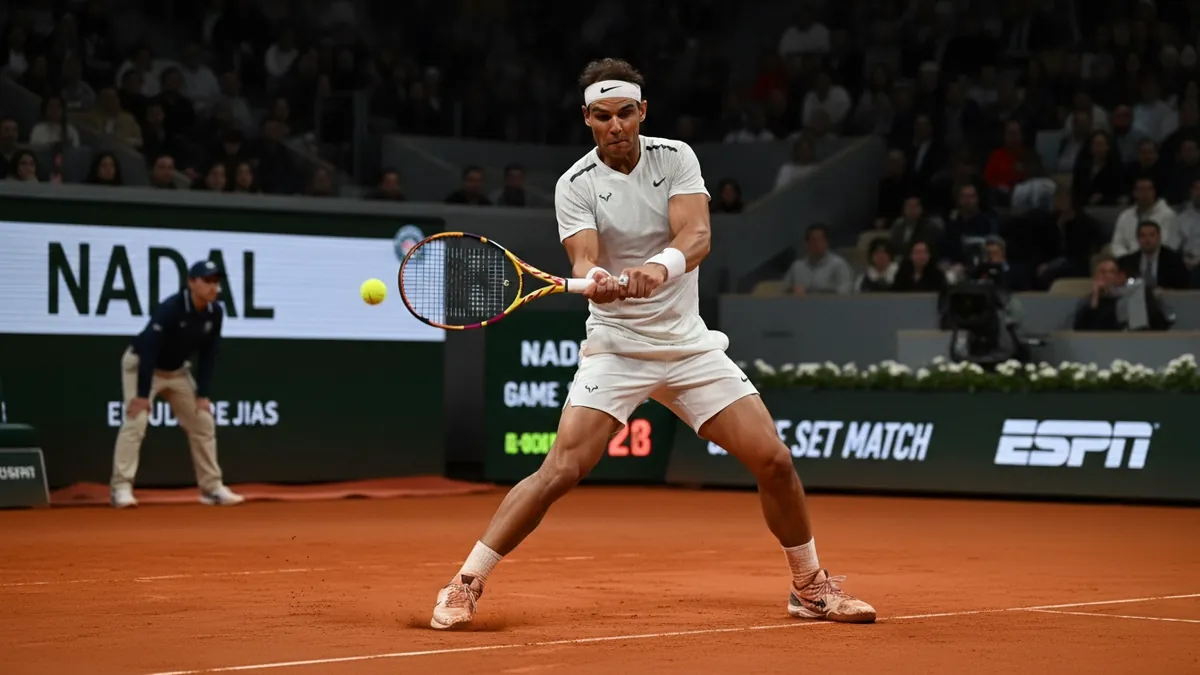
Rafael Nadal: The King of Clay and One of Sport's Greatest Warriors
Rafael Nadal Parera, born June 3, 1986, in Manacor, Mallorca, Spain, is the greatest clay court player in tennis history and the owner of 22 Grand Slam titles — the second most in men's tennis behind Novak Djokovic. His 14 French Open titles are the most any player has won at a single Grand Slam event. Nadal's career has been defined by extraordinary achievement, fierce competitiveness, and an almost unimaginable battle against chronic injury that has repeatedly threatened to end his career.
Early Life: Mallorca's Champion
Nadal was born into a sporting family in Manacor, a small city on the island of Mallorca. His uncle, Toni Nadal, became his coach from age three — a coaching relationship that lasted his entire career. Toni was demanding, disciplined, and at times brutal in his approach — exactly what Rafael needed to forge the mental toughness that defines his game.
Another uncle, Miguel Ángel Nadal, was a professional footballer who played for FC Barcelona and the Spanish national team, giving Rafael his first model of elite sporting achievement.
Nadal was naturally right-handed but Toni encouraged him to play left-handed — a decision that gave him the extreme topspin forehand that became his most devastating weapon.
Professional Debut and Immediate Impact
Nadal turned professional in 2001 at age 15. He entered the top 50 in 2003 and by 2005 was already considered the best clay court player in the world. His 2005 French Open victory — defeating Mariano Puerta in the final at age 19 — was the beginning of a dynasty at Roland Garros that has no parallel in Grand Slam tennis.
14 French Open Titles: The Roland Garros Dynasty
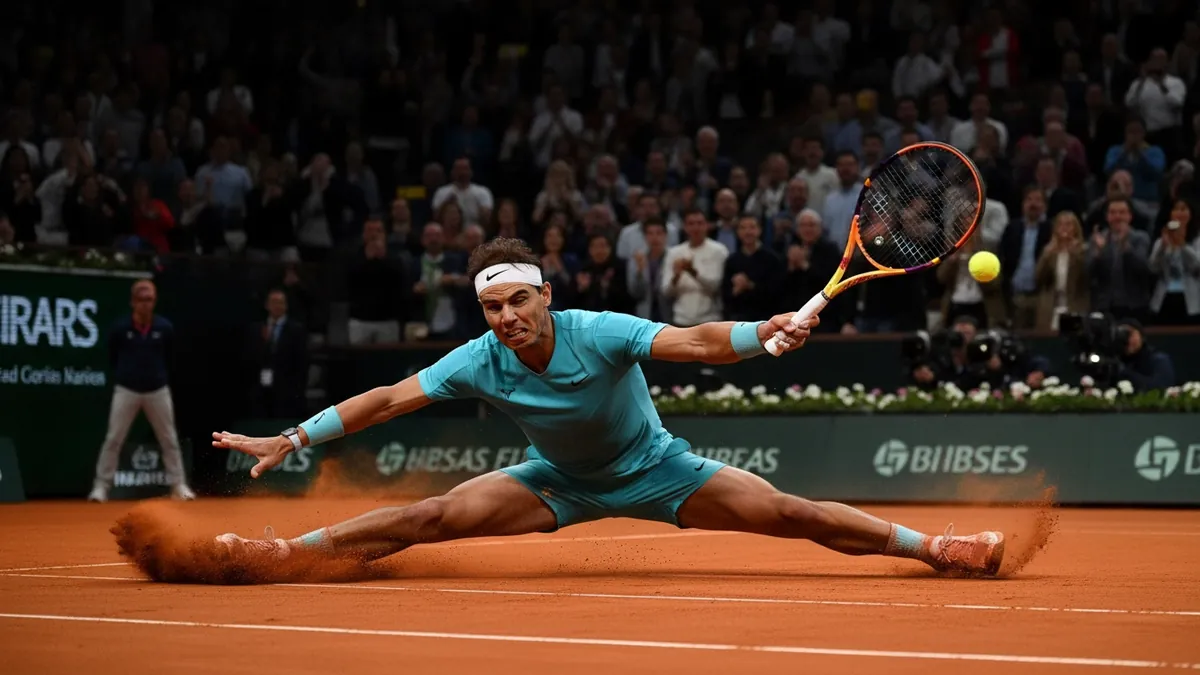
Nadal's relationship with the French Open is the defining story of his career:
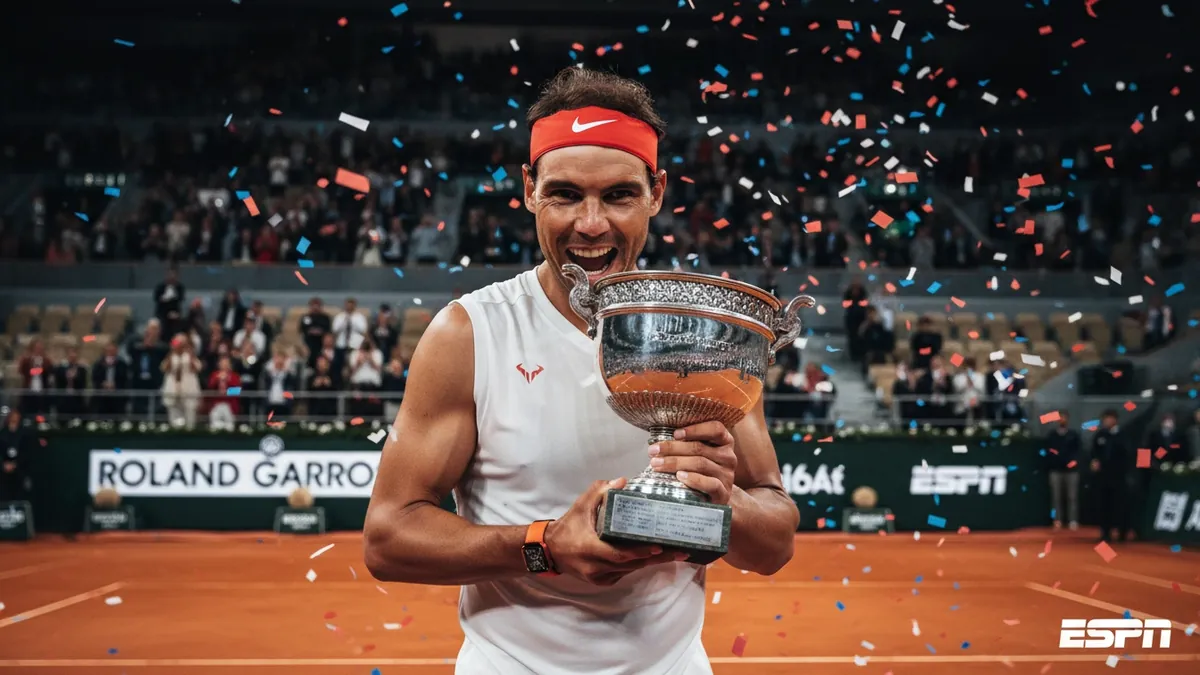
- Won Roland Garros 14 times in 19 appearances
- Compiled a 112-4 win-loss record at Roland Garros
- Won the title in his debut year (2005) and his last entry (2022)
- His four losses at Roland Garros came against Söderling (2009), Djokovic (2015, 2021), and Zverev (2022)
- Roger Federer Biography
- Novak Djokovic: 24 Grand Slams
- Carlos Alcaraz: The New King
- Tennis Grand Slam Records
- ATP Tour, "Rafael Nadal Official Profile," accessed 2024.
- Balaguer, Jordi. Rafa Nadal: The Biography. Aurum Press, 2011.
- Tennis Abstract, "Nadal Match Results," accessed 2024.
22 Grand Slam Titles
| Tournament | Titles | Years |
|---|---|---|
| French Open | 14 | 2005-08, 2010-14, 2017-20, 2022 |
| Wimbledon | 2 | 2008, 2010 |
| US Open | 4 | 2010, 2013, 2017, 2019 |
| Australian Open | 2 | 2009, 2022 |
| Total | 22 |
The Rivalry with Federer
Nadal vs. Roger Federer is the greatest rivalry in tennis history. They have met 40 times, with Nadal leading 24-16. Their styles were perfectly contrasting: Federer's elegant, offensive all-court game versus Nadal's relentless, physical, topspin-heavy baseline game.
Their 2008 Wimbledon final — Nadal defeating Federer 9-7 in the fifth after the match was twice interrupted by rain and darkness — is considered by many the greatest tennis match ever played.
For details on Federer's career, see our Roger Federer Biography. For the current rivalry defining tennis, see Carlos Alcaraz vs. Novak Djokovic.
Injuries and Resilience
Nadal's career has been a continuous battle against a serious foot condition — Müller-Weiss syndrome, a degenerative bone disease in his left foot — as well as knee problems, wrist injuries, abdominal tears, and hip injuries.
He has missed extended periods due to injury throughout his career, making his 22 Grand Slam titles all the more remarkable. He won the 2022 Australian Open and French Open after returns from injuries that many believed had ended his career.
Legacy
Nadal is Spain's greatest sporting icon and one of the most admired athletes in the world. His sportsmanship, humility, and warrior spirit have earned him universal respect. When he finally retires, it will mark the end of one of sport's greatest eras — the Big Three of Federer, Nadal, and Djokovic having collectively dominated tennis for two decades.