TPC Sawgrass History
TPC Sawgrass, located in Ponte Vedra Beach, Florida, is renowned globally as the home of The Players Championship and a groundbreaking concept in golf course design. Its history is deeply intertwined with the PGA Tour's vision to create a permanent, publicly accessible stadium course that would challenge the world's best golfers while offering an unparalleled spectator experience. Conceived by then-PGA Tour Commissioner Deane Beman and brought to life by legendary architect Pete Dye, TPC Sawgrass, particularly its iconic Stadium Course, revolutionized how golf courses were built and presented. Since its opening in 1980, it has become a symbol of strategic design, dramatic finishes, and the PGA Tour's commitment to innovation, cementing its status as one of the most recognizable and challenging courses in professional golf.
The Genesis of the Stadium Course Concept

The history of TPC Sawgrass began in the mid-1970s with a bold vision from PGA Tour Commissioner Deane Beman. Beman recognized the need for a permanent home for The Players Championship, an event he had established in 1974 to be the PGA Tour's flagship tournament. He envisioned a course that would be owned by the players, accessible to the public, and designed specifically to host a major championship-caliber event, offering optimal viewing for spectators. This concept, revolutionary at the time, was dubbed the "Stadium Course"—a design philosophy aimed at creating natural amphitheaters around greens and tees, allowing thousands of fans to comfortably watch the action unfold.
To bring this ambitious project to fruition, Beman enlisted the unconventional and brilliant golf course architect Pete Dye. Dye, known for his innovative and often controversial designs, was given a mandate to create a course that would be challenging for the best players in the world, yet fair, and visually dramatic. The site chosen was a swampy, heavily wooded tract of land in Ponte Vedra Beach, Florida, a seemingly unpromising canvas. However, Dye, in collaboration with his wife Alice, embraced the challenge, moving millions of cubic yards of earth to sculpt the landscape. The design process was meticulous and often contentious, as Dye pushed the boundaries of traditional golf course architecture. The result was a course that opened in 1980, immediately becoming a talking point in the golf world for its unique features and demanding layout, setting a new standard for tournament venues and forever changing the landscape of professional golf course design.
Design Philosophy and Course Evolution
Pete Dye's design philosophy for the Stadium Course at TPC Sawgrass was rooted in creating a strategic, visually intimidating, yet ultimately fair test of golf. He famously stated that he wanted to build a course where "no one could accuse the Tour of having a course that favored one type of player over another." This led to a design characterized by narrow landing areas, severe bunkering, extensive use of water hazards, and greens with subtle yet challenging undulations. The course demands precision, strategic thinking, and nerve from every player, rewarding well-executed shots and severely punishing mistakes. Dye's innovative use of railroad ties around bunkers and water features became a signature element, adding to the course's distinctive aesthetic and challenge.
Over its history, TPC Sawgrass has seen various modifications and refinements, though always with a deep respect for Pete Dye's original vision. The course is meticulously maintained to championship standards year-round, ensuring pristine conditions for The Players Championship. While the core layout has remained largely consistent, subtle changes have been made over the decades to keep pace with advancements in golf technology and player skill. These adjustments, often overseen by Dye himself or in consultation with his design principles, aim to preserve the course's integrity and its reputation as a formidable test. The PGA Tour's continuous investment in the course, including regular agronomic improvements and occasional architectural tweaks, underscores its commitment to maintaining TPC Sawgrass as a premier venue. The course's ability to consistently challenge the world's best, while providing a stunning and accessible experience for fans, has cemented its status as a benchmark for modern tournament golf.
Famous Moments & Iconic Holes

TPC Sawgrass is a course designed for drama, and its history is replete with famous moments, many of which have unfolded on its iconic holes, particularly during The Players Championship. These holes are not just challenging; they are theatrical stages where careers are made and broken, and legends are forged.
The 17th Hole: The Island Green
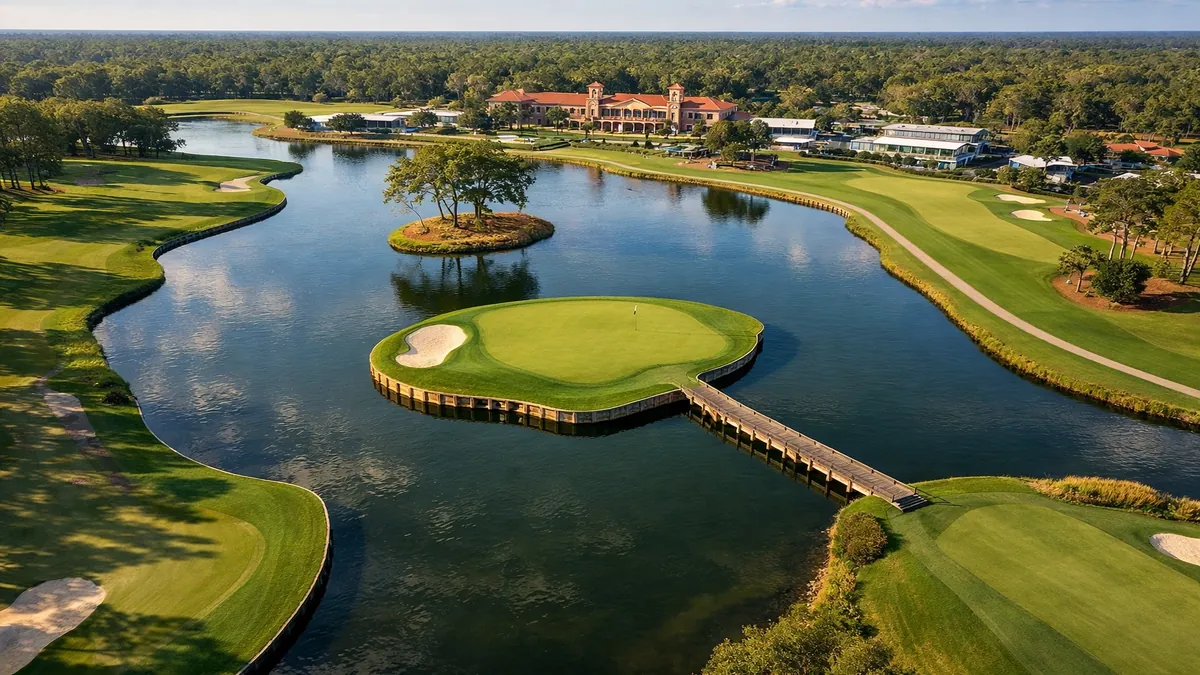
Arguably the most famous hole in golf, the par-3 17th, known as the Island Green, is a mere 137 yards but strikes fear into the hearts of even the most seasoned professionals. The green is almost entirely surrounded by water, with only a narrow walkway connecting it to the mainland. The wind, often swirling and unpredictable, adds another layer of complexity, making club selection a constant dilemma. It has been the scene of countless dramatic birdies, heartbreaking bogeys, and infamous splashes, making it the signature image of TPC Sawgrass and The Players Championship.
- Tiger Woods's "Better Than Most" putt (2001): In one of the most replayed shots in golf history, Tiger Woods faced a seemingly impossible 60-foot triple-breaking birdie putt on the 17th green. His caddie, Steve Williams, famously told him it was "better than most," and indeed it was. The ball slowly tracked towards the hole, hung on the lip for a moment, and then dropped in, sending the crowd into a frenzy and helping Woods secure his first Players Championship title. This moment perfectly encapsulated the drama and excitement the Island Green can produce.
- Fred Couples's near ace (1999): While not a winning shot, Fred Couples's tee shot on the 17th in 1999 landed inches from the hole, spinning back to leave a tap-in birdie. It was a moment of pure precision that highlighted the beauty of a well-struck shot on this intimidating hole.
- Jerry Pate's swim (1982): After winning the inaugural Players Championship at TPC Sawgrass in 1982, Jerry Pate famously pushed Dye and Beman into the lake next to the 18th green, then jumped in himself. It was a moment of spontaneous celebration that became an iconic image of the tournament's early years.
- Rickie Fowler's playoff heroics (2015): In a thrilling finish, Rickie Fowler birdied the 17th and 18th holes in regulation, and then again in a playoff, to win The Players Championship. His clutch performance on the final holes, including a dramatic birdie on the 17th in the playoff, showcased his ability to perform under immense pressure.
- Sergio Garcia's double eagle (2008): In 2008, Sergio Garcia hit a spectacular 250-yard 5-wood into the hole for a double eagle on the 16th, a rare feat that propelled him into contention and ultimately to a playoff victory.
The 18th Hole: The Finishing Challenge
The par-4 18th hole at TPC Sawgrass provides a dramatic and challenging finish to The Players Championship. It features water down the entire left side, a narrow fairway, and a green guarded by bunkers. The hole demands a precise tee shot and an accurate approach, often deciding the tournament's outcome.
The 16th Hole: A Strategic Par-5
The par-5 16th hole offers a strategic risk-reward opportunity, with water guarding the green on the second shot. It's a chance for players to make a birdie or even an eagle, but a miscue can lead to a big number, adding to the late-round drama.
These holes, and the moments they have produced, are integral to the mystique of TPC Sawgrass, making every Players Championship a potential stage for new legends to be born.
Legacy and Enduring Significance
TPC Sawgrass has carved out a unique and enduring legacy in the world of golf, fundamentally altering the landscape of professional tournament venues. Its significance lies not only in its role as the permanent home of The Players Championship but also in its pioneering "Stadium Course" concept, which has influenced countless subsequent designs. The course stands as a testament to the visionary leadership of Deane Beman and the audacious architectural genius of Pete Dye, proving that a purpose-built course could be both a formidable test for the world's elite and an accessible, engaging experience for spectators.
The enduring appeal of TPC Sawgrass stems from its relentless challenge, its dramatic aesthetics, and the consistent delivery of unforgettable moments, particularly on its iconic 17th Island Green. It has played a crucial role in shaping the careers of numerous champions, demanding not just skill but also strategic intelligence and unwavering nerve. The course continues to be a benchmark for modern golf course architecture, demonstrating how natural elements can be integrated with strategic design to create a truly unique and compelling golfing experience. As the PGA Tour's flagship course, TPC Sawgrass remains a powerful symbol of innovation and excellence, inspiring new generations of golfers and fans and ensuring its place as a hallowed ground in the sport.
FAQ: TPC Sawgrass
Q: Who was the primary architect of the Stadium Course at TPC Sawgrass?
A: The Stadium Course at TPC Sawgrass was primarily designed by Pete Dye.
Q: What is the most famous hole at TPC Sawgrass?
A: The par-3 17th hole, known as the Island Green, is the most famous hole at TPC Sawgrass.
Q: When did TPC Sawgrass officially open?
A: TPC Sawgrass officially opened in 1980.
Q: What is the "Stadium Course" concept?
A: The "Stadium Course" concept involves designing a golf course with natural amphitheaters around greens and tees to enhance spectator viewing.
Q: What famous shot occurred on the 17th hole in 2001?
A: Tiger Woods sank a memorable 60-foot triple-breaking birdie putt, famously described as "better than most!"
References
[1] TPC.com. "TPC Sawgrass and PGA TOUR History." TPC.com. Available at: https://tpc.com/sawgrass/history/
[2] PGA Tour. "Relive 50 defining moments in THE PLAYERS history." PGA Tour, March 11, 2024. Available at: https://www.pgatour.com/article/news/latest/2024/03/11/relive-the-top-50-defining-moments-in-the-players-championship-history-tpc-sawgrass