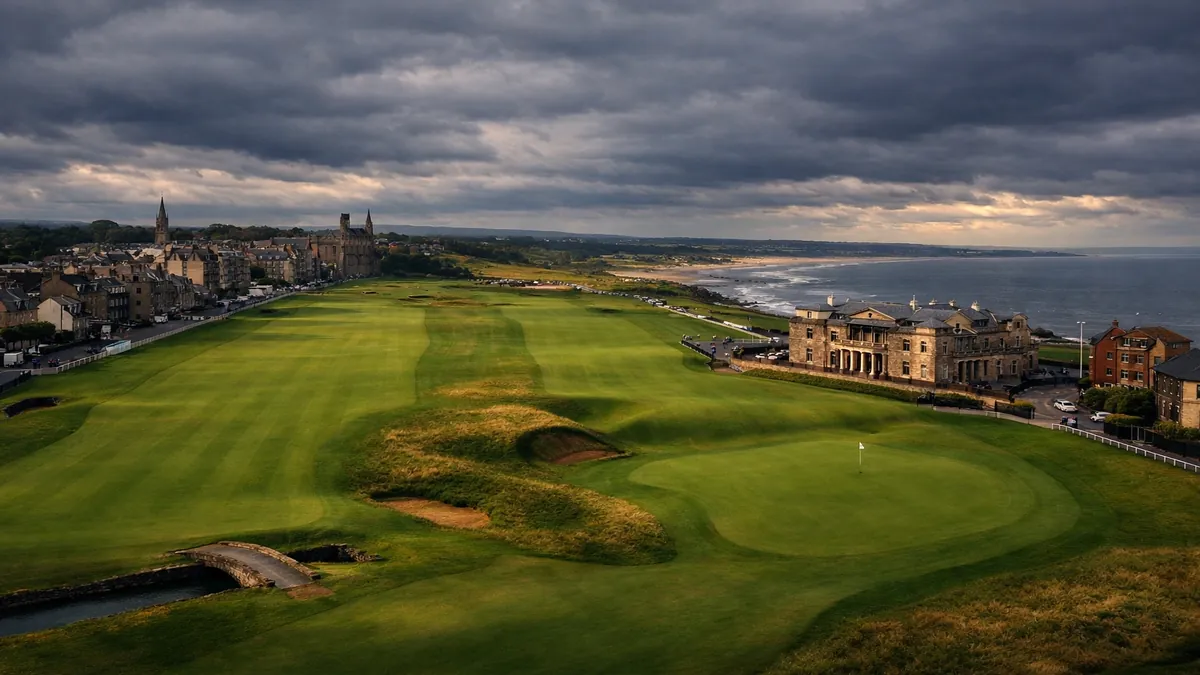
St Andrews Golf Course History
St Andrews Links, particularly its revered Old Course, stands as the undisputed "Home of Golf," a hallowed ground where the game has been played for over six centuries. Its rich and unparalleled history is deeply woven into the fabric of golf itself, predating formal rules and modern equipment. Unlike meticulously designed contemporary courses, the Old Course evolved organically from the natural landscape, shaped by the elements and the footsteps of countless golfers. This ancient links course, located in the town of St Andrews on the east coast of Fife, Scotland, is not merely a golf course; it is a living museum, a pilgrimage site for golfers worldwide, and the spiritual heart of the sport. Its unique design, iconic features, and the countless legendary moments it has hosted have cemented its status as the most famous and historically significant golf course in the world.
The Ancient Origins: Golf's Birthplace

The history of golf at St Andrews dates back to at least the early 15th century, with records indicating that golf was played on the Links as early as 1400 AD. The first documented reference to golf being played on the Old Course itself comes from a 1552 charter, which confirmed the citizens' rights to use the Links for recreation, including golf. This makes St Andrews the oldest continuously played golf course in the world. The game's early form was far removed from modern golf, played with rudimentary equipment over a natural, untamed landscape. The course was not designed in the conventional sense; rather, it evolved over centuries, with fairways and greens naturally forming from the sheep-grazed common land.
In 1754, a group of 22 noblemen, professors, and local gentlemen formed the Society of St Andrews Golfers, which would later become the Royal and Ancient Golf Club of St Andrews (R&A). This club played a pivotal role in formalizing the rules of golf, publishing the first written rules in 1754, which largely influenced the modern game. Initially, the Old Course featured 22 holes, 11 out and 11 back. However, in 1764, the Society decided that some of the early holes were too short and combined them, reducing the course to 18 holes. This decision inadvertently set the standard for the 18-hole golf course that is universally adopted today. The R&A's stewardship of the Links and its role in governing the game further solidified St Andrews' position as the spiritual home of golf, a place where the game's traditions and evolution are deeply intertwined.
The Evolution of the Old Course: A Natural Masterpiece
The Old Course at St Andrews is a testament to natural evolution rather than deliberate design. Its unique character, including its massive double greens, shared fairways, and strategic bunkering, developed organically over centuries. The course was not laid out by a single architect but was shaped by the elements, the contours of the land, and the accumulated wisdom of generations of golfers. This organic development has resulted in a course that demands strategic thinking, adaptability, and a deep understanding of links golf.
Key figures in the course's evolution include Old Tom Morris, who served as the Keeper of the Green from 1865 to 1903. Morris, a four-time Open Champion, made significant contributions to the course, including widening fairways, improving greenkeeping practices, and introducing the concept of separate teeing grounds and greens for the outward and inward nine holes. His work helped to refine the course and make it more playable while preserving its natural essence. The Old Course's iconic features, such as the Hell Bunker on the 14th hole, the Road Hole bunker on the 17th, and the Swilcan Bridge on the 18th, are not artificial creations but natural elements that have become legendary hazards and landmarks. The course's ability to remain relevant and challenging despite advancements in golf technology is a testament to its timeless design and the subtle complexities that reveal themselves with each round. It continues to be a benchmark for golf course architecture, proving that the most enduring designs are often those that work in harmony with nature.
Famous Moments & Iconic Holes

The Old Course at St Andrews has been the stage for countless famous moments in golf history, particularly during The Open Championship, which it has hosted more than any other venue. These moments, often unfolding on its iconic holes, have contributed to the course's legendary status and its enduring appeal.
The 17th Hole: The Road Hole
Arguably the most famous and feared par-4 in golf, the Road Hole (17th) is a brutal test of nerve and precision. Its tee shot requires a blind carry over the Old Course Hotel, followed by an approach shot to a narrow, angled green guarded by the infamous Road Bunker in front and a stone wall and road behind. Many Open Championships have been won and lost on this hole.
- Jack Nicklaus's birdie in 1978: In the final round of the 1978 Open, Nicklaus hit a miraculous approach shot from the road behind the green, making an improbable birdie that helped him secure his third Open Championship title. This shot epitomized his legendary clutch play.
- Costantino Rocca's chip-in in 1995: Trailing John Daly by two strokes on the 72nd hole, Rocca hit his approach shot into the Road Bunker. He then holed out from the bunker for a miraculous par, forcing a playoff. Though he lost the playoff, the shot remains one of the most memorable in Open history.
- Seve Ballesteros's fist pump in 1984: After holing a birdie putt on the 18th to win his second Open Championship, Seve Ballesteros unleashed an iconic fist pump, a moment that perfectly captured his passion and flair. This image has become synonymous with the Old Course and The Open.
- Tiger Woods's dominant victories (2000, 2005): Woods's two Open victories at St Andrews were characterized by his strategic brilliance and masterful control of the course. In 2000, he completed the career Grand Slam with a record-breaking performance, and in 2005, he secured another dominant win, both without finding a single bunker. His walk over the Swilcan Bridge as champion is an enduring image.
- Tom Kidd's victory in the first Open at St Andrews (1873): While not a single moment, Kidd's win marked the first time The Open was played at the Old Course, beginning a long and storied tradition of champions at the Home of Golf.
The 18th Hole: The Home Hole
The par-4 18th, known as the Home Hole, is one of the most recognizable finishing holes in golf. With its wide fairway, the iconic Swilcan Bridge, and the Valley of Sin guarding the green, it offers a dramatic conclusion to any round. The walk over the Swilcan Bridge is a cherished tradition for golfers worldwide.
The 1st Hole: Old Course
The opening hole of the Old Course is unique, featuring a massive shared fairway with the 18th hole. It's a relatively gentle start, but the pressure of teeing off in front of the R&A clubhouse and the town of St Andrews can be immense.
These holes, and the moments they have produced, are integral to the mystique of the Old Course, making every round a journey through golf history.
Legacy and Enduring Mystique
The Old Course at St Andrews holds a legacy unlike any other golf course in the world. It is not merely a venue for major championships but the very cradle of golf, a place where the game's traditions, rules, and spirit were forged. Its enduring mystique stems from its organic evolution, its timeless design, and the profound sense of history that permeates every blade of fescue and every ancient bunker. The course's ability to remain relevant and challenging for over six centuries, adapting to changes in equipment and player skill while preserving its fundamental character, is a testament to its inherent genius.
The Old Course has played a crucial role in shaping the careers of golf's greatest champions, often serving as the ultimate test of their skill and mental fortitude. To win The Open at St Andrews is considered by many to be the pinnacle of a golfer's career, a validation of their place among the sport's legends. The iconic landmarks, such as the Swilcan Bridge and the Road Hole, are not just features of a golf course; they are symbols of golf's heritage, recognized and revered by enthusiasts worldwide. The course continues to inspire new generations of golfers, drawing pilgrims from every corner of the globe who seek to walk in the footsteps of legends and experience the game in its purest form. Its unique character, rich history, and unwavering commitment to the traditions of golf ensure that St Andrews will forever remain the "Home of Golf," a place of unparalleled significance and enduring allure.
FAQ: St Andrews Golf Course
Q: When was golf first played at St Andrews?
A: Records indicate that golf was played on the Links at St Andrews as early as 1400 AD, with the first documented reference to the Old Course in 1552.
Q: What is the significance of the Royal and Ancient Golf Club of St Andrews (R&A)?
A: The R&A, originally the Society of St Andrews Golfers, played a pivotal role in formalizing the rules of golf and continues to be one of the governing bodies of the sport worldwide.
Q: Who is considered a key figure in the evolution of the Old Course?
A: Old Tom Morris, who served as the Keeper of the Green, made significant contributions to the course's refinement and maintenance.
Q: What are some of the most famous holes on the Old Course?
A: The 17th (Road Hole) and the 18th (Home Hole), featuring the Swilcan Bridge, are among the most famous and iconic holes.
Q: Why is St Andrews referred to as the "Home of Golf"?
A: St Andrews is considered the "Home of Golf" due to its ancient origins, its role in formalizing the rules of the game, and its continuous play for over six centuries.
References
[1] The Open. "Magical moments at St Andrews." The Open, July 17, 2022. Available at: https://www.theopen.com/latest/magical-moments-at-st-andrews
[2] The Fried Egg. "The Old Course at St. Andrews Course Review and Rating." The Fried Egg. Available at: https://www.thefriedegg.com/courses/the-old-course---st-andrews