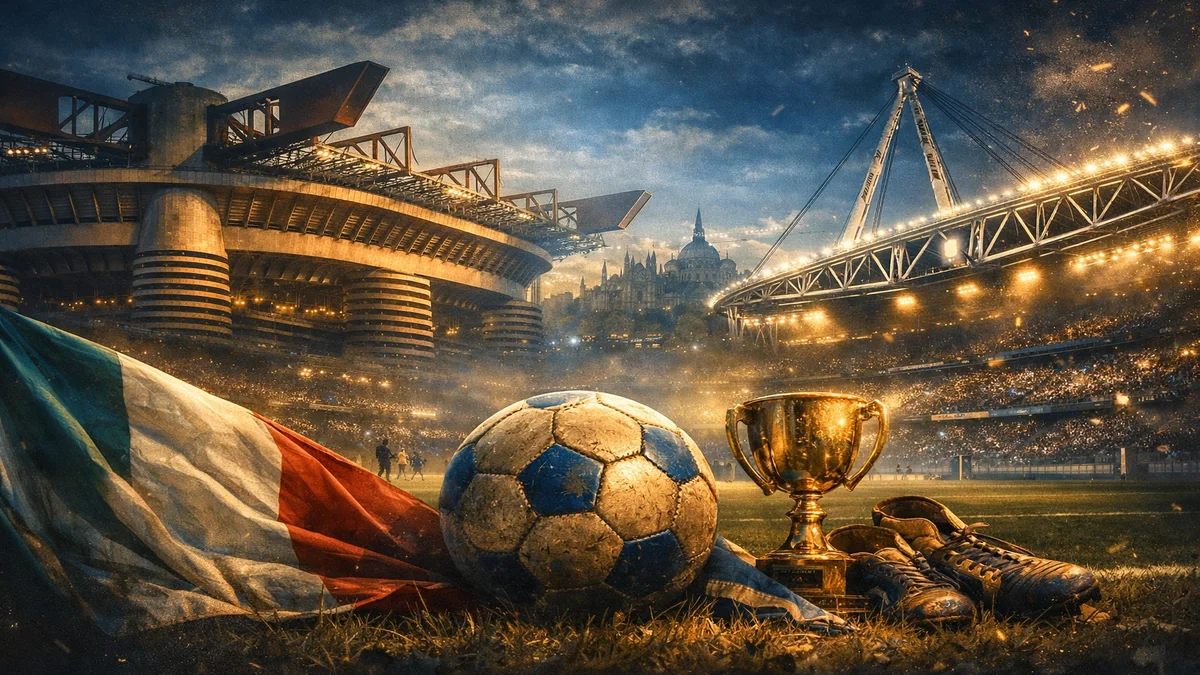
Serie A History and Records
Serie A, the top tier of Italian professional football, is a league steeped in tradition, tactical innovation, and a rich tapestry of legendary clubs and players. The Serie A history is a compelling narrative of intense rivalries, defensive masterclasses, and moments of individual brilliance that have captivated football enthusiasts worldwide for nearly a century. Established in its current round-robin format in the 1929-30 season, Serie A evolved from earlier regional championships, quickly becoming a central pillar of Italian sporting culture. Its journey is marked by periods of dominance from iconic clubs like Juventus, Inter Milan, and AC Milan, interspersed with the triumphs of other formidable teams, all contributing to a vibrant legacy of sporting excellence. Serie A's reputation as a tactical battleground and a league that has consistently produced some of the sport's greatest talents has solidified its status as one of the most prestigious and competitive football leagues globally.
The Genesis of a Giant: Foundation and Early Years

The origins of Italian football can be traced back to the late 19th century, with the first national championship held in 1898. However, the modern structure of Serie A, as a single national league operating in a round-robin format, was inaugurated in the 1929-30 season. This restructuring marked a significant step in professionalizing Italian football, moving away from the regionalized competitions that had characterized its early decades. The inaugural Serie A season saw Ambrosiana (now Inter Milan) crowned as champions, setting the stage for a new era of national competition.
The early years of Serie A were characterized by a competitive landscape, with clubs from different regions vying for supremacy. Juventus, Bologna, and Ambrosiana emerged as early dominant forces, laying the groundwork for the intense rivalries that would define the league. The period leading up to World War II saw Italian football develop rapidly, with a growing emphasis on tactical discipline and physical prowess. The war brought a temporary halt to the championship, but upon its resumption, the league quickly regained its momentum, reflecting the deep-seated passion for football embedded in Italian society. This formative period of Serie A history was instrumental in shaping its identity as a league where tactical innovation, regional pride, and individual brilliance converged to create a compelling sporting spectacle. The early struggles and triumphs forged a resilient character that would define the league for decades to come, setting the stage for its eventual rise to global prominence.
Eras of Dominance: From the Quadrilatero to Modern Dynasties
The Serie A history is punctuated by several distinct eras of dominance, each leaving an indelible mark on the league's illustrious narrative. The 1930s saw the emergence of the "Quadrilatero" – the four dominant teams of Juventus, Inter, Milan, and Bologna – who largely shared the Scudetto among themselves. Bologna, in particular, enjoyed a golden age, winning several titles and showcasing a progressive style of play. Post-World War II, the league continued to grow in popularity and competitiveness, with clubs like Torino achieving legendary status with their "Grande Torino" side, which tragically perished in the Superga air disaster in 1949.
The 1960s and 70s were characterized by a strong emphasis on defensive tactics, with the Catenaccio system becoming synonymous with Italian football. Inter Milan, under Helenio Herrera, epitomized this era, achieving remarkable success both domestically and in Europe. Juventus, however, remained a consistent force, building a reputation for resilience and strategic brilliance. The 1980s and 90s brought a new wave of international stars to Serie A, transforming it into arguably the strongest league in the world. The arrival of players like Diego Maradona at Napoli, Marco van Basten, Ruud Gullit, and Frank Rijkaard at AC Milan, and Lothar Matthäus at Inter, elevated the league's profile and quality. AC Milan, under Arrigo Sacchi and later Fabio Capello, dominated both domestically and in Europe, showcasing a revolutionary style of attacking football that challenged the traditional Catenaccio.
The turn of the millennium saw Juventus reassert their dominance, securing multiple titles, often in fiercely contested battles with Inter Milan and AC Milan. The Calciopoli scandal in 2006 cast a shadow over the league, leading to significant repercussions for several clubs, most notably Juventus, who were relegated. However, Serie A demonstrated its resilience, rebuilding its reputation and continuing to attract top talent. In recent years, Juventus has enjoyed an unprecedented period of success, winning nine consecutive Scudetti from 2011-12 to 2019-20, establishing a modern dynasty. This era of sustained excellence has further cemented Juventus's place at the pinnacle of Serie A history. The league continues to evolve, with other clubs like Inter Milan and Napoli challenging for the title, ensuring that Serie A remains a captivating and unpredictable competition, celebrated for its tactical depth and passionate football.
A Trophy Cabinet Brimming with Glory: Achievements and Records

Serie A's rich history is vividly reflected in its extensive collection of Scudetti, marking it as one of the most successful football leagues globally. The league's trophy cabinet is a testament to decades of relentless pursuit of glory, showcasing the enduring quality and competitiveness of Italian football. Here's a summary of the most successful clubs in Serie A:
| Club | Number of Serie A Titles |
|---|---|
| Juventus | 36 |
| Inter Milan | 20 |
| AC Milan | 19 |
| Genoa | 9 |
| Torino | 7 |
| Bologna | 7 |
| Pro Vercelli | 7 |
| Roma | 3 |
| Lazio | 2 |
| Napoli | 3 |
Juventus stands as the undisputed record holder for the most Serie A titles, with an impressive 36 championships. Their consistent success across different eras speaks to their enduring dominance and strategic prowess. Inter Milan and AC Milan follow closely, highlighting the historical significance of the Milanese clubs in Italian football. The league's ability to produce multiple champions over its history underscores its competitive nature and the cyclical rise and fall of various powerhouses. Each Scudetto represents a significant chapter in the illustrious Serie A history, contributing to a legacy of success that continues to inspire generations of fans and players alike. The league's commitment to tactical excellence and its ability to attract world-class talent have been key factors in its enduring appeal.
Records & Milestones: Defining Serie A's Greatness
Serie A history is replete with remarkable records and milestones that underscore the league's competitive nature and the extraordinary talent it has nurtured. These achievements, both by clubs and individual players, highlight the enduring legacy of Italian football.
Club Records
- Most Titles: Juventus holds the record for the most Serie A titles, with 36 championships, showcasing their unparalleled dominance in Italian football.
- Most Consecutive Titles: Juventus also holds the record for the most consecutive Serie A titles, winning nine in a row from the 2011-12 season to the 2019-20 season, a testament to their sustained excellence.
- Most Points in a Single Season: Juventus achieved the record for the most points in a 38-game Serie A season, accumulating 102 points in the 2013-14 campaign, an extraordinary feat of consistency.
- Longest Unbeaten Run: AC Milan holds the record for the longest unbeaten run in Serie A, going 58 matches without defeat between 1991 and 1993, a testament to their formidable "Invincibles" era.
- Most Goals: Silvio Piola is the all-time leading goalscorer in Serie A, with 274 goals. His prolificacy across various clubs in the pre- and post-war eras set a benchmark for future generations.
- Most Appearances: Gianluigi Buffon, the legendary goalkeeper, holds the record for the most appearances in Serie A, having played in over 650 matches for Parma and Juventus, a testament to his incredible longevity and consistency.
- Most Serie A Titles (Player): Gianluigi Buffon and Leonardo Bonucci share the record for the most Serie A titles won by a player, each with 10 Scudetti, primarily with Juventus.
- Most Pichichi Trophies (Capocannoniere - Top Scorer): Gunnar Nordahl, Giuseppe Meazza, and Paolo Pulici share the record for the most Capocannoniere titles, each winning it five times, highlighting their consistent goal-scoring prowess.
Individual Records
These records not only highlight the individual brilliance of players but also the collective strength and tactical evolution of the clubs. The continuous pursuit of these milestones fuels the competitive spirit of Serie A, ensuring that each season brings new narratives and potential record-breaking performances. The league's ability to attract and retain world-class talent has been crucial in maintaining its high standards and producing these extraordinary feats.
Enduring Legacy: Serie A's Global Impact
Serie A's legacy is one of profound cultural significance, tactical sophistication, and an unwavering commitment to the beautiful game that has resonated with football fans across the globe. From its structured foundation in 1929 to its numerous domestic and European triumphs, the league has consistently embodied a spirit of innovation and a dedication to defensive solidity combined with moments of attacking flair. The league's enduring appeal lies not just in its impressive trophy cabinet, but in its unique identity as a tactical laboratory, where coaches and players alike have pushed the boundaries of footballing strategy. The intense rivalries between clubs like Juventus, Inter Milan, and AC Milan, particularly the Derby d'Italia and the Derby della Madonnina, remain some of the most compelling narratives in world football, spectacles that transcend mere sport and embody the very soul of Italian identity.
Serie A has served as a crucible for some of the sport's greatest talents, producing numerous Ballon d'Or winners and shaping the careers of legendary players and managers alike. Its emphasis on developing well-rounded players, both technically and tactically, has ensured a continuous supply of world-class talent who go on to grace both domestic and international stages. Furthermore, Serie A's global reach is amplified by its rich history and the passionate support of its worldwide fanbase. The league's ability to consistently deliver high-quality, entertaining football, combined with its strategic internationalization efforts, ensures its continued prominence on the international stage. As Serie A continues to evolve, embracing new technologies and adapting to the modern football landscape, its rich history serves as a powerful foundation. The league's narrative is one of continuous ambition, fierce competition, and an unwavering dedication to the beautiful game, ensuring its place as a permanent fixture in the pantheon of elite football competitions and a source of inspiration for generations to come.
FAQ: Serie A History and Records
Q: When was Serie A founded in its current format?
A: Serie A was established in its current single national league, round-robin format in the 1929-30 season.
Q: Which club has won the most Serie A titles?
A: Juventus holds the record for the most Serie A titles, with 36 championships.
Q: Who is the all-time leading goalscorer in Serie A?
A: Silvio Piola is the all-time leading goalscorer in Serie A, with 274 goals.