San Antonio Spurs History: Quiet Excellence: How San Antonio Built the Most Consistent Dynasty in NBA History
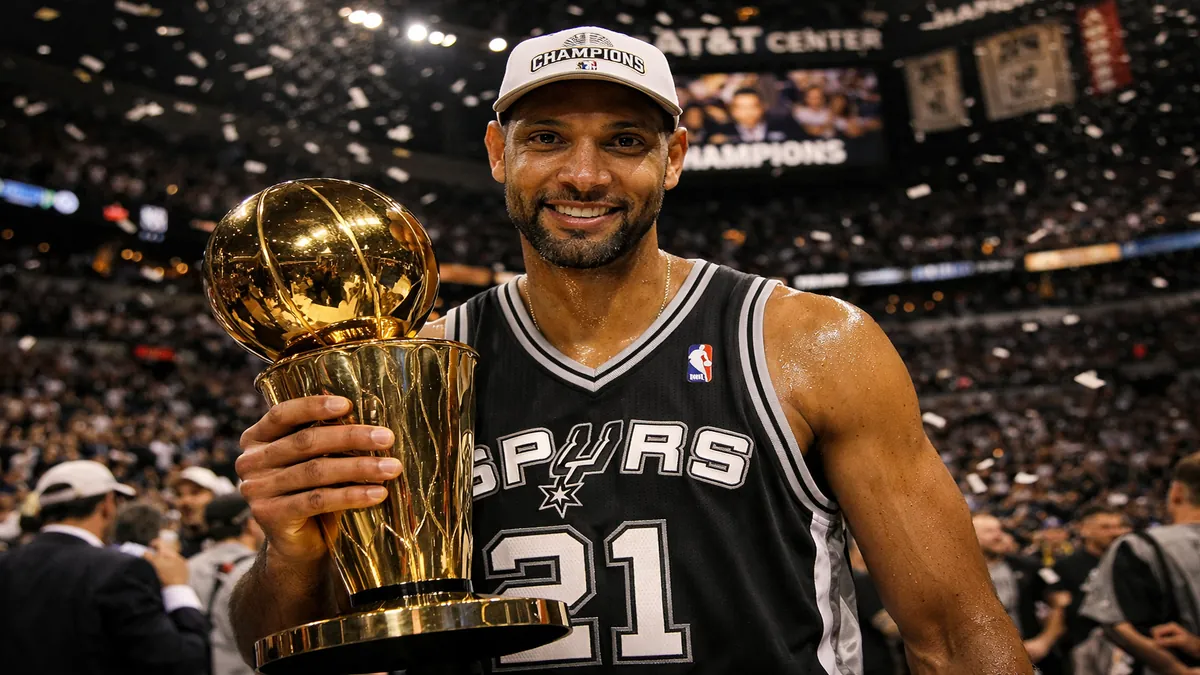
In the often-turbulent world of professional sports, where drama, scandal, and superstar demands frequently dominate the headlines, the San Antonio Spurs stand as a remarkable anomaly. For over two decades, they were the embodiment of quiet excellence, a franchise that eschewed the spotlight in favor of a relentless pursuit of consistency and team-oriented basketball. While other dynasties were built on flashy plays and larger-than-life personalities, the Spurs built their legacy on fundamentals, discipline, and an unwavering commitment to a system that prioritized the collective over the individual. Their five championships, spread across 15 years, are a testament to a unique organizational philosophy that valued character as much as talent, and that consistently found success in the most unassuming of ways.
This article explores the storied history of the San Antonio Spurs, focusing on the era of quiet excellence that defined their dynasty. We will delve into the pivotal moments and key figures that shaped their success, from the arrival of Tim Duncan and Gregg Popovich to the formation of the "Big Three" and their artistic peak in the 2014 NBA Finals. Through a detailed analysis of their championship runs and their unique organizational culture, we will illustrate how the Spurs built the most consistent dynasty in modern NBA history, proving that substance can indeed triumph over style.
From ABA to NBA: The Early Foundation

The San Antonio Spurs began their life in the American Basketball Association (ABA) as the Dallas Chaparrals. After a few years of struggling to find a consistent fanbase, the team relocated to San Antonio in 1973 and was rebranded as the Spurs. They quickly became one of the ABA's premier franchises, led by the high-scoring George "The Iceman" Gervin. When the ABA merged with the NBA in 1976, the Spurs were one of four teams to make the transition.
In their early NBA years, the Spurs continued to be a competitive team, with Gervin winning multiple scoring titles. However, they struggled to achieve sustained playoff success. The 1980s saw a period of decline, and by the end of the decade, the franchise was in need of a new direction. The arrival of David Robinson, a dominant center from the Naval Academy, in 1989 marked the beginning of a new era. Robinson, known as "The Admiral," immediately transformed the Spurs into a contender, winning Rookie of the Year and leading the team to the playoffs.
Despite Robinson's individual brilliance, the Spurs were unable to get over the hump in the highly competitive Western Conference. They consistently fell short in the playoffs, often at the hands of Hakeem Olajuwon and the Houston Rockets. The 1996-97 season proved to be a turning point. Robinson suffered a season-ending injury, and the Spurs stumbled to a 20-62 record. While disastrous at the time, this season would ultimately pave the way for the franchise's golden age.
Tim Duncan and the Dynasty Begins (1997-2003)
The Spurs' dismal 1996-97 season resulted in them winning the 1997 NBA Draft Lottery, giving them the first overall pick. With that pick, they selected Tim Duncan, a fundamentally sound power forward from Wake Forest. Duncan's arrival was not just a talent upgrade; it was a cultural shift. He was a quiet, unassuming superstar who cared only about winning. His partnership with David Robinson, dubbed the "Twin Towers," immediately made the Spurs a championship favorite.
In their first season together, Duncan and Robinson led the Spurs to 56 wins. Duncan was named Rookie of the Year, and the foundation for a dynasty was laid. The following season, in the lockout-shortened 1998-99 campaign, the Spurs, now coached by Gregg Popovich, put it all together. They dominated the playoffs, losing only two games en route to their first NBA championship. Duncan was named Finals MVP, and the era of quiet excellence had officially begun.
Over the next few years, the Spurs remained a perennial contender. They won their second championship in 2003, with Duncan once again being named Finals MVP. This championship was particularly significant as it marked the end of David Robinson's career. The torch had been passed, and Duncan was now the undisputed leader of the franchise.
Five Championships with Key Players and Finals Opponents
| Year | Key Players | Head Coach | Finals Opponent | Finals MVP |
|---|---|---|---|---|
| 1999 | Tim Duncan, David Robinson, Avery Johnson | Gregg Popovich | New York Knicks | Tim Duncan |
| 2003 | Tim Duncan, Tony Parker, Manu Ginobili, Stephen Jackson | Gregg Popovich | New Jersey Nets | Tim Duncan |
| 2005 | Tim Duncan, Tony Parker, Manu Ginobili, Robert Horry | Gregg Popovich | Detroit Pistons | Tim Duncan |
| 2007 | Tim Duncan, Tony Parker, Manu Ginobili, Bruce Bowen | Gregg Popovich | Cleveland Cavaliers | Tony Parker |
| 2014 | Tim Duncan, Tony Parker, Manu Ginobili, Kawhi Leonard | Gregg Popovich | Miami Heat | Kawhi Leonard |
The Big Three Era: Parker, Duncan, Ginobili

The heart of the Spurs' dynasty was the legendary trio of Tim Duncan, Tony Parker, and Manu Ginobili. This "Big Three" played together for 14 seasons, winning four championships and amassing more wins than any other trio in NBA history. What made them so special was their incredible chemistry, their unselfishness, and their perfect blend of complementary skills.
- Tim Duncan: "The Big Fundamental" was the anchor of the team. His consistent excellence on both ends of the floor, his quiet leadership, and his unwavering commitment to the team set the tone for the entire organization.
- Tony Parker: The speedy French point guard was the engine of the offense. His ability to penetrate defenses, finish at the rim, and hit mid-range jumpers made him a constant threat.
- Manu Ginobili: The fiery Argentine shooting guard was the team's creative force. His unorthodox style, his clutch play, and his willingness to sacrifice for the team made him a fan favorite and a vital component of their success.
- Accountability: He holds every player, from the superstar to the end-of-the-bench role player, to the same high standards. His in-game interviews, often curt and sarcastic, are a reflection of his no-nonsense approach.
- Team-First Mentality: He preaches the importance of the collective over the individual. His offensive system, often referred to as the "beautiful game," is built on ball movement, player movement, and finding the open man.
- Personal Growth: He cares about his players as people, not just as athletes. He often discusses politics, history, and current events with his team, encouraging them to be well-rounded individuals.
- Adaptability: Despite his old-school demeanor, Popovich has shown a remarkable ability to adapt to the changing landscape of the NBA. He has coached dominant post players, speedy point guards, and three-point-heavy offenses, always finding a way to maximize the talent at his disposal.
- Continuity: The stability provided by the long-term partnership of Popovich and Duncan was the bedrock of their success. In an era of constant player and coach turnover, the Spurs remained a model of consistency.
- Humility: The franchise, from the front office to the players, embraced a low-key, drama-free approach. They let their play do the talking, avoiding the media circus that often surrounds other successful teams.
- Character: The Spurs prioritized character as much as talent. They sought out players who were coachable, unselfish, and committed to the team's philosophy.
- Global Perspective: Their willingness to scout and develop international talent gave them a significant competitive advantage and helped to globalize the game of basketball.
- Resilience: They faced numerous challenges and setbacks over the years, but they always found a way to bounce back, often stronger than before. Their response to the 2013 Finals loss is a prime example of their mental fortitude.
Together, they embodied the Spurs' philosophy of team-first basketball. They were all willing to defer to one another, to accept their roles, and to do whatever it took to win. Their longevity as a trio is a testament to their individual character and the strength of the organization's culture.
European Scouting Advantage
The Spurs' success was also built on their innovative approach to scouting. They were one of the first NBA teams to heavily invest in international scouting, a strategy that paid off handsomely with the discoveries of Tony Parker (drafted 28th overall in 2001) and Manu Ginobili (drafted 57th overall in 1999). These late-round draft picks, who would go on to become Hall of Fame-caliber players, gave the Spurs a significant competitive advantage. Their ability to find and develop international talent became a hallmark of the franchise and a model for the rest of the league.
Gregg Popovich: Why He Is the Greatest Coach
At the helm of the Spurs' dynasty was Gregg Popovich, a coach whose impact on the game extends far beyond his five championships and his status as the winningest coach in NBA history. Popovich is more than just a brilliant tactician; he is a master of building relationships, a demanding yet compassionate leader, and the architect of the Spurs' enduring culture.
Popovich's coaching philosophy is rooted in a few key principles:
His partnership with Tim Duncan was the foundation of the Spurs' success. They shared a mutual respect and a singular focus on winning, creating a stable and drama-free environment that allowed the team to thrive. Popovich's legacy is not just in the championships he won, but in the culture of excellence he created and the countless players and coaches he has influenced.
2014 Finals: The Most Beautiful Team Performance Ever
The culmination of the Spurs' dynasty, and the ultimate expression of their basketball philosophy, came in the 2014 NBA Finals against the Miami Heat. The previous year, the Spurs had suffered a heartbreaking loss to the Heat in a seven-game series, a defeat that would have broken many teams. However, the Spurs, in their typical fashion, used the loss as motivation.
They returned to the Finals in 2014 with a renewed focus and a refined offensive system that was a joy to watch. Their ball movement was crisp, their player movement was constant, and their shot selection was impeccable. They played with a level of chemistry and unselfishness that was breathtaking, often making multiple passes before finding an open shot. Many observers, including basketball purists, consider their performance in that series to be the "most beautiful team performance ever."
They defeated the Heat in five games, with Kawhi Leonard, a young, emerging star, being named Finals MVP. The series was a masterclass in team basketball, a stark contrast to the Heat's superstar-driven approach. It was a fitting end to the Big Three era, a final, definitive statement on the power of the collective over the individual.
What Made San Antonio Different from Everyone Else
The San Antonio Spurs' dynasty was built on a set of principles that set them apart from the rest of the league:
The San Antonio Spurs' era of quiet excellence is a reminder that there is more than one way to build a dynasty. In a league that often celebrates the individual, the Spurs celebrated the team. Their legacy is not just in the championships they won, but in the way they won them—with class, humility, and an unwavering commitment to the beautiful game. They were, and remain, a model franchise, a testament to the enduring power of quiet excellence.