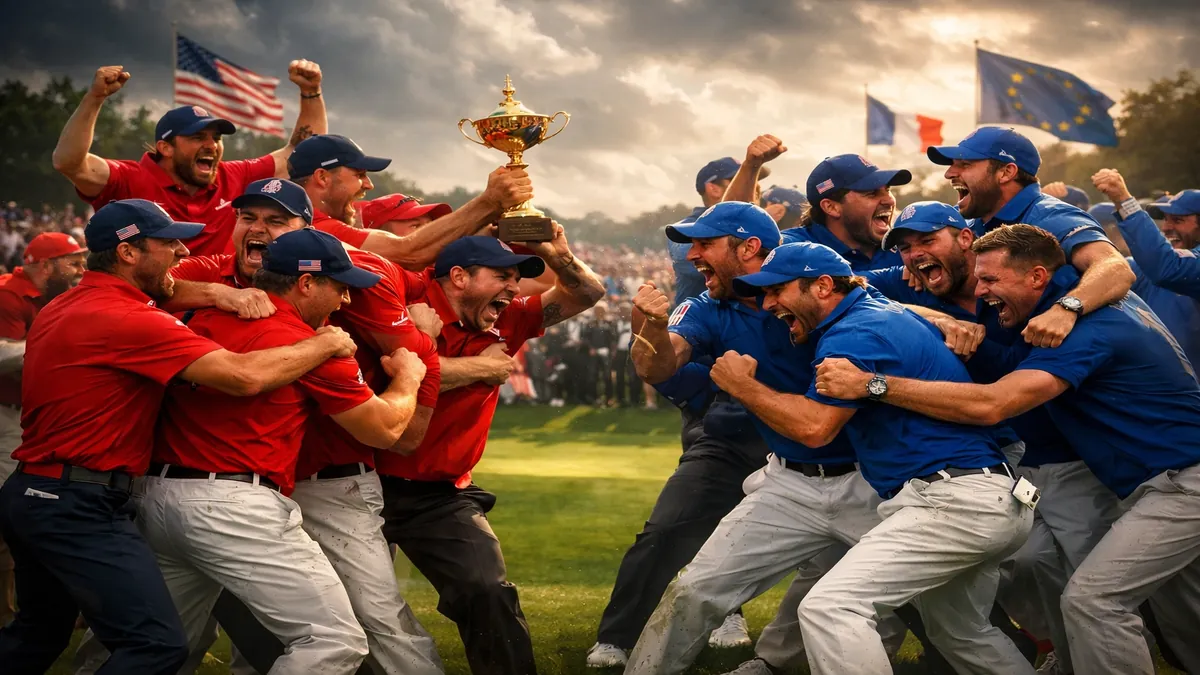
Ryder Cup History
The Ryder Cup stands as one of golf's most compelling and passionately contested events, a biennial team competition that pits the best male professional golfers from Europe against their counterparts from the United States. Its rich Ryder Cup history is a narrative of intense rivalry, extraordinary sportsmanship, and unforgettable moments that have captivated audiences worldwide. Conceived in the spirit of friendly competition, it has evolved from a modest exhibition into a global spectacle, renowned for its unique match-play format and the fervent patriotism it ignites among players and fans alike. The Ryder Cup is not merely a golf tournament; it is a celebration of team golf, a testament to national pride, and a defining event that transcends individual achievement to highlight the collective spirit of the sport.
The Genesis of a Transatlantic Rivalry

The Ryder Cup history began with the vision of Samuel Ryder, an English seed merchant and keen amateur golfer. Ryder was inspired by a series of informal matches played between British and American professionals in the early 1920s. Recognizing the potential for a formal competition to foster goodwill and elevate the profile of professional golf, he commissioned a gold trophy, which would bear his name, and officially inaugurated the Ryder Cup. The first official Ryder Cup match took place from June 3-4, 1927, at Worcester Country Club in Worcester, Massachusetts. The American team, led by the legendary Walter Hagen, defeated the British team by a score of 9½ to 2½.
Initially, the competition was contested between teams from Great Britain and the United States. The early decades were largely dominated by the American side, particularly after World War II, as the professional game flourished in the United States. This period of American supremacy led to concerns about the long-term competitiveness and relevance of the event. However, the spirit of the Ryder Cup, characterized by its unique match-play format—foursomes, fourballs, and singles—and the camaraderie it fostered, ensured its survival. The early matches, though often one-sided, laid the groundwork for the intense rivalry that would define the championship in later years, establishing it as a significant fixture on the international golf calendar.
Evolution of the Format and the Rise of Team Europe
For over five decades, the Ryder Cup remained a contest between the United States and Great Britain, later expanded to include Ireland (Great Britain & Ireland). However, by the late 1970s, American dominance had become so pronounced that the competition was losing its competitive edge and, consequently, some of its appeal. To revitalize the event and create a more balanced contest, a pivotal decision was made in 1979: the Great Britain & Ireland team was expanded to include players from continental Europe. This change marked a significant turning point in Ryder Cup history, transforming it into the thrilling transatlantic showdown it is today.
The inclusion of European players, such as the charismatic Spaniard Seve Ballesteros and the steely German Bernhard Langer, immediately injected new life into the competition. The European team quickly found its footing, and the 1980s ushered in an era of fierce and often dramatic contests. Europe secured its first victory as a combined team in 1985 at The Belfry, ending a 28-year American winning streak. This triumph signaled a shift in power and ignited a rivalry that has since produced some of golf's most memorable moments. The Ryder Cup's format, with its emphasis on team play and head-to-head matches, lends itself to incredible tension and excitement, often coming down to the final singles matches on Sunday. The passion and patriotism displayed by both sets of players and their respective fans have elevated the Ryder Cup to a status comparable to, and in some ways surpassing, that of the individual major championships.
Iconic Moments and the Spirit of Competition

The Ryder Cup has been the stage for countless iconic moments, each contributing to its legendary status. These moments often involve clutch putts, improbable comebacks, and displays of both fierce competition and profound sportsmanship. The "War on the Shore" at Kiawah Island in 1991, which came down to the final putt on the 18th green, epitomized the intensity of the rivalry. The "Battle of Brookline" in 1999 saw a dramatic American comeback in the Sunday singles matches, though it was marred by some controversial celebrations. Europe's "Miracle at Medinah" in 2012, where they overturned a seemingly insurmountable deficit on the final day, stands as one of the greatest comebacks in sports history, fueled by the memory of their late compatriot Seve Ballesteros.
Beyond the dramatic finishes, the Ryder Cup is also celebrated for its unique atmosphere. The partisan crowds, often chanting and cheering with unbridled enthusiasm, create an electric environment unlike any other in golf. The team aspect fosters a camaraderie among players who are typically individual competitors, leading to powerful bonds and emotional displays. The trophy itself, a relatively modest gold cup, has become one of the most coveted prizes in golf, representing not individual glory but collective triumph. These elements combine to make the Ryder Cup a truly special event, a biennial celebration of golf's competitive spirit and its ability to unite nations through sport.
Most Successful Players & Records
The Ryder Cup, with its unique team format, has allowed certain players to forge remarkable records, showcasing their prowess in match play and their ability to perform under immense pressure. These individuals have become synonymous with the event, contributing significantly to their team's successes and etching their names into Ryder Cup history.
Sergio Garcia holds the record for the most overall points won by a player, accumulating 28.5 points over his numerous appearances for Team Europe [1]. His passion and competitive fire have made him a Ryder Cup legend. Following closely is Nick Faldo, another European stalwart, with 25 points. For the United States, Billy Casper leads with 23.5 points, followed by Lanny Wadkins with 21.5 points.
In terms of appearances, Sergio Garcia also holds the record for the most Ryder Cup appearances for Europe, with 10. For the USA, Phil Mickelson holds the record with 12 appearances, a testament to his longevity and consistent presence on the American team. The captaincy is another crucial role, and several individuals have led their teams multiple times. For Europe, Tony Jacklin and Bernard Gallacher have each captained three times, while for the USA, Walter Hagen holds the record with six captaincies in the early years of the competition.
Other significant records include:
- Most Matches Won (Overall): Sergio Garcia (25)
- Most Singles Matches Won: Billy Casper (7) for USA, Colin Montgomerie (6) for Europe
- Largest Margin of Victory (Team): USA 23.5 - 8.5 in 1967
- Most Consecutive Wins (Team): USA (7 wins from 1935-1959)
These records highlight the individual brilliance and team cohesion required to succeed in the Ryder Cup. The pressure of match play, combined with the team dynamic, often brings out the best in these players, creating performances that are remembered for generations.
| Record Category | Player (Team) | Record |
|---|---|---|
| Most Overall Points | Sergio Garcia (Europe) | 28.5 |
| Most Appearances | Phil Mickelson (USA) | 12 |
| Most Matches Won | Sergio Garcia (Europe) | 25 |
| Most Singles Matches Won | Billy Casper (USA) | 7 |
| Largest Team Victory | USA (1967) | 23.5-8.5 |
| Most Consecutive Team Wins | USA | 7 |
Legacy and Enduring Appeal
The Ryder Cup's legacy is one of unparalleled excitement and a profound impact on the global perception of golf. It has successfully transformed a sport often viewed as individualistic into a captivating team spectacle, fostering national pride and intense rivalries that resonate far beyond the golf course. The biennial contest has not only elevated the careers of its participants but has also significantly contributed to the growth and popularity of golf, particularly in Europe, where its success has inspired a generation of players and fans.
The enduring appeal of the Ryder Cup lies in its unique blend of competitive fire, emotional drama, and genuine sportsmanship. It consistently delivers moments of high tension and unexpected heroism, often culminating in thrilling finishes that keep audiences on the edge of their seats. The camaraderie among teammates, the strategic decisions of the captains, and the passionate involvement of the fans all contribute to an atmosphere that is truly one-of-a-kind in the sporting world. As the Ryder Cup continues to evolve, it remains a powerful symbol of golf's ability to unite and inspire, a testament to the enduring power of team competition on the grandest stage.
FAQ: Ryder Cup
Q: When was the first official Ryder Cup held?
A: The first official Ryder Cup was held from June 3-4, 1927.
Q: Who was Samuel Ryder?
A: Samuel Ryder was an English seed merchant and keen amateur golfer who founded and donated the trophy for the Ryder Cup.
Q: When did European players join the Great Britain & Ireland team?
A: European players were included in the team starting in 1979, transforming it into Team Europe.
Q: Which player holds the record for the most overall points won in the Ryder Cup?
A: Sergio Garcia holds the record for the most overall points won, with 28.5 points.
Q: What is the format of the Ryder Cup?
A: The Ryder Cup is a match-play competition consisting of foursomes, fourballs, and singles matches.
References
[1] Golf365. "Seven staggering Ryder Cup records that will NEVER be broken." Golf365, September 24, 2025. Available at: https://www.golf365.com/news/ryder-cup-records-never-broken