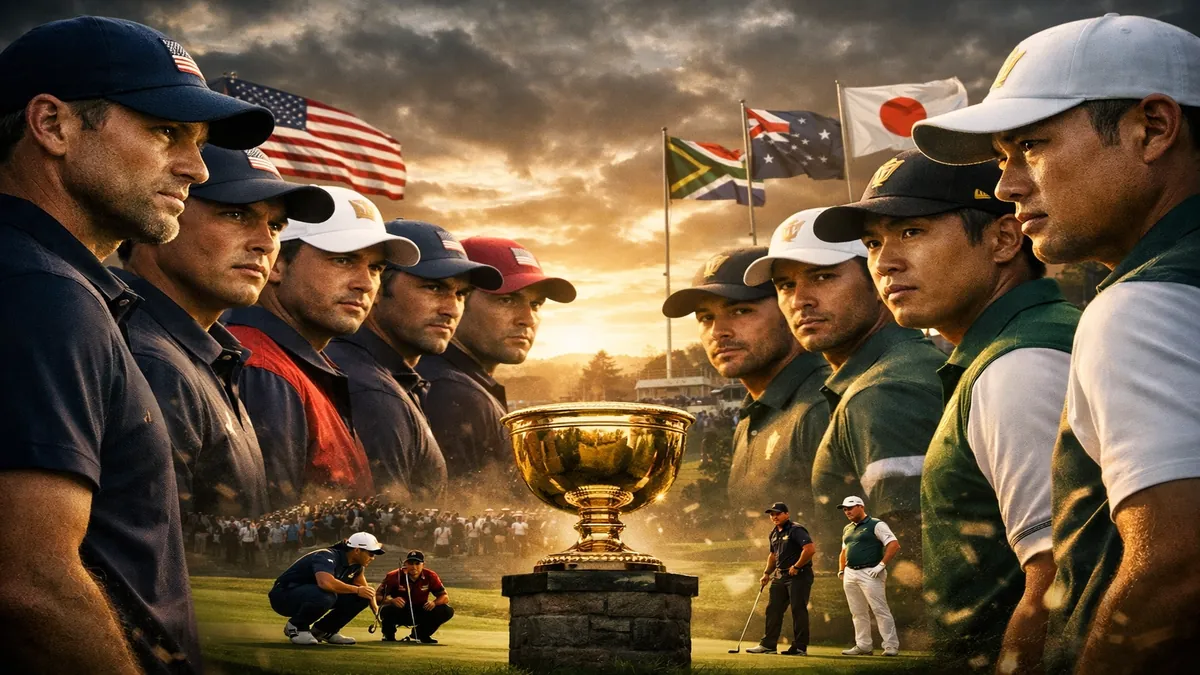
Presidents Cup History
The Presidents Cup stands as a relatively young yet profoundly significant event in the world of professional golf, a biennial team competition that pits a selection of the best male professional golfers from the United States against an International Team representing the rest of the world, excluding Europe. Its rich Presidents Cup history is a narrative of intense rivalry, sportsmanship, and the global expansion of golf, conceived as a counterpart to the Ryder Cup. Established in 1994, this unique match-play event has rapidly grown in stature, offering a compelling blend of individual brilliance and collective effort. It serves not only as a showcase for golf's elite talent but also as a powerful platform for fostering camaraderie and international goodwill, solidifying its place as a cherished fixture on the professional golf calendar.
The Genesis and Vision of a Global Competition

The Presidents Cup history began in the early 1990s, born from the vision of the PGA Tour to create a team match-play competition that would provide an opportunity for non-European international players to compete against the United States in a format similar to the highly successful Ryder Cup. At the time, American golfers regularly participated in the Ryder Cup against Europe, but there was no equivalent event for the many talented players from countries like Australia, South Africa, Canada, and Asia. The PGA Tour recognized this void and sought to establish a new, prestigious event that would celebrate the global nature of golf and offer these players a chance to represent their regions on a grand stage.
The inaugural Presidents Cup was held from September 16-18, 1994, at the Robert Trent Jones Golf Club in Prince William County, Virginia. The event was an immediate success, with the United States team, captained by Hale Irwin, defeating the International Team, led by David Graham, by a score of 20-12. This first edition set the stage for what would become a compelling and often dramatic competition. The format, mirroring much of the Ryder Cup, included foursomes (alternate shot), fourballs (best ball), and singles matches, designed to maximize excitement and strategic play. The creation of the Presidents Cup not only filled a gap in the international golf schedule but also provided a crucial platform for players from diverse backgrounds to unite under a common banner, fostering a unique team spirit that quickly became a hallmark of the event.
Evolution and the Quest for International Parity
In its early years, the Presidents Cup was primarily dominated by the United States team, mirroring the early history of the Ryder Cup. The Americans won the first three editions (1994, 1996, 1998), leading to concerns about the long-term competitiveness of the event. However, the International Team, comprised of players from various nations, steadily grew stronger, developing a unique team identity and camaraderie despite their diverse backgrounds. This quest for parity became a central theme in the tournament's evolution, driving both teams to elevate their game and strategies.
A pivotal moment in the Presidents Cup history occurred in 2003 at Fancourt Golf Estate in George, South Africa. The competition ended in a dramatic tie, 17-17, after a sudden-death playoff between Tiger Woods and Ernie Els was called due to darkness. This historic draw, the only one in the event's history, showcased the International Team's growing strength and proved that they could stand toe-to-toe with the American powerhouse. It injected a new level of excitement and belief into the competition, demonstrating that the Presidents Cup was capable of delivering the same nail-biting finishes and emotional highs as its Ryder Cup counterpart.
Over the decades, the Presidents Cup has continued to evolve, refining its selection criteria, captaincy roles, and overall presentation. The biennial nature of the event, alternating with the Ryder Cup, ensures that team match-play golf remains a prominent feature on the international golf calendar. The PGA Tour's commitment to rotating the host venues between the United States and various international locations has also contributed to its global appeal, allowing different regions to experience the excitement of this unique competition firsthand. This continuous evolution has cemented the Presidents Cup's status as a significant and highly anticipated event in professional golf.
Iconic Moments and Unforgettable Drama

The Presidents Cup has been the stage for numerous iconic moments and unforgettable dramas, often culminating in thrilling finishes that underscore the intensity of team match play. These moments are etched into the collective memory of golf fans, showcasing the extraordinary skill, nerve, and sportsmanship of the world's best players.
Beyond the 2003 tie, another defining moment came in 2009 at Harding Park in San Francisco, where the United States, captained by Fred Couples, secured a hard-fought victory over the International Team. The 2019 Presidents Cup in Melbourne, Australia, delivered a particularly memorable contest. The International Team, led by Ernie Els, held a significant lead heading into the Sunday singles matches, only for the American team, captained by Tiger Woods (who also played), to mount a dramatic comeback and secure a narrow victory. Woods's role as a playing captain, leading his team by example, added an extra layer of narrative to this already compelling event. These instances, often decided by clutch putts on the final holes, highlight the immense pressure and emotional swings inherent in the Presidents Cup.
The unique team dynamic of the Presidents Cup also contributes to its memorable moments. Players, usually fierce individual competitors, come together to represent their regions, fostering a camaraderie and collective spirit that is rarely seen in professional golf. The passionate crowds, whether in the United States or at international venues, create an electric atmosphere, adding to the drama and intensity of each match. The Presidents Cup has consistently delivered compelling narratives, proving its ability to produce golf that is both highly competitive and deeply engaging for players and spectators alike.
Most Successful Players & Records
The Presidents Cup, while a team event, has seen individual players establish remarkable records, showcasing their exceptional match-play prowess and leadership qualities. These individuals have become synonymous with the event, contributing significantly to their team's successes and leaving an indelible mark on Presidents Cup history.
Phil Mickelson holds the record for the most appearances in the Presidents Cup, having played in 12 editions for the United States team [1]. His longevity and consistent presence underscore his dedication to team golf. Mickelson also holds the record for the most matches played, with 55, accumulating 26 wins, 16 losses, and 3 ties. For the International Team, Adam Scott leads in appearances with 10 and matches played with 54, securing 20 wins, 23 losses, and 11 ties.
Tiger Woods stands out as one of the most successful players in Presidents Cup history. He holds the record for the most points won by a player, with 33 points, and the most singles matches won, with 7 victories [1]. Woods's dominant performances, particularly in singles, have been crucial to many American victories. His role as a playing captain in 2019 further cemented his legendary status in the event.
Other significant records include:
- Most Points Won (International Team): Adam Scott (20 points)
- Most Matches Won (International Team): Adam Scott (20 wins)
- Largest Margin of Victory (Team): USA 21.5 - 10.5 in 2000
- Most Consecutive Wins (Team): USA (8 wins from 2005-2017)
These records highlight the individual brilliance and team cohesion required to succeed in the Presidents Cup. The pressure of match play, combined with the team dynamic, often brings out the best in these players, creating performances that are remembered for generations.
| Record Category | Player (Team) | Record |
|---|---|---|
| Most Appearances | Phil Mickelson (USA) | 12 |
| Most Matches Played | Phil Mickelson (USA) | 55 |
| Most Points Won | Tiger Woods (USA) | 33 |
| Most Singles Matches Won | Tiger Woods (USA) | 7 |
| Most Points Won (Intl) | Adam Scott (Intl) | 20 |
| Most Matches Won (Intl) | Adam Scott (Intl) | 20 |
| Largest Team Victory | USA (2000) | 21.5-10.5 |
Legacy and Enduring Significance
The Presidents Cup has rapidly established a legacy as a vibrant and essential component of the international golf landscape. Its enduring significance lies in its role as a premier team match-play competition that provides a global stage for players outside of Europe to compete against the formidable American team. The event has successfully fostered a unique team identity for the International side, bringing together golfers from diverse nations to compete with a shared purpose. This camaraderie, combined with the intense rivalry, has created a compelling narrative that resonates with golf fans worldwide.
The Presidents Cup has played a crucial role in elevating the profile of international golf and has provided countless memorable moments that showcase the sport's competitive spirit and the extraordinary talent of its players. It continues to inspire new generations of golfers and fans, demonstrating the power of team competition and the unifying force of sport. As the event moves forward, it remains a powerful symbol of golf's global reach and its ability to deliver thrilling, high-stakes drama, solidifying its place as a cherished and anticipated biennial event on the professional golf calendar.
FAQ: Presidents Cup
Q: When was the first Presidents Cup held?
A: The first Presidents Cup was held in 1994.
Q: Which teams compete in the Presidents Cup?
A: The Presidents Cup is contested between a team from the United States and an International Team (representing the rest of the world, excluding Europe).
Q: Which player holds the record for the most appearances in the Presidents Cup?
A: Phil Mickelson holds the record for the most appearances, with 12.
Q: What is the format of the Presidents Cup?
A: The Presidents Cup is a match-play competition consisting of foursomes, fourballs, and singles matches.
Q: What was a pivotal moment in the Presidents Cup history regarding parity?
A: The 2003 event, which ended in a historic tie between the United States and International Teams, was a pivotal moment in establishing the International Team's competitiveness.
References
[1] Golf Compendium. "Most Presidents Cup Appearances and Matches Played." Golf Compendium. Available at: https://www.golfcompendium.com/2024/09/presidents-cup-appearances-matches.html