Pelé Biography: The King of Football
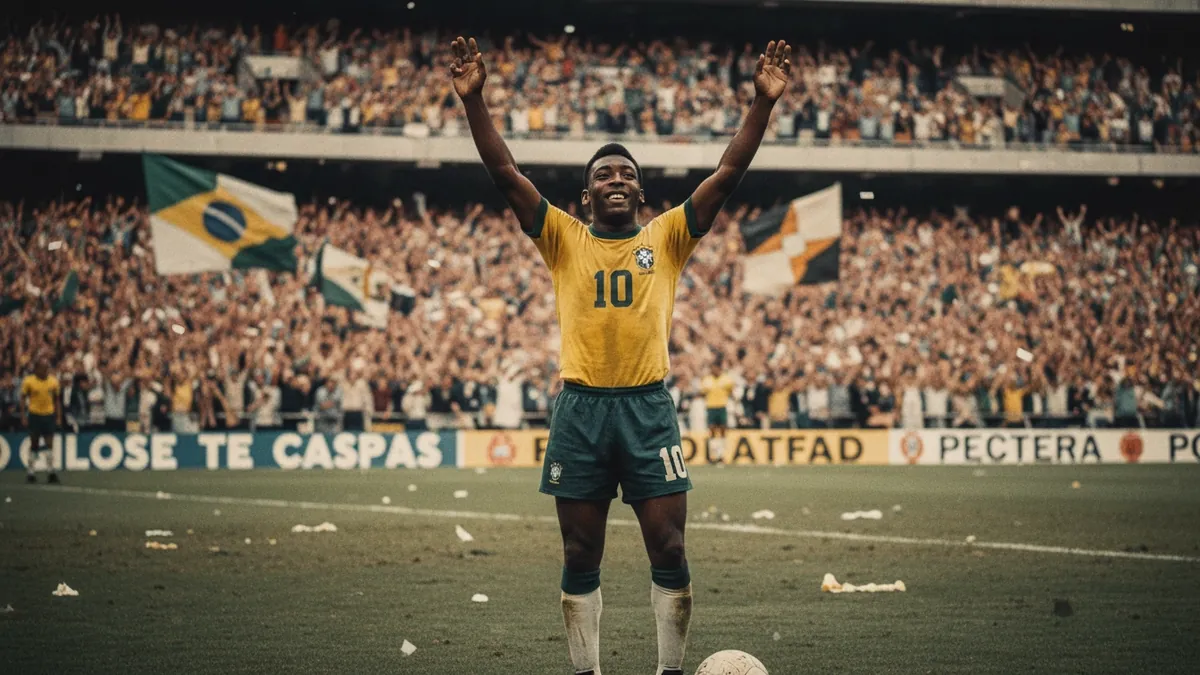
Edson Arantes do Nascimento, universally known as Pelé, is widely regarded as the greatest footballer who ever lived. Born into poverty in Brazil, he rose to become a global icon whose name became synonymous with the sport itself. His three World Cup victories, two of which came as a teenager, remain unmatched in football history.
Early Life and Childhood
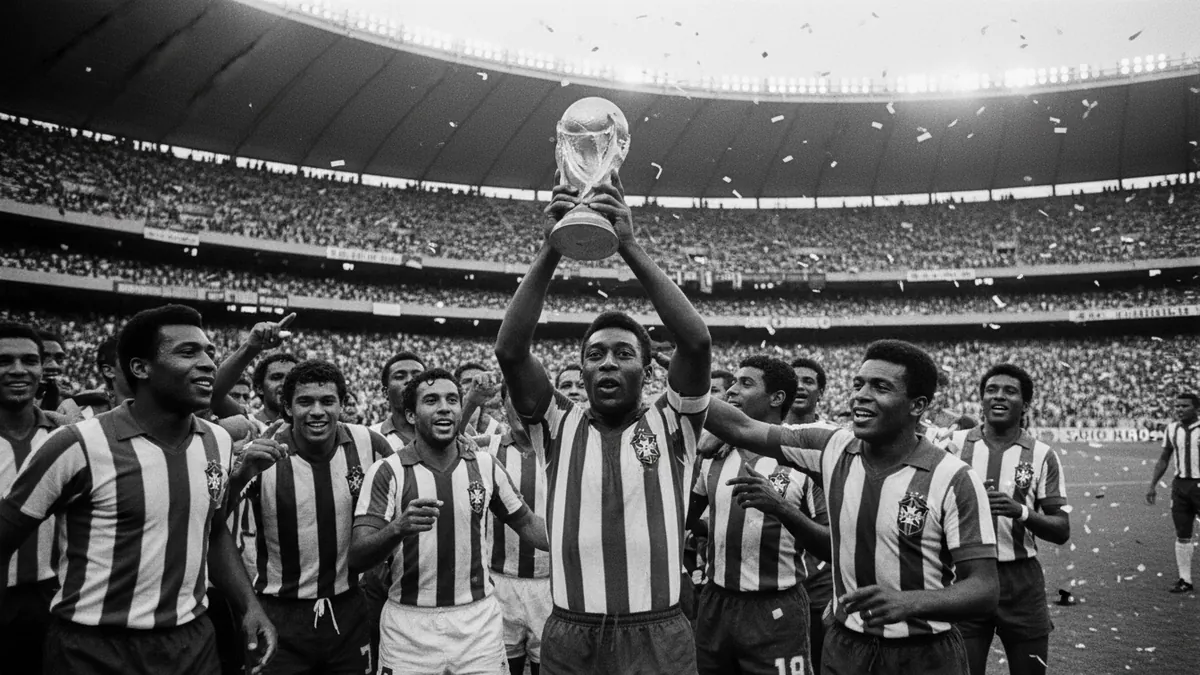
Pelé was born on October 23, 1940, in Três Corações, a small city in the state of Minas Gerais, Brazil. His father, Dondinho, was a professional footballer of modest means, and the family struggled financially. They eventually settled in Bauru, São Paulo, where Pelé grew up in poverty.
As a child, Pelé was so poor he could not afford a real football. He and his friends played with a stuffed sock or grapefruit in the streets of Bauru. Despite these limitations, his talent was unmistakable. He shined shoes and sold peanuts at a railway station to help support his family.
His talent caught the attention of Waldemar de Brito, a former Brazilian international, who coached him at youth level and eventually arranged for him to trial at Santos FC, a professional club in São Paulo. When Pelé arrived at Santos at age 15, the coach immediately recognized his extraordinary ability.
Rise to Stardom at Santos FC (1956–1974)
Pelé made his professional debut for Santos in September 1956, aged just 15. Within a year, he was the leading scorer in the São Paulo state championship. His pace, technique, balance, and finishing were unlike anything seen before.
He scored 77 goals in his first full season and quickly established himself as the most exciting young player in Brazil. Santos built their entire team around him, and the results were extraordinary. With Pelé, Santos won multiple Brazilian championships and became one of the most famous clubs in the world.
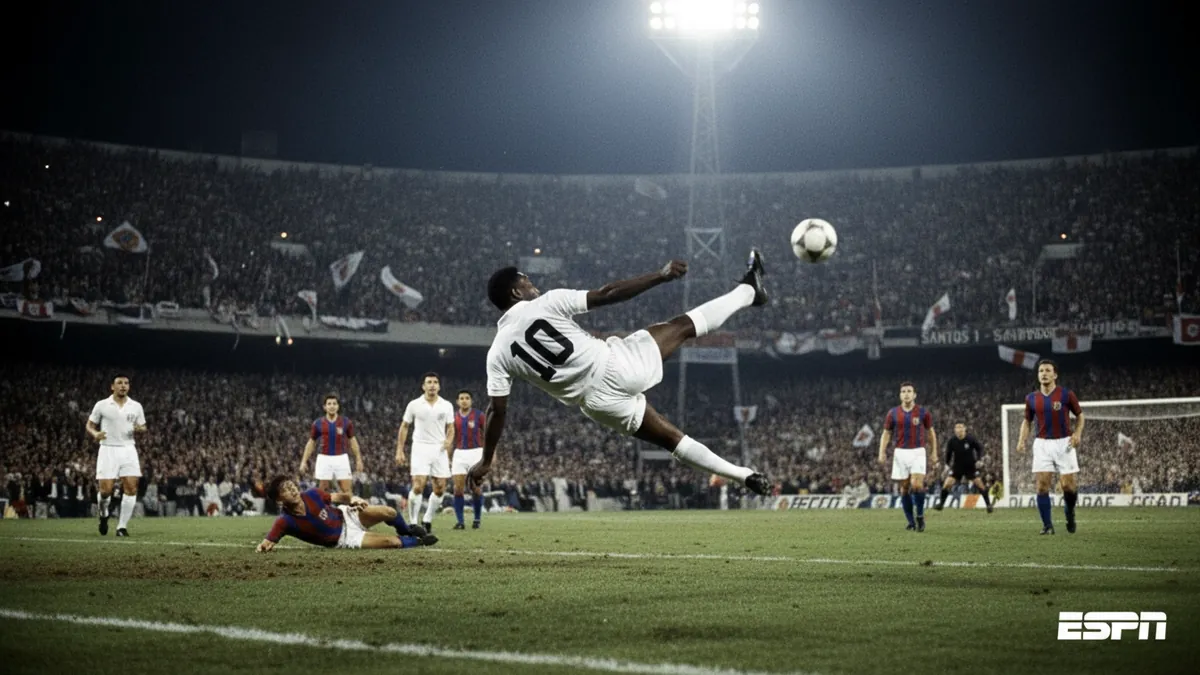
Pelé spent 18 years at Santos, scoring an astonishing 643 goals in 659 official matches — a ratio that remains essentially unmatched at the highest level of the game. He was famous for scoring virtually every type of goal: volleys, headers, long-range strikes, dribbles past multiple defenders, and the occasional backheel finish.
His famous "gol de placa" — literally "goal worthy of a plaque" — was scored against Fluminense in 1961 and is considered by many who witnessed it as the greatest goal ever scored. Pelé received the ball near his own half, beat five defenders with a dribbling run, rounded the goalkeeper, and scored into an empty net.
The 1958 World Cup: A Legend Born
The 1958 FIFA World Cup in Sweden announced Pelé to the world. He was just 17 years and 249 days old — the youngest player in World Cup history at the time — when he made his tournament debut.
In the quarterfinals against Wales, Pelé scored the only goal of the match, becoming the youngest scorer in World Cup history. In the semifinal against France, he scored a hat-trick. In the final against the host nation Sweden, he scored twice, including a chest-and-volley finish of breathtaking skill, as Brazil won 5-2.
Pelé's performance in that final — his tearful embrace with goalkeeper Gilmar after the final whistle — was broadcast around the world and became one of football's most enduring images. He had arrived on the world stage in the most spectacular fashion imaginable.
The 1962 World Cup
Brazil successfully defended their World Cup title in Chile in 1962, but Pelé's tournament was cut short by injury in the second match. His replacement, Amarildo, performed brilliantly, and Brazil won the title without their star — a testament to the squad depth but a disappointment for Pelé personally.
The 1966 World Cup
The 1966 World Cup in England was a disaster for Pelé personally. With inadequate protection from referees, he was systematically kicked out of the tournament by physical opponents. Brazil were eliminated in the group stage, and a bruised and battered Pelé vowed never to play in another World Cup.
The 1970 World Cup: The Greatest Team in History
Pelé broke his vow and returned for the 1970 World Cup in Mexico, and what followed is widely considered the greatest footballing performance in World Cup history — by both the player and the team.
Brazil's 1970 squad featured Pelé, Jairzinho, Rivelino, Tostão, Gérson, and Carlos Alberto Torres — collectively considered the most talented group ever assembled for a national team. They played with a freedom and joy that elevated football to an art form.
Pelé scored four goals and provided five assists across six matches. His performances included a header against Czechoslovakia that was saved by the goalkeeper — though Pelé had already turned away to celebrate, so certain was he it would go in. Against Uruguay in the semifinal, he performed a famous dummy, letting the ball run past him, leaving the goalkeeper sprawling.
Brazil beat Italy 4-1 in the final, with the fourth goal — a flowing team move finished by captain Carlos Alberto from Pelé's cutback — considered the greatest goal in World Cup history. Brazil kept the Jules Rimet trophy permanently, having won it three times.
International Career
Pelé played 92 international matches for Brazil between 1957 and 1971, scoring 77 goals — a ratio of nearly one per game. He remains Brazil's all-time leading scorer. His three World Cup victories in 1958, 1962, and 1970 are a record that no player in history has matched.
New York Cosmos and Retirement
After leaving Santos in 1974, Pelé came out of retirement to join the New York Cosmos of the North American Soccer League in 1975, helping to popularize football in the United States. Playing alongside stars like Giorgio Chinaglia and Franz Beckenbauer, Pelé helped the Cosmos win the 1977 NASL championship.
His farewell match in October 1977 — a friendly in which he played one half for Santos and one half for the Cosmos — was watched by 75,000 fans at Giants Stadium and broadcast internationally. It was a fitting global farewell for the world's most famous athlete.
Legacy and Honors
FIFA named Pelé the joint Player of the Century (along with Diego Maradona) in 1999 based on a poll of football legends. He was appointed UNESCO Goodwill Ambassador and Brazil's Extraordinary Minister for Sport.
Pelé spent decades as a global ambassador for football, meeting world leaders and celebrities and using his platform to promote social causes in Brazil and around the world. He was awarded honorary British knighthood in 1997 and received the Presidential Medal of Freedom.
His total goal count — 1,281 goals in 1,363 appearances according to his own records, though this includes friendlies and exhibition matches — is recognized by Guinness World Records as the highest career tally by any footballer.
Pelé passed away on December 29, 2022, at age 82, following a battle with colon cancer. The world mourned the loss of a figure who transcended sport. Brazil declared three days of national mourning. Football's greatest player had left the stage, but his legacy — the joy, the artistry, the impossibly gifted boy from Bauru who conquered the world — will endure as long as the game is played.