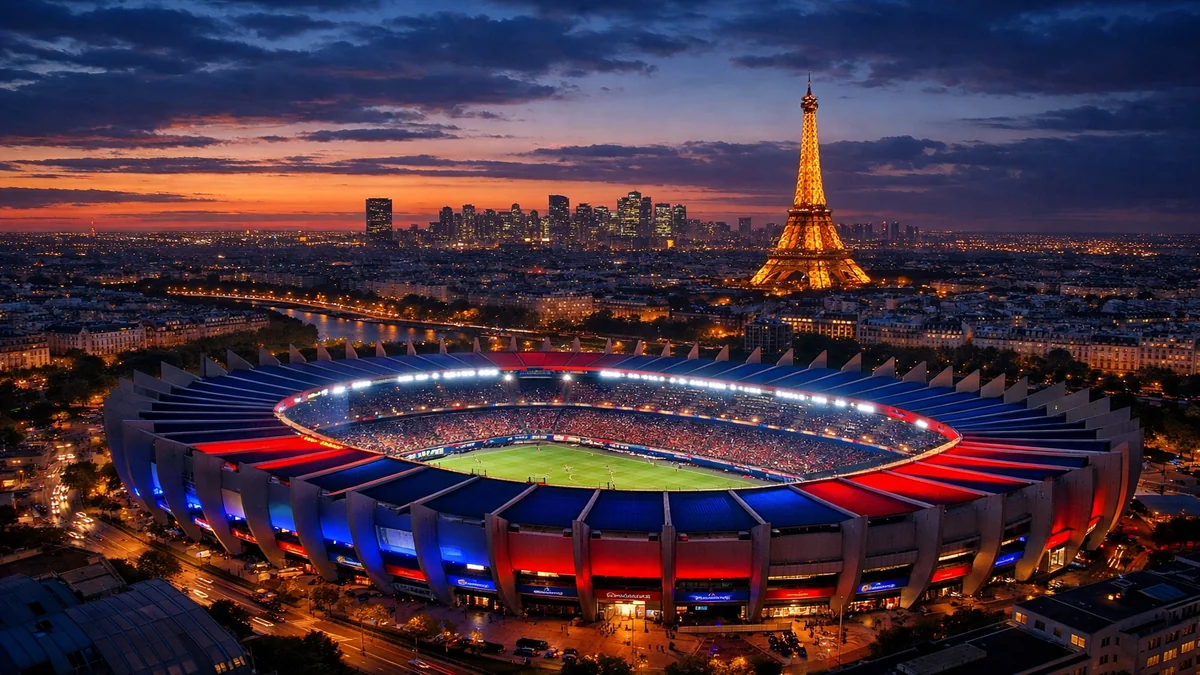
Paris Saint-Germain History
Paris Saint-Germain history is a captivating narrative of ambition, transformation, and the relentless pursuit of footballing glory. Founded in 1970 through the merger of Paris FC and Stade Saint-Germain, the club has rapidly ascended from its nascent beginnings to become France's most dominant football institution and a globally recognized brand. Often referred to as PSG, the club's journey is marked by distinct eras, from its early struggles and initial successes to its dramatic resurgence under Qatari ownership, which propelled it into the elite echelons of European football. With a record number of Ligue 1 titles, numerous domestic cups, and a growing presence on the continental stage, PSG has redefined what is possible for a French club. This article delves into the rich and dynamic story of Paris Saint-Germain, exploring its origins, the pivotal periods that shaped its identity, its vast array of achievements, and the legendary figures who have contributed to its enduring status as a global footballing powerhouse. From its foundational years to its modern-day commercial might, PSG's history is one of strategic growth, star power, and an unwavering commitment to victory.
Early Foundations and Identity Formation

The origins of Paris Saint-Germain history trace back to a unique merger in 1970, born out of a desire to create a major football club in the French capital. Paris, despite being a global city, lacked a prominent football team that could compete at the highest national and European levels. This ambition led to the amalgamation of two existing entities: Paris FC, a proposed professional club, and Stade Saint-Germain, an amateur side from the Parisian suburbs. The merger officially took place on August 12, 1970, giving birth to Paris Saint-Germain Football Club. The club's initial identity was a blend of Parisian ambition and the more traditional, community-focused spirit of Saint-Germain-en-Laye, reflected in its name and early emblem.
PSG's early years were characterized by rapid growth and immediate challenges. The newly formed club quickly gained promotion to the top flight, winning the Ligue 2 title in its inaugural season (1970-71). However, internal disagreements led to a split in 1972, with Paris FC separating to retain the professional status in Division 1, while PSG was relegated to the third division. This setback, however, proved to be a defining moment for the club. Under the leadership of Daniel Hechter, a fashion designer who became president in 1973, PSG embarked on a remarkable journey back to the top. Hechter not only stabilized the club financially but also designed its iconic blue, white, and red kit, which remains largely unchanged today. The club quickly climbed back through the divisions, returning to Division 1 in 1974. This period established PSG's reputation as a resilient club with a strong identity, laying the groundwork for future successes. The early struggles and the subsequent resurgence fostered a deep sense of loyalty among its burgeoning fanbase, distinguishing PSG as a club forged through adversity and driven by the ambition to represent the vibrant city of Paris on the grandest footballing stages.
Decades of Growth and European Ambition
The late 1970s and 1980s saw Paris Saint-Germain establish itself as a consistent force in French football, gradually shedding its underdog status and beginning to challenge for major honors. The club secured its first significant trophy in 1982, winning the Coupe de France, a feat they repeated in 1983. These victories marked PSG's arrival as a serious contender and demonstrated their growing prowess on the national stage. The pinnacle of this era came in the 1985-1986 season, when PSG clinched its first-ever Ligue 1 title, a monumental achievement that broke the dominance of traditional French powerhouses. This triumph was a testament to the club's strategic investments and the emergence of talented players who could compete at the highest level. The team of the mid-80s, featuring players like Safet Sušić and Luis Fernandez, played with a distinctive flair that captivated Parisian audiences.
Building on its domestic success, the 1990s became a decade of significant European ambition for Paris Saint-Germain. Under the ownership of Canal+ from 1991, the club underwent a period of substantial investment, attracting world-class players and managers. This era saw PSG consistently competing in European competitions, reaching multiple semi-finals in the UEFA Champions League and the UEFA Cup Winners' Cup. The club's persistent efforts culminated in its first major European trophy in the 1995-1996 season, when they won the UEFA Cup Winners' Cup, defeating Rapid Wien in the final. This historic victory, achieved with a squad featuring stars like George Weah, Raí, and David Ginola, cemented PSG's reputation as a formidable European contender. They also reached the final of the same competition the following year, narrowly losing to Barcelona. Domestically, PSG continued to add to its trophy cabinet, winning more Coupe de France and Coupe de la Ligue titles. This period was crucial in shaping PSG's identity as a club with European aspirations, demonstrating its ability to attract top talent and compete with the continent's best. The 1990s laid the groundwork for the global superpower status that the club would eventually achieve, showcasing its potential to transcend national boundaries and become a major player on the international football scene.
The QSI Era and Global Superpower Status

The 21st century brought a new chapter of transformation for Paris Saint-Germain, culminating in a dramatic shift in its global standing. The early 2000s were a period of mixed fortunes, with some domestic cup successes but a struggle to consistently challenge for the Ligue 1 title. However, the most significant turning point in Paris Saint-Germain history arrived in 2011 with the acquisition of the club by Qatar Sports Investments (QSI). This takeover marked the beginning of an unprecedented era of financial investment, strategic ambition, and a relentless pursuit of global recognition. QSI's vision was clear: to transform PSG into one of the world's elite football clubs, capable of winning the UEFA Champions League and establishing a dominant brand presence globally.
The QSI era saw an immediate and dramatic influx of capital, enabling PSG to attract some of the biggest names in world football. High-profile signings like Zlatan Ibrahimović, Thiago Silva, Edinson Cavani, Neymar, and Kylian Mbappé not only elevated the team's on-field quality but also significantly boosted its global appeal and commercial value. This period ushered in an era of unparalleled domestic dominance, with PSG winning an astonishing nine Ligue 1 titles in the 2010s and 2020s, establishing a near-monopoly on French football. They also consistently swept up domestic cups, including the Coupe de France and Coupe de la Ligue, setting new records for consecutive wins. The club's financial power allowed for state-of-the-art training facilities, a revamped youth academy, and aggressive marketing campaigns that transformed PSG into a global brand, attracting millions of new fans worldwide.
While domestic success became routine, the ultimate ambition of winning the UEFA Champions League remained the elusive prize. PSG consistently reached the knockout stages of Europe's premier club competition, often making deep runs, including reaching the final in 2020 (losing to Bayern Munich) and multiple semi-finals. Despite not yet lifting the coveted trophy, their consistent presence at the business end of the Champions League underscores their status as a European superpower. The QSI era has not only brought trophies but has also fundamentally reshaped the club's identity, transforming it from a respected French club into a global footballing and commercial giant. This period is characterized by a blend of star power, attacking football, and a relentless drive to achieve the ultimate European glory, ensuring that Paris Saint-Germain remains at the forefront of football discussions worldwide.
Greatest Players & Managers
The rich tapestry of Paris Saint-Germain's history is adorned with a host of legendary players and influential managers who have contributed to the club's unique identity and success. From the early pioneers to the modern-day superstars, these individuals have left an indelible mark on the Parc des Princes.
Among the greatest players to have worn the PSG jersey, these names frequently emerge:
The managerial legacy at Paris Saint-Germain is marked by figures who have navigated different eras of the club's development:
- Pierre Phelipon: The first manager of PSG, Phelipon led the club to its first Ligue 2 title in 1971.
- Velibor Vasović: The Yugoslavian manager led PSG to its first major trophies, the Coupe de France in 1982 and 1983.
- Gérard Houllier: Houllier guided PSG to its first Ligue 1 title in 1986, a landmark achievement for the club.
- Artur Jorge: The Portuguese coach led PSG to the UEFA Cup Winners' Cup triumph in 1996, the club's first major European trophy, and another Ligue 1 title in 1994.
- Laurent Blanc: Blanc managed PSG during the early QSI era (2013-2016), winning three consecutive Ligue 1 titles, two Coupe de France, and three Coupe de la Ligue, establishing domestic dominance.
- Thomas Tuchel: Tuchel led PSG to their first-ever UEFA Champions League final in 2020, showcasing a tactical flexibility and an ability to manage a squad of superstars.
Legacy and Current Status
Paris Saint-Germain history is a testament to the power of ambition and strategic investment, creating a legacy that is both recent and profoundly impactful. The club's identity has evolved from its humble Parisian roots to that of a global footballing superpower, synonymous with star players, attacking football, and a relentless pursuit of the UEFA Champions League. PSG represents the modern era of football, where financial backing can rapidly transform a club's fortunes and elevate its brand to unprecedented heights. Its legacy is built on breaking domestic records, attracting some of the world's most marketable athletes, and consistently challenging for European football's most coveted prize. The Parc des Princes, its iconic home, has become a fortress, witnessing countless moments of brilliance and passion from its dedicated fanbase.
In terms of current status, Paris Saint-Germain remains the dominant force in French football and a perennial contender on the European stage. Under the continued ownership of QSI, the club possesses immense financial resources, allowing it to maintain a squad filled with world-class talent. They are consistently expected to win Ligue 1 and compete for domestic cups, a testament to their superior squad depth and quality. In the UEFA Champions League, PSG is always considered among the favorites, with the ultimate goal of lifting the trophy remaining a driving force. The club's global brand continues to expand, attracting new fans and commercial partners from around the world, further solidifying its position as one of the most valuable and recognizable sports franchises. PSG's academy is also increasingly producing top talents, ensuring a sustainable future for the club.
Why it matters: Paris Saint-Germain's story matters because it exemplifies the changing landscape of modern football, where strategic investment and global branding can create a new kind of superpower. Their rise has injected immense excitement and competition into French football, elevating the profile of Ligue 1. PSG's pursuit of the Champions League has become one of football's most compelling narratives, captivating audiences and showcasing the drama of elite European competition. The club embodies the glamour and ambition of Paris, representing the city on a global stage. Its impact extends beyond trophies, influencing transfer markets, player salaries, and the overall commercialization of the sport. PSG's continued journey, with its blend of star power, tactical innovation, and unwavering ambition, ensures its relevance and significance in the global footballing narrative, inspiring generations of fans and shaping the future of the beautiful game.
FAQ: Paris Saint-Germain
Q: When was Paris Saint-Germain FC founded?
A: Paris Saint-Germain FC was founded on August 12, 1970, through the merger of Paris FC and Stade Saint-Germain.
Q: How many Ligue 1 titles has Paris Saint-Germain won?
A: Paris Saint-Germain holds the record for the most Ligue 1 titles, having won 13 titles, with a significant portion of these coming in the QSI era since 2011.
Q: Has Paris Saint-Germain ever won the UEFA Champions League?
A: As of early 2026, Paris Saint-Germain has not yet won the UEFA Champions League, though they reached the final in 2020 and have consistently been strong contenders in the competition.