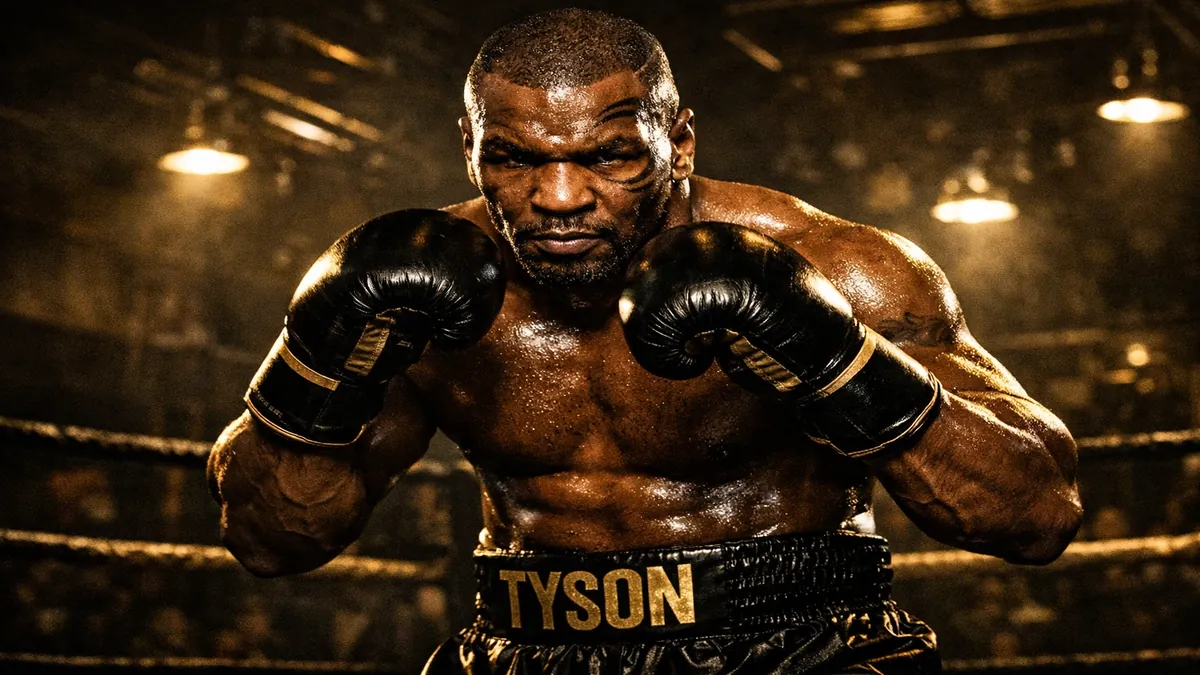
Mike Tyson Biography: Iron Mike and the Rise and Fall of a Champion
Mike Tyson was the most feared boxer on the planet for a period in the late 1980s. His rise from a juvenile delinquent in Brooklyn to undisputed heavyweight champion is one of sport's most remarkable stories. His fall — from drugs, legal troubles, and the demons within — is equally dramatic.
Early Life in Brownsville

Michael Gerard Tyson was born on June 30, 1966, in Brooklyn, New York. He grew up in Brownsville, one of the most dangerous neighborhoods in New York City. His father abandoned the family early. His mother died when he was 16.
Tyson was a small, chubby child with a lisp who was regularly beaten and robbed. By his early teens he had turned to crime — street robbery, assault — and accumulated over 38 arrests by age 13. His criminal behavior landed him at the Tryon School for Boys in Johnstown, New York, where a staff member named Bobby Stewart, a former boxer, recognized something in the troubled teenager.
Discovering Boxing: Cus D'Amato
Stewart introduced Tyson to legendary trainer and manager Cus D'Amato. D'Amato, who had previously guided Floyd Patterson and José Torres to world titles, was in his 70s when he first saw Tyson at 13. His assessment was immediate: "That's the heavyweight champion of the world."
D'Amato became Tyson's legal guardian when he was 16. He installed Tyson in his home in Catskill, New York, and began teaching him the "peek-a-boo" style he had developed — gloves held high beside the face, constant head movement, slipping punches, and attacking from angles.
Tyson absorbed the style perfectly. D'Amato died in November 1985 before seeing Tyson claim the title he had prophesied. "He'll be champion," D'Amato said near the end. "I just wish I could be there to see it."
Amateur Career

Tyson's amateur career was brief but explosive. He lost to Henry Tillman twice at the Olympic trials (controversially, many felt), missing the 1984 Olympics. His amateur record was approximately 24-3, with almost all wins by knockout. The knockouts often came within the first round.
Professional Breakthrough
Tyson turned professional in March 1985, aged 18. What followed was one of the most electrifying runs in boxing history. He won his first 19 fights by knockout, 12 in the first round. Opponents described the same terrifying experience: the bob and weave making him difficult to hit, then an explosive combination from an unexpected angle that ended the night.
His body was sculpted and intimidating — he fought at around 218 pounds but looked larger due to his extraordinary musculature. His neck measured nearly 20 inches. His punching power, measured scientifically, was among the highest ever recorded.
Undisputed Champion
On November 22, 1986, Tyson became the youngest heavyweight champion ever at 20 years old, destroying Trevor Berbick (who had beaten Ali in his final fight) in two rounds. The WBC title was followed by the WBA title (beating James Smith in 1987) and the IBF title (beating Tony Tucker in 1987), making him the undisputed heavyweight champion.
At his peak, Tyson was genuinely terrifying. Opponents often appeared beaten before the first punch was thrown. He would stare down fighters during pre-fight instructions, the barely contained violence in his eyes doing psychological work before boxing started.
His knockout of Michael Spinks in 91 seconds — with Spinks's promoter Bob Arum having sold the fight as competitive — became the defining image of his dominance.
The Loss to Buster Douglas (1990)
On February 11, 1990, James "Buster" Douglas, a 42-to-1 underdog with no particular reputation, knocked out Mike Tyson in the 10th round in Tokyo. The shock was total — arguably the greatest upset in boxing history.
The reasons for Tyson's decline had been accumulating: his split from trainer Kevin Rooney (the last man who knew D'Amato's methods), his divorce from actress Robin Givens amid allegations of abuse, the distractions of fame and money, and the absence of D'Amato's stabilizing influence.
Conviction and Prison
In 1991, Tyson was accused of raping beauty pageant contestant Desiree Washington in an Indianapolis hotel room. In 1992, he was convicted of rape and sentenced to six years in prison, serving three years before parole in 1995.
The conviction changed everything. Tyson remained a polarizing figure — supporters insisted he was wrongly convicted, while others saw the verdict as confirmation of what his personal life had suggested.
Return and the Holyfield Fights
Tyson returned to boxing in 1995 and rebuilt his record against moderate opponents. The fights against Evander Holyfield were the defining events of his return.
Holyfield, the underdog, stopped Tyson in the 11th round of their first fight (1996) — exposing that Tyson could be hurt and stopped. The rematch in 1997 ended in one of sport's most bizarre moments: Tyson bit off a piece of Holyfield's ear in the third round, was disqualified, and forfeited his boxing license temporarily.
Later Career and Legacy
Tyson fought until 2005, eventually losing to Lennox Lewis in 2002 in a fight that confirmed his decline. He retired, returning briefly for exhibition matches in his 50s that showed the competitive fire still burned even if the body had changed.
His post-boxing life included bankruptcy (he had earned over $400 million and lost it all), film appearances (notably in The Hangover franchise), and a one-man stage show that received strong reviews for its unexpected honesty.
Mike Tyson's legacy is genuinely complex: a supreme athlete who achieved the pinnacle of his sport, undone by circumstances — childhood trauma, the wrong people around him, and the demons D'Amato might have managed had he lived — that made tragedy perhaps inevitable.