Miami Heat History: Built on Culture, Sustained by Toughness: The Heat's 35-Year Rise
In the pantheon of professional sports franchises, few have cultivated an identity as distinct and enduring as the Miami Heat. More than just a basketball team, the Heat represent a philosophy—a relentless pursuit of excellence, a commitment to conditioning, and an unwavering belief in the power of collective effort, all encapsulated by the now-legendary phrase: "Heat Culture." This isn't a mere marketing slogan; it is the organizational DNA, meticulously crafted and fiercely protected by Pat Riley, that has guided the franchise through three distinct championship eras and sustained its relevance for over 35 years. In a league often defined by superstar egos and fleeting allegiances, the Heat stand as a testament to the idea that culture, when deeply ingrained and consistently applied, can be the ultimate competitive advantage.
This article will delve into the rich history of the Miami Heat, tracing their journey from an expansion franchise to a perennial contender. We will explore the pivotal moments and key figures that shaped "Heat Culture," from Pat Riley's arrival to the emergence of Dwyane Wade, the formation of the "Big Three," and the current era led by Jimmy Butler. Through detailed analysis of their championship runs and the specific tenets of their organizational philosophy, we will illustrate how the Heat have consistently produced results that others struggle to replicate, proving that toughness, discipline, and an unyielding will to win can overcome any obstacle.
Pat Riley Arrives: The Culture Begins (1995)

The Miami Heat entered the NBA as an expansion franchise in 1988, and for their first few years, they struggled to find their footing. While they had moments of promise, they lacked a clear identity and consistent success. That all changed in 1995 with the arrival of Pat Riley. Riley, a legendary coach who had led the Los Angeles Lakers to four championships in the 1980s, was brought in as both President and Head Coach. His arrival marked the true genesis of "Heat Culture."
Riley immediately set about transforming the organization. He preached a philosophy of "no shortcuts," demanding an unprecedented level of physical conditioning, mental toughness, and accountability from every player. He famously introduced the "10-in-1" conditioning drill, a grueling test of endurance that became a rite of passage for every Heat player. His mantra was simple: "If you can make it through training camp, you can make it through anything."
His first major move was to trade for Alonzo Mourning, a dominant center, and Tim Hardaway, a dynamic point guard. This duo, combined with Riley's demanding coaching style, quickly established the Heat as a defensive powerhouse and a formidable force in the Eastern Conference. They became known for their physical, grind-it-out style of play, often engaging in intense, bruising playoff battles with the New York Knicks. While they didn't win a championship in this era, they laid the groundwork for the future, instilling the core values of toughness and discipline that would define the franchise for decades to come.
What "Heat Culture" Means Specifically
"Heat Culture" is not an abstract concept; it is a tangible set of principles and practices that permeate every level of the organization. It encompasses:
- Elite Conditioning: Players are expected to be in peak physical condition year-round. The Heat's training staff is renowned for its rigorous programs, pushing players beyond their perceived limits.
- Accountability: Every player, from the superstar to the 15th man, is held to the same high standards. There are no excuses for lack of effort or commitment.
- Selflessness: The team always comes before individual accolades. Players are expected to embrace their roles, make the extra pass, and prioritize winning above all else.
- Defensive Intensity: Defense is the cornerstone of the Heat's identity. Players are expected to be tenacious on that end of the floor, taking pride in stopping their opponents.
- Work Ethic: The Heat preach a relentless pursuit of improvement. Players are encouraged to spend countless hours in the gym, refining their skills and addressing their weaknesses.
- Mental Toughness: The ability to perform under pressure, to overcome adversity, and to maintain focus in critical moments is paramount. The Heat thrive in high-stakes situations.
These principles are not just talked about; they are lived every single day within the organization. They are the reason why the Heat have consistently outperformed expectations and developed players who might have been overlooked elsewhere.
Dwyane Wade and the First Championship (2006)
The next pivotal moment in Heat history came with the drafting of Dwyane Wade in 2003. Wade, a dynamic shooting guard from Marquette, quickly emerged as the face of the franchise. His explosive athleticism, clutch scoring, and unwavering competitive spirit made him a perfect embodiment of Heat Culture. In 2004, Pat Riley stepped down as head coach to focus on his role as President, and Stan Van Gundy took over. However, Riley remained the architect of the team's vision.
The 2004-05 season saw the Heat acquire Shaquille O'Neal, forming a formidable duo with Wade. While O'Neal brought superstar power, it was Wade who truly blossomed into a transcendent talent. In the 2006 NBA Finals against the Dallas Mavericks, Wade delivered one of the most iconic individual performances in Finals history. After falling behind 0-2 in the series, Wade took over, leading the Heat to four consecutive victories and their first NBA championship.
Dwyane Wade's 2006 Finals: 34.7 PPG Last 4 Games
| Game | Points | Rebounds | Assists | Steals | Blocks | Result |
|---|---|---|---|---|---|---|
| Game 3 | 42 | 13 | 2 | 2 | 0 | Win |
| Game 4 | 36 | 6 | 3 | 1 | 0 | Win |
| Game 5 | 43 | 4 | 4 | 3 | 0 | Win |
| Game 6 | 36 | 10 | 5 | 4 | 3 | Win |
| Year | Key Players | Head Coach | Finals Opponent | Finals MVP | ||
| 2006 | Dwyane Wade, Shaquille O'Neal, Alonzo Mourning, Gary Payton | Pat Riley | Dallas Mavericks | Dwyane Wade | ||
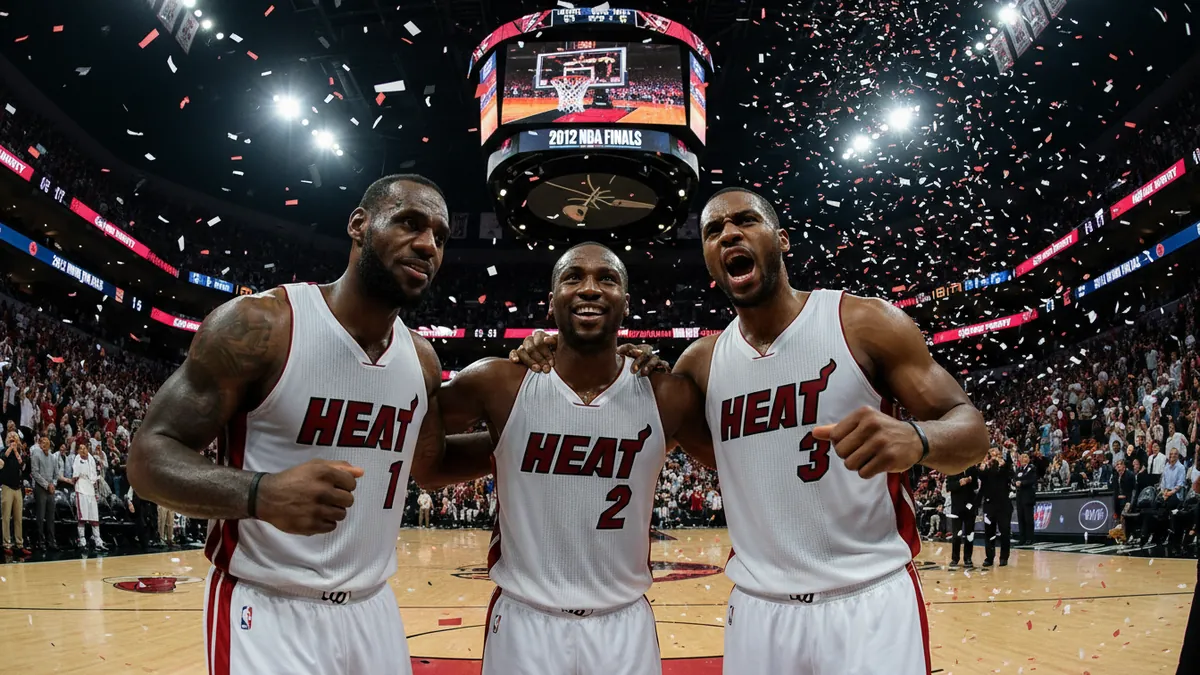
| 2012 | LeBron James, Dwyane Wade, Chris Bosh, Mario Chalmers | Erik Spoelstra | Oklahoma City Thunder | LeBron James | ||
| 2013 | LeBron James, Dwyane Wade, Chris Bosh, Ray Allen | Erik Spoelstra | San Antonio Spurs | LeBron James |
This table illustrates the different iterations of championship rosters, each built around a core of star talent but always infused with the principles of Heat Culture. From the veteran-laden team of 2006 to the superstar-driven squads of 2012-13, the underlying commitment to toughness and discipline remained constant.
The Enduring Legacy of Heat Culture

The Miami Heat's 35-year rise is a compelling narrative of how a clear organizational philosophy, consistently applied and fiercely protected, can lead to sustained success. Pat Riley's vision, combined with the dedication of players like Dwyane Wade, LeBron James, and Jimmy Butler, has created a franchise that is synonymous with winning and resilience.
Heat Culture is more than just a set of rules; it is a way of life that permeates every aspect of the organization. It is the reason why the Heat consistently outperform expectations, develop overlooked talent, and compete for championships year after year. In an NBA that is constantly changing, the Heat have remained a beacon of stability and excellence, proving that a strong culture can be the ultimate competitive advantage.
The story of the Miami Heat is still being written, but its legacy is already secure. It is a legacy built on toughness, sustained by discipline, and defined by an unyielding will to win. For any aspiring franchise, the Heat provide a blueprint for how to build a lasting dynasty, not just through talent acquisition, but through the cultivation of a powerful and enduring culture.