Manchester City History
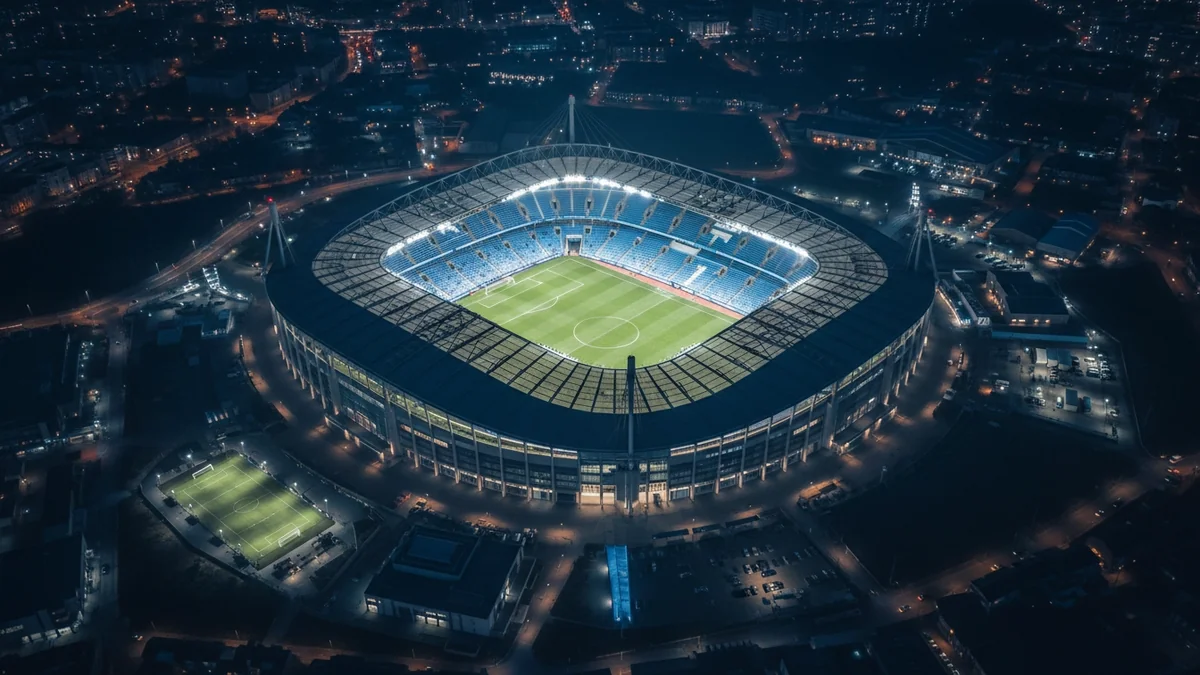
Manchester City Football Club, a name now synonymous with domestic and European dominance, boasts a rich and multifaceted history that long predates its modern era of success. From its humble 19th-century origins in industrial Manchester to its current status as a global footballing powerhouse, the club's journey has been marked by periods of triumph, adversity, and profound transformation. The sky-blue shirt has been worn by generations of iconic players, and the dugout has been graced by legendary managers who have each left an indelible mark. This article explores the comprehensive Manchester City history, charting its course from a church team in West Gorton to the treble-winning behemoth of the 21st century, examining the key milestones, pivotal figures, and defining eras that have shaped this iconic English club.
Formation and Early Years
Manchester City's story begins not in a boardroom, but in the heart of a community seeking social cohesion and purpose. The club was founded in 1880 as St. Mark's (West Gorton) by members of St. Mark's Church of England in Gorton, a district of Manchester. The initiative, led by rector Arthur Connell and his daughter Anna, was a philanthropic effort to provide positive recreational activities for local men and curb the influence of gang violence and alcoholism prevalent in the area. The team played its early matches on a patch of land near the church, their first recorded game taking place in November 1880.
In 1887, the club underwent a significant change, relocating to a new ground at Hyde Road in Ardwick and renaming itself Ardwick A.F.C. to reflect its new home. This move coincided with the club turning professional, and in 1892, Ardwick A.F.C. was invited to become a founding member of the Football League Second Division. Financial troubles soon followed, leading to a reorganization in 1894. It was during this restructuring that the club was reborn under the name it carries to this day: Manchester City Football Club. This name change signified a broader ambition to represent the entire city. The newly christened club quickly found success, winning the Second Division in 1899 to earn promotion to the top flight of English football for the first time, and capping its early rise by winning its first major trophy, the FA Cup, in 1904.
Pre-War Success and Post-War Fluctuations
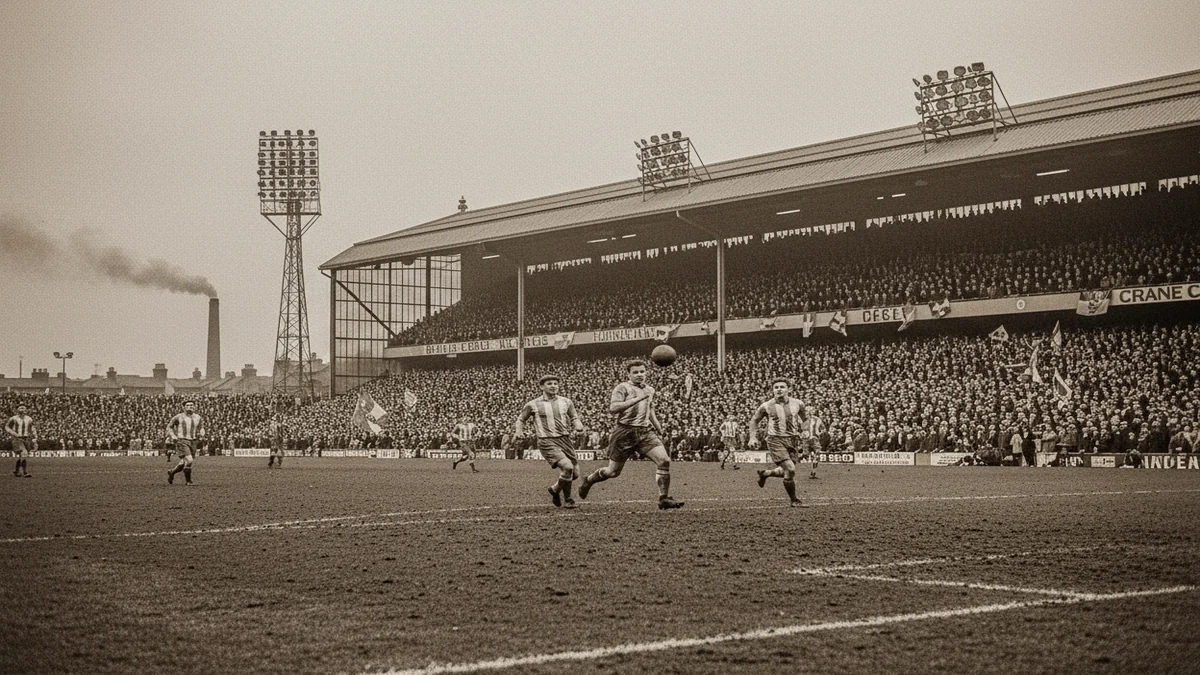
The period leading up to the First World War saw Manchester City establish itself as a consistent First Division side, though further major honors proved elusive. The post-war era, however, brought a mixture of highs and lows that would characterize much of the club's 20th-century existence. The 1920s saw the club move to a new, expansive stadium, Maine Road, which would be its home for the next 80 years. The 1930s ushered in a period of significant success. City reached two consecutive FA Cup finals, losing in 1933 but triumphing in 1934. This was followed by the club's first-ever First Division league title in the 1936–37 season, with a team that played an exciting, attacking brand of football.
However, in a turn of events that would become emblematic of the club's unpredictable nature, Manchester City was relegated from the First Division the very next season, despite scoring more goals than any other team. The post-Second World War era continued this pattern of fluctuation. The club developed a tactical system known as the "Revie Plan" in the 1950s, which saw them reach the FA Cup final in both 1955 and 1956. After losing the first, they won the second in a final famous for being the game where legendary goalkeeper Bert Trautmann continued playing despite breaking his neck. The late 1960s brought another golden era under the management of Joe Mercer and his coach Malcolm Allison, as City won the league title in 1968, the FA Cup in 1969, and two trophies in 1970: the League Cup and their first and only European honor for over 50 years, the European Cup Winners' Cup.
The Mercer-Allison Era and Subsequent Decline
The managerial partnership of Joe Mercer and Malcolm Allison in the late 1960s and early 1970s is remembered as one of the most glorious periods in Manchester City's history. Mercer, the calm and dignified manager, and Allison, the flamboyant and tactically innovative coach, created a perfect synergy that propelled the club to new heights. They assembled a team renowned for its attacking flair and resilience, featuring club legends such as Colin Bell, Francis Lee, and Mike Summerbee. This trio formed the heart of a side that played with a swagger and confidence that captivated the nation.
The era's crowning achievement was winning the First Division title in 1967-68, clinching it on the final day of the season. This was followed by an FA Cup victory in 1969 and a historic double in 1970, when City won both the League Cup and the European Cup Winners' Cup, defeating Polish side Górnik Zabrze in the final. This European triumph was a landmark moment, cementing City's place among the continent's elite. However, the success was not sustained. Internal friction and the departure of key figures led to a gradual decline. The 1980s and 1990s were largely a period of struggle and instability, with the club experiencing several relegations, including a drop to the third tier of English football for the first time in its history in 1998. This period was a stark contrast to the glory days, testing the loyalty of the club's fanbase to its limits.
The Abu Dhabi Takeover and the Dawn of a New Era
The modern history of Manchester City was irrevocably transformed on September 1, 2008. The club was purchased by Sheikh Mansour bin Zayed Al Nahyan's Abu Dhabi United Group, heralding the dawn of an era of unprecedented investment and ambition. The takeover provided the club with financial resources that were previously unimaginable, allowing for the acquisition of world-class players and the development of state-of-the-art infrastructure, including the magnificent Etihad Campus training facility.
The impact was almost immediate. The club began to climb the Premier League table, and the first piece of silverware of the new era arrived with the FA Cup in 2011. However, the most iconic moment came on the final day of the 2011-12 Premier League season. In a heart-stopping finale, Sergio Agüero scored a goal in the 94th minute against Queens Park Rangers to snatch the league title from rivals Manchester United on goal difference, ending City's 44-year wait for a top-flight championship. This dramatic victory was a watershed moment, symbolizing the shift in power in English football and marking the true beginning of Manchester City's dominance. The appointment of managers like Roberto Mancini and Manuel Pellegrini brought further league titles and domestic cups, but it was the arrival of Pep Guardiola in 2016 that would elevate the club to a level of sustained excellence never before seen in its history.
The Pep Guardiola Revolution and the Treble
The appointment of Pep Guardiola as manager in 2016 initiated the most successful and dominant period in Manchester City's history. The Catalan tactician implemented a revolutionary footballing philosophy based on possession, positional play, and intense pressing, transforming City into one of the most aesthetically pleasing and tactically sophisticated teams in the world. Under Guardiola, the club has achieved a level of sustained domestic success that is almost unparalleled.
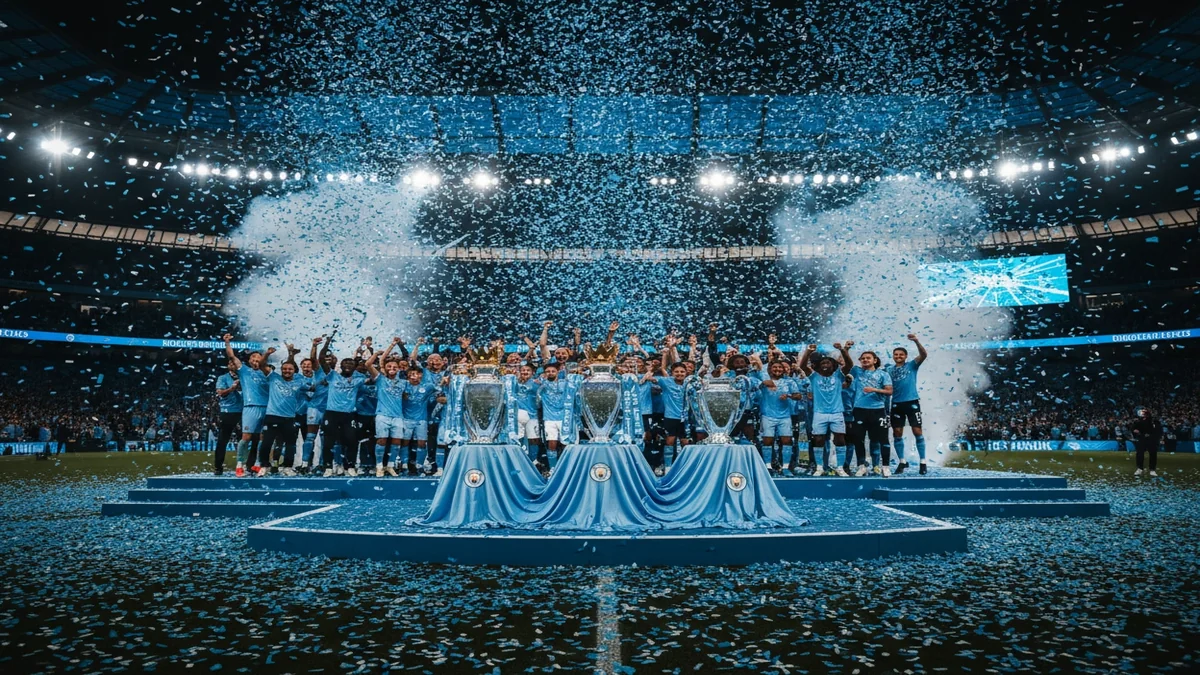
City has won multiple Premier League titles, including a record-breaking 2017-18 season where they became the first team to amass 100 points. They also achieved an unprecedented domestic treble in the 2018-19 season, winning the Premier League, FA Cup, and League Cup. The culmination of Guardiola's project and the club's ultimate ambition was realized in the 2022-23 season. Manchester City completed the historic Continental Treble, winning the Premier League, the FA Cup, and, for the first time in their history, the UEFA Champions League. The Champions League final victory over Inter Milan in Istanbul was the crowning glory, cementing the club's status as the best in Europe. This achievement was the result of years of meticulous planning, investment, and the brilliant execution of Guardiola's vision, solidifying his and the team's place in footballing immortality.
Greatest Players & Managers
Manchester City's journey from a community club to a global superpower has been shaped by a host of legendary figures. These players and managers are revered not just for the trophies they won, but for their lasting impact on the club's identity and culture.
Iconic Players:
- Colin Bell: Often cited as Manchester City's greatest-ever player, "The King of the Kippax" was a midfield dynamo in the 1960s and 70s. His grace, stamina, and goal-scoring ability were central to the Mercer-Allison era of success.
- Sergio Agüero: The club's all-time leading goalscorer, the Argentine striker is a modern-day legend. His title-winning goal in 2012 is the most iconic moment in the club's history, and his clinical finishing delivered countless trophies during his decade at the Etihad.
- David Silva: Nicknamed "El Mago" (The Magician), the Spanish playmaker was the creative heart of City's midfield for a decade. His vision, passing, and technical brilliance were instrumental in the club's transformation into a dominant force.
- Vincent Kompany: A colossal figure at the heart of the defense and a natural leader, the Belgian captained the club through its most successful period, lifting four Premier League titles. His thunderous long-range goal against Leicester City in 2019 was a defining moment in another title race.
- Kevin De Bruyne: Widely regarded as one of the best midfielders of his generation, the Belgian has been the driving force behind Pep Guardiola's success. His incredible passing range, vision, and goal contributions have been central to City's domestic and European dominance.
- Bert Trautmann: A former German prisoner of war who became a club icon, the goalkeeper is best remembered for his bravery in the 1956 FA Cup final, where he played the final 17 minutes with a broken neck.
- Joe Mercer and Malcolm Allison: This managerial duo orchestrated the club's golden era in the late 1960s and early 1970s, winning the league title, FA Cup, League Cup, and the European Cup Winners' Cup with a team that played with style and flair.
- Pep Guardiola: The most successful manager in the club's history, Guardiola has revolutionized City with his tactical genius. He has delivered a plethora of domestic trophies and, most significantly, the club's first-ever UEFA Champions League title as part of a historic treble.
Legendary Managers:
Legacy and Modern Dominance
Manchester City's legacy has been dramatically redefined in the 21st century. While the club has always possessed a rich history and a fiercely loyal fanbase, the Abu Dhabi takeover in 2008 and the subsequent appointment of Pep Guardiola have elevated it to the pinnacle of world football. The club's modern identity is one of relentless ambition, tactical innovation, and an unwavering pursuit of perfection. The investment in world-class players, state-of-the-art facilities, and a global network of clubs under the City Football Group umbrella has created a sustainable model for success.
Today, Manchester City is not just a football club; it is a global brand, admired for its attractive style of play and its consistent accumulation of silverware. The historic treble-winning season of 2022-23 cemented this era of dominance, fulfilling the long-held dream of European glory. The club's current status is that of a benchmark for excellence in modern football. As they continue to compete for every major trophy, the challenge is to build upon this incredible foundation, nurture the next generation of talent, and ensure that this golden era is not just a fleeting moment but the beginning of a lasting dynasty in English and European football.
FAQ: Manchester City History
Q: When was Manchester City founded?
A: Manchester City was founded in 1880 as St. Mark's (West Gorton). The club was renamed Ardwick A.F.C. in 1887 and finally became Manchester City Football Club in 1894.
Q: What is the "93:20" moment?
A: The "93:20" moment refers to the exact time (93 minutes and 20 seconds) when Sergio Agüero scored the winning goal against Queens Park Rangers on the final day of the 2011-12 season, securing Manchester City's first league title in 44 years in the most dramatic fashion.
Q: Who is Manchester City's most successful manager?
A: Pep Guardiola is Manchester City's most successful manager, having won numerous Premier League titles, FA Cups, League Cups, and the club's first-ever UEFA Champions League as part of a historic Continental Treble in the 2022-23 season.