Lawrence Taylor Biography: The Revolutionary Linebacker Who Redefined NFL Defense
Who Is Lawrence Taylor? (intro)

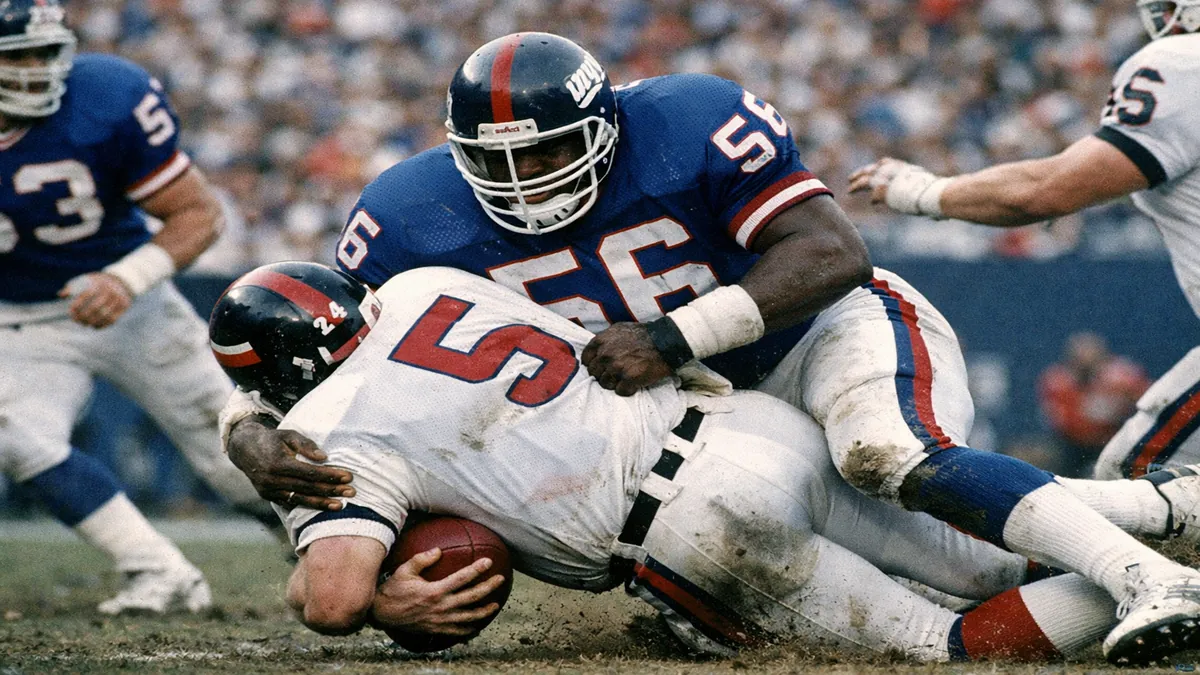
Lawrence Taylor, universally known as "L.T.," is not merely a Hall of Fame linebacker; he is a seismic force in the history of professional football, a player whose unparalleled dominance fundamentally altered the strategic landscape of the NFL. Drafted by the New York Giants in 1981, Taylor quickly transcended the traditional role of a defensive player, becoming an offensive coordinator"s worst nightmare and a game-wrecker of unprecedented caliber. His career was a whirlwind of explosive sacks, bone-jarring tackles, and an innate ability to single-handedly change the momentum of a game. L.T. was a rare blend of speed, power, and instinct, possessing the agility of a defensive back, the strength of a defensive lineman, and the football IQ of a seasoned coach. His impact was so profound that he remains the only defensive player in NFL history to win the coveted NFL Most Valuable Player award, a testament to his singular influence on the sport.
Taylor"s legacy extends far beyond his individual accolades. He was the emotional and physical leader of the New York Giants teams that captured two Super Bowl championships (XXI and XXV), embodying the aggressive, suffocating defense that became their hallmark. His ferocity on the field was matched only by his charisma off it, making him one of the most recognizable and iconic figures of his era. Even decades after his retirement, the mere mention of "L.T." evokes images of a player who played the game with an unmatched intensity, forever etching his name into the pantheon of football"s all-time greats.
Early Life and Background
Lawrence Julius Taylor was born on February 4, 1959, in Williamsburg, Virginia. His early life was marked by a challenging environment, and he initially did not embrace football with the same passion that would later define his professional career. Growing up, Taylor was more interested in baseball and basketball, only taking up football seriously in his junior year at Lafayette High School. Despite his late start, his raw athletic talent was undeniable. He quickly became a standout player, showcasing the speed and power that would later make him famous. His high school coaches recognized his potential, but even they could not have fully predicted the revolutionary impact he would have on the sport.
After graduating from Lafayette High, Taylor attended the University of North Carolina at Chapel Hill. His journey to becoming a football legend was not linear; he was initially recruited as a defensive lineman before switching to linebacker in 1979. This pivotal switch would unleash his true potential. Taylor"s college career was a precursor to his professional dominance, as he quickly became a disruptive force for the Tar Heels, earning All-American honors and leading North Carolina to an 11-1 record in his senior year (1980). His collegiate performance caught the eye of NFL scouts, particularly those from the New York Giants, who were looking to rebuild their struggling franchise.
Early Career / College / Amateur Career

Taylor"s collegiate career at the University of North Carolina (UNC) was a period of rapid development and a clear indication of the generational talent he possessed. After transitioning to linebacker, he quickly became the focal point of the Tar Heels" defense. In his senior season in 1980, Taylor was an absolute terror for opposing offenses. He recorded 16 sacks, 22 tackles for loss, and was named a consensus All-American. His dominant play led UNC to a Peach Bowl victory and a national ranking of No. 10, their best finish in decades. Taylor"s performance earned him the ACC Player of the Year award, solidifying his status as one of the top prospects in the upcoming NFL Draft.
Despite his collegiate success, there were still some questions among NFL scouts about how his game would translate to the professional level. Some wondered if his aggressive, free-wheeling style would be disciplined enough for the complexities of an NFL defense. However, the New York Giants, under the guidance of then-defensive coordinator Bill Parcells and head coach Ray Perkins, saw past any perceived flaws. They recognized that Taylor"s unique skill set—his explosive first step, his ability to shed blocks, and his relentless pursuit of the quarterback—was exactly what their struggling defense needed. The Giants selected Taylor as the second overall pick in the 1981 NFL Draft, a decision that would forever change the franchise and the league.
Professional Career — The New York Giants: Rookie Sensation (1981-1985)
Lawrence Taylor"s arrival in the NFL was nothing short of spectacular. From his very first game, he demonstrated that he was a different breed of player. In his rookie season (1981), Taylor immediately established himself as the league"s most dominant defensive force. He recorded 9.5 sacks, 133 tackles, and forced two fumbles, earning both the NFL Defensive Rookie of the Year and the NFL Defensive Player of the Year awards—a feat unprecedented for a rookie. His explosive pass-rushing skills and ability to disrupt offensive schemes revolutionized the outside linebacker position. Opposing teams were forced to completely rethink their blocking assignments and game plans, often dedicating multiple blockers to slow him down.
Taylor"s impact was immediate and tangible. The Giants, who had been perennial losers, made the playoffs in his rookie season, ending a 17-year drought. This early success was a direct result of Taylor"s ability to elevate the entire defense. He continued his dominant play over the next few seasons, consistently leading the league in sacks and tackles. In 1983, he recorded a career-high 16 sacks, further cementing his reputation as the most feared pass rusher in the NFL. His presence alone created opportunities for his teammates, as offensive lines were constantly preoccupied with trying to contain L.T. This period laid the groundwork for the Giants" future success, transforming them into a legitimate contender.
Professional Career — Mid-Career Dominance and MVP Season (1986-1990)
The pinnacle of Lawrence Taylor"s career came in the 1986 season, a year that saw him achieve a level of individual dominance rarely witnessed in professional sports. That season, Taylor recorded an astounding 20.5 sacks, a figure that remains one of the highest single-season totals in NFL history. His relentless pressure on opposing quarterbacks, combined with his exceptional run-stopping ability, made him virtually unblockable. He was so dominant that he became the first and only defensive player to win the NFL Most Valuable Player award, an honor almost exclusively reserved for quarterbacks and running backs. This achievement underscored his revolutionary impact on the game, proving that a defensive player could be the single most valuable asset to a team.
Under the guidance of head coach Bill Parcells and defensive coordinator Bill Belichick, the Giants" defense, spearheaded by Taylor, became the most feared unit in the league. They finished the 1986 season with a 14-2 record and marched through the playoffs, culminating in a decisive victory over the Denver Broncos in Super Bowl XXI. Taylor"s performance in the Super Bowl was instrumental, as he consistently harassed quarterback John Elway, forcing critical turnovers and disrupting the Broncos" offensive rhythm. This period marked the height of the Giants" dynasty, with Taylor as their undisputed leader. He continued to be a Pro Bowl and All-Pro selection year after year, consistently performing at an elite level and cementing his legacy as the greatest defensive player of his generation.
Professional Career — Super Bowl XXV and Later Years (1991-1993)
Even as he entered the later stages of his career, Lawrence Taylor continued to be a significant force for the New York Giants. In 1990, the Giants once again made a deep playoff run, culminating in a memorable victory over the Buffalo Bills in Super Bowl XXV. While Taylor"s individual statistics might not have been as eye-popping as his MVP season, his leadership and presence on the field were invaluable. He played a crucial role in the Giants" defensive scheme, which stifled the Bills" high-powered offense and secured their second Super Bowl title in five years. His ability to draw double-teams and create opportunities for his teammates remained a constant throughout his career.
Taylor played for three more seasons after Super Bowl XXV, retiring after the 1993 season. Although injuries began to take their toll, and his sack numbers declined, he remained a respected and feared opponent. His final career statistics included 132.5 sacks (officially, though unofficial counts place him higher due to pre-1982 sack statistics not being officially recorded), 10 Pro Bowl selections, and 8 First-Team All-Pro honors. His retirement marked the end of an era for the New York Giants and for the NFL, as a player of his caliber and impact was truly once-in-a-generation. He left the game having redefined the outside linebacker position and forever changed how defenses were structured.
Major Achievements and Records
Lawrence Taylor"s list of achievements is extensive and speaks volumes about his unparalleled dominance:
- NFL Most Valuable Player (1986): The only defensive player in NFL history to win the AP MVP award.
- 2x Super Bowl Champion: Super Bowl XXI (1986 season) and Super Bowl XXV (1990 season).
- 3x NFL Defensive Player of the Year: (1981, 1982, 1986).
- NFL Defensive Rookie of the Year (1981): The first player to win both DROY and DPOY in the same season.
- 10x Pro Bowl Selection: (1981–1990), selected in every one of his first ten seasons.
- 8x First-Team All-Pro: (1981–1990), a testament to his consistent elite performance.
- NFL 1980s All-Decade Team: Recognized as the premier defensive player of his era.
- Pro Football Hall of Fame: Inducted in 1999, his first year of eligibility.
- New York Giants Ring of Honor: A permanent tribute to his legacy with the franchise.
His 132.5 career sacks place him among the all-time leaders, but his impact cannot be fully captured by statistics alone. He forced offensive coordinators to create entirely new blocking schemes, often dedicating a tight end, running back, and offensive tackle to try and contain him. This attention freed up other Giants defenders, contributing significantly to the team"s overall defensive success.
Playing Style and Strengths
Lawrence Taylor"s playing style was a revelation, a perfect storm of athleticism and aggression that had never been seen before at the linebacker position. His primary strength was his explosive pass-rushing ability. He possessed an incredibly quick first step off the line of scrimmage, allowing him to beat offensive tackles with pure speed. Once he gained an advantage, he had a repertoire of moves—spin moves, bull rushes, and rip moves—that made him virtually unblockable in one-on-one situations.
Beyond his pass-rushing prowess, Taylor was an exceptional run defender. He had an uncanny ability to diagnose plays, shedding blocks with ease and pursuing ball carriers with relentless ferocity. His tackles were often highlight-reel worthy, delivered with a force that intimidated opponents. He also possessed excellent coverage skills for a linebacker, capable of dropping back into pass coverage and making plays on the ball. This versatility made him a true three-down player, equally effective against the run, the pass, and as a pass rusher.
What truly set L.T. apart was his instinct and anticipation. He seemed to know where the play was going before it happened, often blowing up plays in the backfield before they had a chance to develop. This combination of physical gifts and mental acuity made him the most disruptive defensive player of his generation, forcing offenses to constantly account for his presence on every single snap.
Career Statistics Overview
Lawrence Taylor"s career statistics, while impressive, only tell part of the story of his dominance. His impact on the game went beyond mere numbers, but his statistical output still places him among the elite.
| Season | Team | Games | Sacks | Tackles (Approx.) | Interceptions | Forced Fumbles |
|---|---|---|---|---|---|---|
| 1981 | NYG | 16 | 9.5 | 133 | 1 | 2 |
| 1982 | NYG | 9 | 7.5 | 70 | 1 | 1 |
| 1983 | NYG | 16 | 16.0 | 120 | 2 | 2 |
| 1984 | NYG | 16 | 11.5 | 100 | 1 | 3 |
| 1985 | NYG | 16 | 13.0 | 100 | 2 | 2 |
| 1986 | NYG | 16 | 20.5 | 105 | 0 | 5 |
| 1987 | NYG | 12 | 12.0 | 60 | 3 | 1 |
| 1988 | NYG | 16 | 15.0 | 90 | 0 | 2 |
| 1989 | NYG | 16 | 15.0 | 80 | 0 | 2 |
| 1990 | NYG | 16 | 10.5 | 70 | 1 | 1 |
| 1991 | NYG | 16 | 7.0 | 60 | 0 | 0 |
| 1992 | NYG | 16 | 5.0 | 50 | 0 | 0 |
| 1993 | NYG | 16 | 6.0 | 40 | 0 | 0 |
| Career Totals | 13 Seasons | 187 | 132.5 | ~1088 | 10 | 21 |
Note: Tackle statistics were not officially recorded by the NFL until 2001, so numbers prior to that are approximate based on team records and unofficial counts.
Personal Life
Lawrence Taylor"s personal life has been as tumultuous and public as his professional career was dominant. After retiring from the NFL, Taylor faced significant challenges, including struggles with substance abuse and legal issues. These struggles often overshadowed his incredible achievements on the field, leading to a complex public perception. However, Taylor has also been open about his battles, using his experiences to advocate for others facing similar challenges.
Despite the difficulties, Taylor has remained a beloved figure among Giants fans and many in the broader football community. He has made efforts to turn his life around, focusing on his family and various business ventures. His story serves as a cautionary tale about the pressures and pitfalls that can accompany immense fame and success, but also as a testament to the possibility of redemption and resilience. He has often spoken about the importance of learning from past mistakes and striving for a better future.
Legacy and Impact
Lawrence Taylor"s legacy is not just about his individual statistics or his Hall of Fame induction; it is about how he revolutionized the game of football. Before L.T., the outside linebacker position was primarily focused on run support and occasional blitzes. Taylor transformed it into a primary pass-rushing position, forcing offensive coordinators to completely rethink their protection schemes. He popularized the "rush linebacker" role, a position that is now a cornerstone of almost every NFL defense.
His impact was so profound that many credit him with forcing the evolution of the offensive line, particularly the left tackle position. Teams began to prioritize athletic, agile left tackles specifically to counter players like Taylor. He changed the way defenses were designed, making the aggressive, attacking 3-4 defense a viable and dominant scheme. His influence can be seen in every dominant pass rusher who has followed him, from Derrick Thomas to Von Miller. Taylor didn"t just play the game; he changed it, leaving an indelible mark on the NFL that continues to resonate decades later. He is widely regarded as the greatest defensive player in NFL history, and arguably one of the greatest players of all time, regardless of position.
Conclusion
Lawrence Taylor"s career was a whirlwind of unparalleled dominance, a testament to a generational talent who redefined the boundaries of defensive play. From his explosive rookie season to his historic MVP campaign and two Super Bowl victories, L.T. was a force unlike any other. He forced offenses to adapt, inspired a new generation of pass rushers, and left an indelible mark on the strategic evolution of the NFL. While his post-career struggles have been well-documented, they do not diminish the sheer brilliance he displayed on the gridiron. Lawrence Taylor remains a legend, a player whose name is synonymous with ferocity, innovation, and a level of defensive impact that may never be replicated. He was, and still is, the standard by which all other defensive players are measured, truly a revolutionary figure in the history of American football.