Juventus History
Juventus history is a saga of unparalleled success, enduring passion, and a profound influence on Italian and European football. Founded in 1897 by a group of Turinese students, the club, affectionately known as "La Vecchia Signora" (The Old Lady), has grown from a youthful endeavor into Italy's most successful football institution. With a record number of Serie A titles, numerous Coppa Italia trophies, and a significant presence on the European stage, Juventus has consistently set the benchmark for excellence in Italian football. Their journey is marked by periods of dominant dynasties, iconic players who became legends, and a distinctive black and white identity that resonates with millions of fans worldwide. This article delves into the rich and complex narrative of Juventus FC, exploring its origins, the pivotal eras that shaped its identity, its vast array of achievements, and the legendary figures who have contributed to its enduring status as a global footballing powerhouse. From its amateur beginnings to its modern-day commercial might, Juventus's story is one of relentless ambition, strategic innovation, and an unwavering commitment to victory.
Early Foundations and the Agnelli Era

The origins of Juventus history trace back to November 1, 1897, when a group of students from the Massimo D'Azeglio Lyceum in Turin founded a sports club. Initially, they called themselves Sport-Club Juventus, with "Juventus" being Latin for "youth." The club's early years were characterized by an amateur spirit, with matches played among friends and against other local teams. Their first official league match took place in 1900. In 1903, the club adopted its iconic black and white striped kits, inspired by English club Notts County, a design that has remained synonymous with Juventus ever since. This early period saw the club establish its presence in Italian football, winning its first Italian Football Championship in 1905, a significant milestone that signaled its potential.
However, a major turning point in Juventus's history, and indeed in Italian football, occurred in 1923 when the club came under the ownership of the Agnelli family, founders of the Fiat automobile company. This acquisition marked the beginning of a transformative era, providing Juventus with unprecedented financial stability and a long-term vision that would propel it to national and international prominence. The Agnelli family's patronage allowed Juventus to professionalize its operations, attract top talent, and invest in infrastructure, laying the groundwork for sustained success. The 1930s, under the Agnelli ownership, became Juventus's first golden age, known as the "Quinquennio d'Oro" (Golden Quinquennium). From 1930 to 1935, the club won five consecutive Serie A titles, a feat that established their dominance in Italian football and set a precedent for future generations. This period was characterized by a strong, organized team and innovative tactical approaches, solidifying Juventus's reputation as a leading force. The Agnelli family's enduring involvement, spanning nearly a century, has been a cornerstone of Juventus's identity, providing continuity, resources, and a commitment to excellence that few other clubs can match. Their influence transformed Juventus from a local club into a national and then global brand, deeply embedding the club within the fabric of Italian industry and society.
Dynasties and European Aspirations
The post-World War II era saw Juventus continue its trajectory of success, building new dynasties and increasingly setting its sights on European glory. The 1950s brought further Serie A titles, with legendary players like Giampiero Boniperti becoming the face of the club. The 1960s and 70s were marked by intense domestic competition, but Juventus consistently remained at the top, adding more Scudetti to their collection. This period also saw the club make significant strides in European competitions, though major continental trophies remained elusive for a time. The club's consistent presence in the latter stages of the European Cup and other UEFA tournaments underscored its growing stature on the continent.
The late 1970s and 1980s ushered in another golden era, particularly under the astute management of Giovanni Trapattoni. His first spell as manager (1976-1986) is widely considered one of the most successful in the club's history. Under Trapattoni, Juventus achieved unprecedented success, becoming the first club in European football history to win all three major UEFA club competitions: the UEFA Cup (1977), the UEFA Cup Winners' Cup (1984), and the European Cup (1985). The 1984-1985 season, culminating in the European Cup triumph, was particularly poignant, overshadowed by the tragic Heysel Stadium disaster. Despite the tragedy, the victory marked a significant milestone, fulfilling a long-held ambition for the club. This era featured iconic players such as Michel Platini, Paolo Rossi, and Gaetano Scirea, who formed the backbone of a team that combined tactical discipline with immense individual talent. Trapattoni's Juventus was a dominant force, not just in Italy but across Europe, establishing a reputation for resilience and strategic brilliance. The club's consistent domestic success, including six Serie A titles under Trapattoni, solidified its position as the undisputed leader of Italian football and a major player on the European stage, constantly pushing the boundaries of what an Italian club could achieve.
The Lippi and Modern Eras

The 1990s and early 2000s witnessed another period of immense success for Juventus, largely defined by the managerial genius of Marcello Lippi. His two spells at the club (1994-1999 and 2001-2004) brought a renewed sense of dominance, both domestically and in Europe. Lippi's Juventus was a formidable force, characterized by a strong defense, a dynamic midfield, and potent attacking options. Under his guidance, the club won five Serie A titles, one Coppa Italia, four Supercoppa Italiana, and most notably, the UEFA Champions League in 1996, defeating Ajax in the final. They also reached three consecutive Champions League finals between 1996 and 1998, a testament to their consistent excellence. This era featured a galaxy of stars including Alessandro Del Piero, Zinedine Zidane, Didier Deschamps, Edgar Davids, and Gianluigi Buffon, who became synonymous with the club's success. Lippi's tactical acumen and ability to manage strong personalities created a cohesive and winning team that dominated Italian football and consistently challenged for European honors.
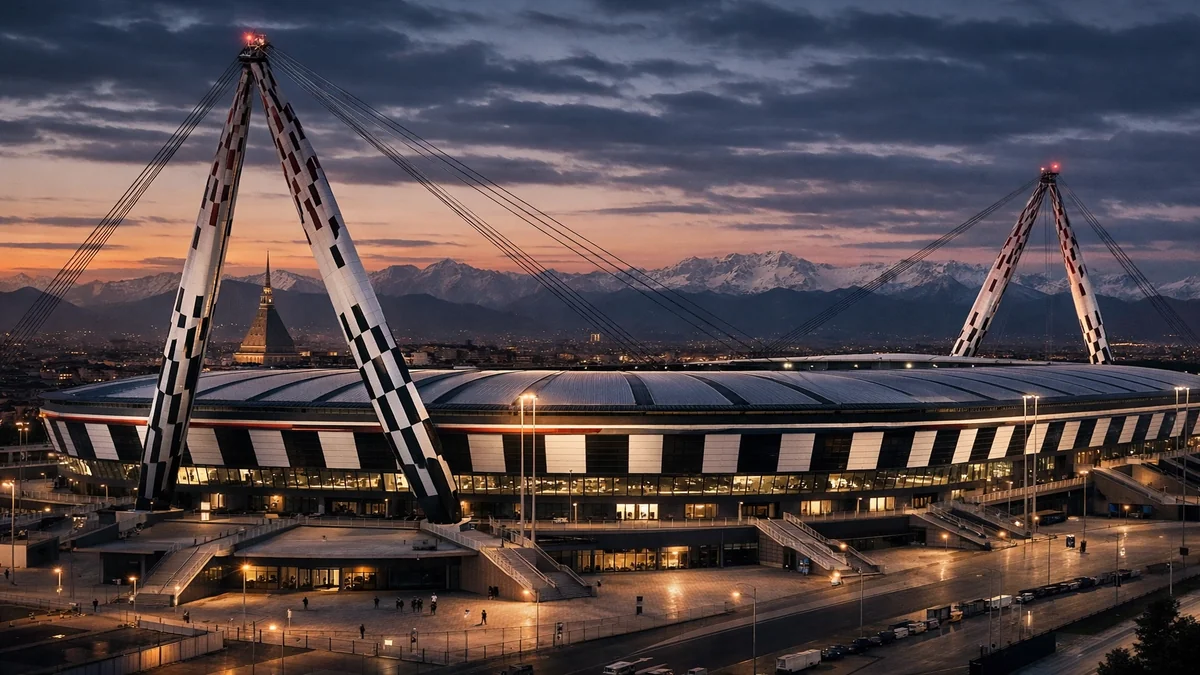
The mid-2000s brought a significant challenge to Juventus's reputation with the Calciopoli scandal in 2006, which resulted in the club being stripped of two Serie A titles and relegated to Serie B. This was a dark chapter in Juventus history, but it also showcased the club's resilience and the unwavering loyalty of its fanbase. Despite the setback, Juventus bounced back, securing promotion back to Serie A in just one season. The subsequent years were a period of rebuilding, culminating in a remarkable resurgence in the 2010s. Under managers like Antonio Conte and Massimiliano Allegri, Juventus established an unprecedented period of dominance, winning nine consecutive Serie A titles from 2011-2012 to 2019-2020. This historic run, known as the "Nove Scudetti" (Nine Scudetti), reaffirmed their status as the undisputed champions of Italy. During this modern era, the club also reached two more UEFA Champions League finals (2015 and 2017), though they were unable to add to their European Cup tally. The signing of Cristiano Ronaldo in 2018 further elevated the club's global profile and commercial appeal, demonstrating their continued ambition to compete at the very highest level. The construction of the Juventus Stadium (now Allianz Stadium) in 2011 provided the club with a modern, owned facility, further solidifying its financial and institutional strength, and marking a new chapter in its illustrious history.
Greatest Players & Managers
The pantheon of Juventus legends is vast, reflecting over a century of unparalleled success and the contributions of countless world-class talents. Identifying the absolute greatest is a challenging task, but certain individuals have left an indelible mark on the club's identity and achievements.
Among the greatest players to have worn the black and white stripes, these names frequently emerge:
The managerial legacy at Juventus is equally distinguished, with several figures shaping the club's tactical and cultural identity:
- Giovanni Trapattoni: "Trap" is the most successful manager in Juventus history, winning 14 trophies across two spells, including 6 Serie A titles, 2 Coppa Italia, 1 European Cup, 1 UEFA Cup Winners' Cup, and 1 UEFA Cup. His tactical acumen and ability to build winning teams are legendary.
- Marcello Lippi: Lippi's two spells brought 5 Serie A titles, 1 Champions League, 1 Coppa Italia, and 4 Supercoppa Italiana. He created one of the most dominant European teams of the 1990s, known for its attacking flair and mental strength.
- Carlo Carcano: The architect of the "Quinquennio d'Oro" in the 1930s, Carcano led Juventus to five consecutive Serie A titles, establishing the club's first great dynasty.
- Antonio Conte: As a former player and captain, Conte returned to manage Juventus in 2011 and immediately revitalized the club, leading them to three consecutive Serie A titles, initiating the "Nove Scudetti" era with his intense tactical approach and winning mentality.
- Massimiliano Allegri: Allegri continued Conte's success, winning five consecutive Serie A titles, four Coppa Italia, and two Supercoppa Italiana. He also guided Juventus to two Champions League finals, demonstrating his ability to adapt and maintain the club's dominance.
Legacy and Current Status
Juventus history is synonymous with success, a legacy built on a foundation of relentless ambition, strategic foresight, and an unwavering commitment to victory. The club's identity, deeply intertwined with the Agnelli family, has fostered a culture of professionalism and excellence that has consistently placed it at the pinnacle of Italian football. The "Old Lady" is not just a football club; it is a symbol of Turin, a national institution, and a global brand recognized for its distinctive black and white stripes and its "fino alla fine" (until the end) motto. Despite challenges, including the Calciopoli scandal, Juventus has always demonstrated remarkable resilience, bouncing back stronger and reaffirming its dominant position. Their legacy is one of setting records, producing legends, and consistently challenging for the highest honors, both domestically and in Europe.
In terms of current status, Juventus remains one of the most prominent and influential clubs in world football. While the era of nine consecutive Serie A titles has concluded, the club continues to be a major contender in Italy, consistently competing for the Scudetto and Coppa Italia. Their financial strength, underpinned by a global fanbase and commercial partnerships, allows them to attract top talent and maintain a competitive squad. The Allianz Stadium, their modern, owned home, provides a significant revenue stream and a formidable atmosphere for home matches. Juventus is also a perennial participant in the UEFA Champions League, where they aim to add to their European Cup tally. The club's academy continues to develop promising young players, ensuring a pipeline of talent that can uphold the club's high standards. Strategically, Juventus is focused on sustainable growth, balancing sporting ambition with financial prudence, aiming to maintain its elite status for decades to come.
Why it matters: Juventus's story matters because it represents the enduring power of a well-managed, ambitious football club. Their consistent success has elevated Italian football on the global stage and provided a benchmark for other clubs to aspire to. The club's ability to overcome adversity, such as the Calciopoli scandal, speaks volumes about its institutional strength and the loyalty of its supporters. Juventus embodies a blend of tradition and modernity, constantly adapting to the evolving football landscape while staying true to its core values. Their rivalries, particularly with Inter Milan (Derby d'Italia) and AC Milan, are central to the drama and passion of Italian football. Juventus's continued pursuit of excellence, both on and off the pitch, ensures its relevance and significance in the global footballing narrative, inspiring generations of fans and players alike. The club's history is a testament to the fact that sustained success is built on a foundation of strong leadership, strategic vision, and an unwavering commitment to winning.
FAQ: Juventus
Q: When was Juventus FC founded?
A: Juventus FC was founded on November 1, 1897, by a group of Turinese students.
Q: How many Serie A titles has Juventus won?
A: Juventus has won a record 36 Serie A titles, including an unprecedented nine consecutive titles from 2011-2012 to 2019-2020.
Q: Who is considered the most successful manager in Juventus history?
A: Giovanni Trapattoni is widely considered the most successful manager in Juventus history, having won 14 trophies across two spells, including 6 Serie A titles and the European Cup.