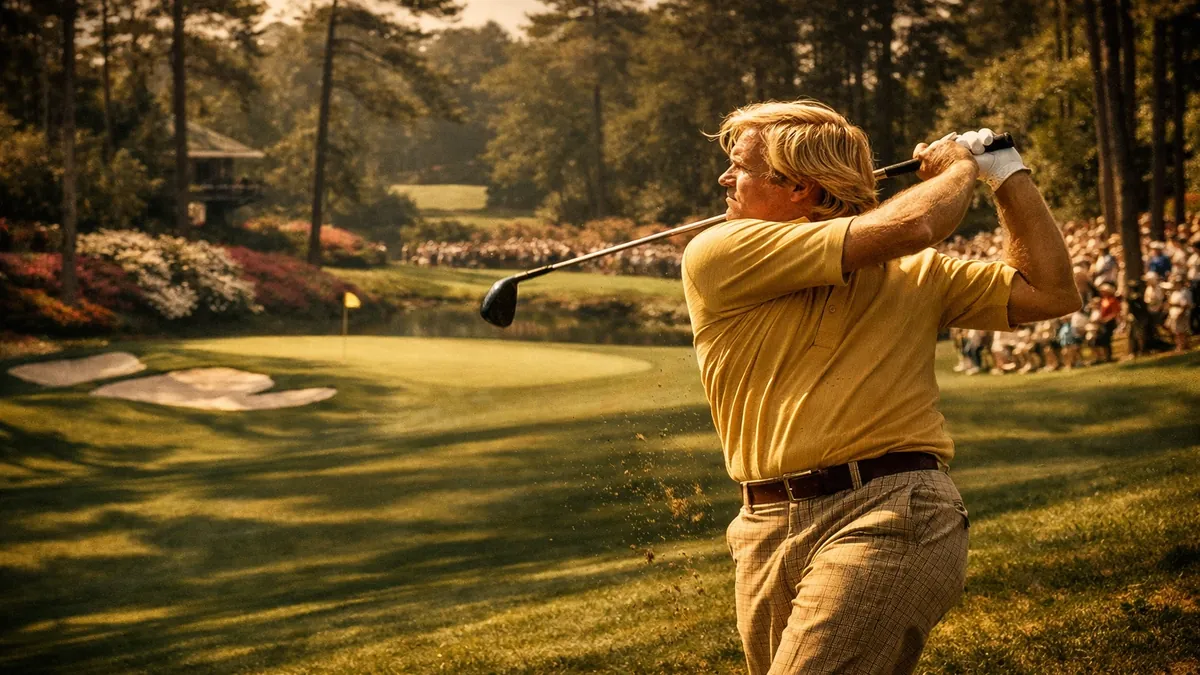
Jack Nicklaus Biography
The name Jack Nicklaus biography is synonymous with golfing greatness, representing a career of unparalleled achievement and sustained dominance that has cemented his status as the greatest golfer of all time. Often referred to as the "Golden Bear," Nicklaus redefined the sport through his strategic prowess, mental fortitude, and an extraordinary ability to perform under the most intense pressure. This comprehensive article delves into the life and career of Jack Nicklaus, exploring his formative years, his professional journey, his record-breaking achievements, his distinctive playing style, and the enduring legacy he has carved out in the annals of golf history. His story is not just one of victories, but of a relentless pursuit of excellence that continues to inspire generations of golfers and sports enthusiasts worldwide.
Early Life and the Genesis of a Legend

Jack William Nicklaus was born on January 21, 1940, in Columbus, Ohio, to parents Louis Charles "Charlie" Nicklaus and Helen "Nellie" Schoener. His introduction to golf came at the tender age of 10, when his father, a pharmacist and avid golfer, took him to the Scioto Country Club. Under the tutelage of club professional Jack Grout, Nicklaus quickly displayed an extraordinary natural talent and an insatiable appetite for the game. His progress was rapid and remarkable; by the age of 12, he had already broken 70, a feat that signaled the arrival of a prodigious talent. His amateur career was nothing short of spectacular, marked by numerous victories that foreshadowed his future professional dominance. He won the Ohio Open at just 16 years old, competing against seasoned professionals, and went on to capture two U.S. Amateur Championship titles in 1959 and 1961. These amateur triumphs, particularly his victory over Charlie Coe in the 1959 U.S. Amateur, showcased his competitive fire and ability to perform on the biggest stages even before turning professional. His collegiate career at Ohio State University further honed his skills, though he left before graduating to pursue his professional dreams, having already established himself as the most promising amateur in the world.
Nicklaus's upbringing in Columbus instilled in him a strong work ethic and a grounded perspective that would serve him throughout his career. His father, Charlie, was a significant influence, not only introducing him to golf but also teaching him the values of sportsmanship and integrity. The competitive environment of junior and amateur golf in Ohio provided a fertile ground for Nicklaus to develop his game, constantly challenging him against older and more experienced players. His early success, including his memorable second-place finish to Arnold Palmer in the 1960 U.S. Open as an amateur, served as a clear indication that a new force was emerging in golf. This performance, where he outplayed many established professionals, sent a clear message to the golfing world that the young Golden Bear was destined for greatness. The foundation laid during these formative years, characterized by rigorous practice, a deep understanding of the game, and an unwavering desire to win, was instrumental in shaping the legendary career that was to follow.
A Career Defined by Dominance and Major Championship Prowess
Jack Nicklaus turned professional in 1961, and his impact on the PGA Tour was immediate and profound. His rivalry with Arnold Palmer, which began in earnest at the 1962 U.S. Open where Nicklaus defeated Palmer in a playoff, captivated the golfing world and ushered in a golden era for the sport. This rivalry, often dubbed "Arnie's Army vs. Jack's Pack," significantly boosted golf's popularity and television viewership. Nicklaus quickly established himself as a major championship specialist, a reputation that would define his career. He won his first Masters in 1963, followed by a string of victories across all four major championships. His ability to peak for the biggest events, coupled with his strategic course management, allowed him to consistently contend and win against the strongest fields. Over his illustrious career, Nicklaus amassed a record 73 PGA Tour victories, a testament to his consistent excellence and longevity at the highest level of the game. His dominance extended beyond the PGA Tour, with 117 official worldwide wins, showcasing his global reach and competitive spirit.
Nicklaus's career was characterized by several distinct periods of dominance. In the 1960s, he established himself as the heir apparent to Palmer, winning multiple majors and setting new standards for professional play. The 1970s saw him solidify his position as the world's number one golfer, adding more major titles and consistently outperforming his peers. Even in the 1980s, as younger talent emerged, Nicklaus continued to contend, culminating in his iconic victory at the 1986 Masters at the age of 46. This victory, often considered one of the greatest moments in sports history, showcased his enduring skill, mental toughness, and ability to defy age. His record of playing in 154 consecutive major championships for which he was eligible, from the 1957 U.S. Open to the 1998 U.S. Open, further highlights his incredible dedication and longevity. Beyond his individual achievements, Nicklaus was a respected figure in the locker room, known for his sportsmanship and his commitment to the integrity of the game. His influence extended to course design, where he became one of the most sought-after architects, designing hundreds of courses worldwide that reflect his strategic understanding of golf. His professional journey is a narrative of sustained excellence, strategic brilliance, and an unwavering commitment to being the best, making his biography a study in competitive mastery.
His ability to consistently perform at the highest level, year after year, against ever-increasing competition, is a testament to his mental fortitude and physical conditioning. Nicklaus's career is a masterclass in strategic golf, where every shot was calculated, and every tournament approached with meticulous planning. His rivalries, particularly with Arnold Palmer and later Tom Watson, not only elevated his own game but also created some of the most compelling narratives in golf history, drawing millions of fans to the sport. The sheer volume of his victories, combined with the quality of his competition, firmly establishes his professional journey as one of unparalleled success and enduring influence.
Unrivaled Achievements and Records

Jack Nicklaus's record of 18 major championship victories stands as the most iconic and revered achievement in golf, a benchmark that has remained unsurpassed for decades. His major haul includes a record six Masters Tournaments (1963, 1965, 1966, 1972, 1975, 1986), four U.S. Open Championships (1962, 1967, 1972, 1980), three Open Championships (British Opens) (1966, 1970, 1978), and a record five PGA Championships (1963, 1971, 1973, 1975, 1980). Beyond the sheer number of wins, Nicklaus also holds the record for the most runner-up finishes in majors with 19, and an astonishing 73 top-10 finishes in major championships, demonstrating an unparalleled level of consistent contention at golf's most prestigious events. He completed the career Grand Slam three times (winning all four major championships), a feat that underscores his mastery across diverse course conditions and competitive formats. This remarkable consistency in majors, often peaking when it mattered most, is a cornerstone of his claim as the greatest of all time.
In addition to his major championship record, Nicklaus amassed 73 PGA Tour victories, placing him third on the all-time list. His 117 official worldwide wins further highlight his global dominance. He was named PGA Player of the Year five times and was the leading money winner eight times. Nicklaus's longevity is another remarkable aspect of his career; he won majors across three different decades, from his first Masters in 1963 to his final one in 1986. His ability to adapt his game to evolving equipment and changing competitive landscapes, while maintaining an elite level of performance, speaks volumes about his skill and dedication. The sheer volume and significance of his achievements paint a picture of a golfer who not only won frequently but also consistently performed at the highest possible level when the stakes were greatest, solidifying his legendary status.
Playing Style & Course Management
Jack Nicklaus's playing style was characterized by a powerful, yet controlled, approach that earned him the nickname 'Golden Bear.' He possessed immense strength, which allowed him to hit the ball prodigious distances, but it was his strategic mind and exceptional course management that truly set him apart. Nicklaus was renowned for his ability to analyze a golf course, identifying the optimal lines of play, the safest routes, and the best opportunities for birdies. He often played a conservative strategy, aiming for the fat part of the greens and avoiding unnecessary risks, especially in major championships. This calculated approach minimized bogeys and allowed him to capitalize on his opponents' mistakes. His iron play was exceptionally precise, enabling him to consistently hit greens in regulation and set up birdie opportunities. He was also a master putter, particularly under pressure, sinking crucial putts that often sealed his victories.
What distinguished Nicklaus was his unparalleled mental game. He possessed an unwavering focus and an almost uncanny ability to perform under the most intense pressure. He rarely showed emotion on the course, maintaining a calm and composed demeanor that often intimidated his opponents. His strategic thinking extended to his preparation; he meticulously scouted courses, often playing practice rounds with a clear game plan in mind. This combination of raw power, precise ball-striking, exceptional short game, and an unshakeable mental approach made him a formidable opponent in any tournament, but especially in the majors. He understood that major championships were won by avoiding mistakes and capitalizing on opportunities, rather than by constantly chasing birdies. His ability to pace himself through a tournament, knowing when to attack and when to play safe, was a hallmark of his genius. This strategic brilliance, combined with his physical gifts, allowed him to dominate the sport for an extended period, setting a standard for intelligent and effective course management that few have ever matched.
Legacy and Enduring Impact
Jack Nicklaus's legacy in golf is multifaceted and profound, extending far beyond his record-breaking 18 major championships. He is universally regarded as the greatest golfer of all time, a title earned not just through his victories but also through his sportsmanship, integrity, and his lasting contributions to the game. Nicklaus played a pivotal role in elevating the professional status of golfers, demonstrating that a career in golf could be both financially rewarding and highly respected. His intense rivalries, particularly with Arnold Palmer and Tom Watson, captivated audiences and significantly boosted golf's popularity, transforming it into a mainstream spectator sport. He inspired countless individuals to take up the game, both as players and as fans, and his influence on the development of young golfers remains significant.
Beyond his playing career, Nicklaus has made substantial contributions to golf through his highly successful golf course design business. His courses, known for their strategic challenges and aesthetic beauty, are played worldwide and reflect his deep understanding of the game. He has also been a prominent philanthropist, particularly through the Nicklaus Children's Health Care Foundation, which has raised millions for pediatric healthcare. As an elder statesman of golf, Nicklaus continues to be a respected voice on issues affecting the sport, offering insights and guidance. His enduring presence and influence ensure that his legacy will continue to shape golf for generations to come. The 'Golden Bear' is not just a historical figure; he is a living legend whose impact on the sport is as relevant today as it was during his dominant playing years, serving as the ultimate benchmark for excellence and a constant source of inspiration for all who aspire to greatness in golf. His life story is a testament to the power of dedication, strategic thinking, and an unwavering commitment to one's craft.
FAQ: Jack Nicklaus Biography
Q: How many major championships did Jack Nicklaus win?
A: Jack Nicklaus won a record 18 major championships during his career.
Q: What is Jack Nicklaus's nickname?
A: Jack Nicklaus is widely known by his nickname, the "Golden Bear."
Q: What is considered one of Jack Nicklaus's most iconic victories?
A: His victory at the 1986 Masters Tournament at the age of 46 is widely considered one of his most iconic and memorable wins.