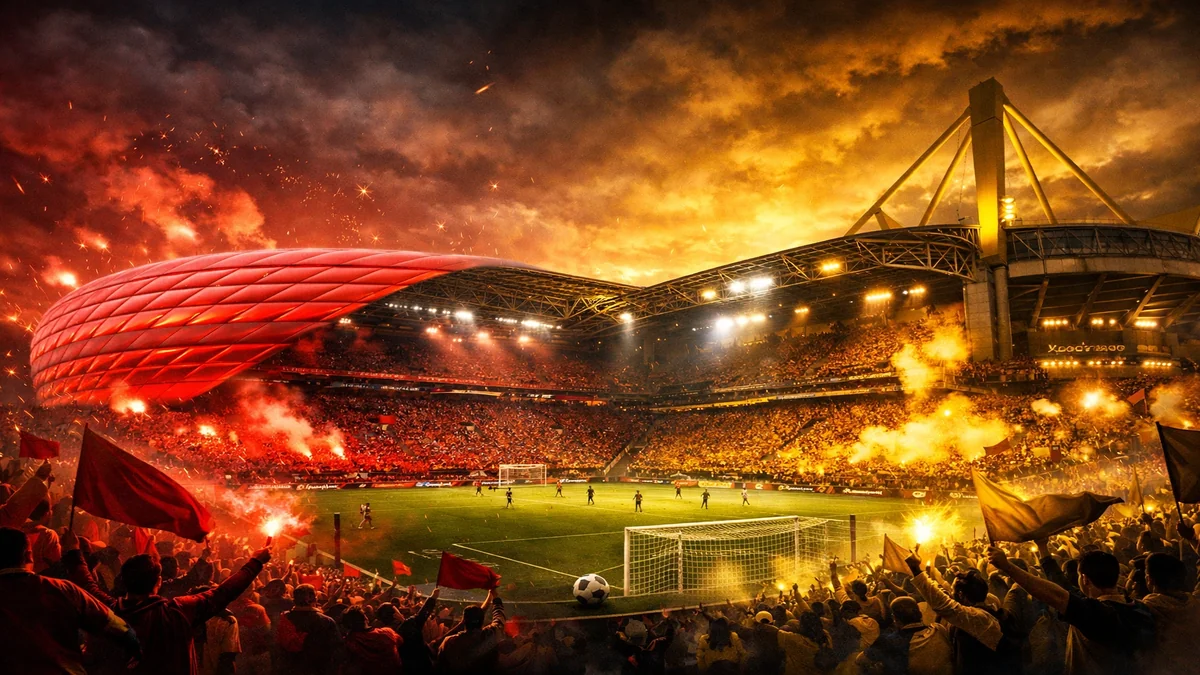
Bundesliga History and Records
The Bundesliga, Germany's premier professional football league, stands as a beacon of sporting excellence, renowned globally for its vibrant fan culture, attacking football, and consistent production of world-class talent. The Bundesliga history is a compelling narrative of evolution, resilience, and a deep-seated connection with its passionate supporters, making it one of the most respected and widely followed football competitions on the planet. Founded in 1962 and commencing its first season in 1963-64, the league unified Germany's fragmented regional football landscape into a single, cohesive national championship. This pivotal transformation laid the groundwork for a competition that would not only dominate domestically but also leave an indelible mark on the international stage, celebrated for its tactical innovation, high-scoring matches, and the iconic atmosphere generated by its loyal fanbase. The Bundesliga's commitment to financial stability, youth development, and fan engagement has solidified its reputation as a model league in modern football.
The Genesis of a Giant: Foundation and Early Years

The concept of a unified national football league in Germany had been debated for decades, with the country's football landscape historically dominated by regional championships. However, following the disappointing performance of the West German national team at the 1962 FIFA World Cup, the German Football Association (DFB) finally voted to establish a professional national league. The Bundesliga was officially founded in Dortmund on July 28, 1962, and its inaugural season kicked off on August 24, 1963, with 16 teams. This marked a revolutionary step, professionalizing German football and creating a platform for consistent, high-level competition.
The early years of the Bundesliga were characterized by a diverse range of champions, reflecting the competitive balance of the nascent league. FC Köln claimed the very first title in the 1963-64 season, followed by Werder Bremen and 1860 Munich. These initial seasons were crucial in establishing the league's identity, showcasing exciting football and attracting growing attendances. The introduction of a professional league brought about significant changes in training methods, player development, and club management, setting new standards for German football. This formative period of Bundesliga history was instrumental in shaping its identity as a dynamic and forward-thinking competition, driven by a blend of tactical innovation and a burgeoning professional ethos. The early successes and challenges forged a resilient character that would define the league for decades to come, setting the stage for its eventual rise to global prominence.
Eras of Dominance: From Bayern's Hegemony to Modern Competitiveness
The Bundesliga history is largely defined by the unparalleled dominance of FC Bayern Munich, particularly from the 1970s onwards. The 1970s saw Bayern, spearheaded by legends like Franz Beckenbauer, Gerd Müller, and Sepp Maier, establish themselves as a European powerhouse, winning three consecutive European Cups (1974-1976) alongside multiple Bundesliga titles. This era marked the beginning of Bayern's long-standing hegemony, setting a benchmark for success that other German clubs have consistently strived to match.
While Bayern's influence has been a constant, the Bundesliga has also witnessed periods of strong competition and the emergence of other formidable clubs. The late 1970s and early 1980s saw clubs like Hamburger SV and Borussia Mönchengladbach challenge Bayern's supremacy, each securing multiple league titles and contributing to the league's competitive spirit. The 1990s brought a renewed sense of excitement, with Borussia Dortmund emerging as a significant force under Ottmar Hitzfeld, winning back-to-back titles in 1995 and 1996, and famously clinching the UEFA Champions League in 1997. This period showcased the league's ability to produce compelling narratives beyond Bayern's dominance.
The 21st century has largely seen Bayern Munich reassert their authority, particularly in the last decade, winning an unprecedented eleven consecutive Bundesliga titles from 2013 to 2023. This sustained period of success has been built on a combination of shrewd management, financial strength, and the ability to attract and retain world-class talent. However, clubs like Borussia Dortmund, RB Leipzig, and Bayer Leverkusen have consistently challenged Bayern, ensuring that the title race, while often concluding with Bayern as champions, remains competitive and engaging. The league's commitment to attractive, attacking football, combined with its unique fan culture and emphasis on youth development, ensures its continued prominence on the international stage. The Bundesliga history continues to be written, with each season adding new chapters of tactical evolution, individual brilliance, and collective triumph, solidifying its place as one of the most exciting and well-managed leagues in world football.
A Trophy Cabinet of German Football: Achievements and Records

The Bundesliga's illustrious history is vividly reflected in its extensive collection of Meisterschale (championship shields), marking it as one of the most successful football leagues globally. The league's trophy cabinet is a testament to decades of relentless pursuit of glory, showcasing the enduring quality and competitiveness of German football. Here's a summary of the most successful clubs in the Bundesliga:
| Club | Number of Bundesliga Titles |
|---|---|
| Bayern Munich | 33 |
| Borussia Dortmund | 5 |
| Borussia Mönchengladbach | 5 |
| Werder Bremen | 4 |
| Hamburger SV | 3 |
| VfB Stuttgart | 3 |
| FC Köln | 2 |
| Kaiserslautern | 2 |
Bayern Munich stands as the undisputed record holder for the most Bundesliga titles, with an impressive 33 championships since the league's inception in 1963. Their consistent success across different eras speaks to their enduring dominance and strategic prowess. Borussia Dortmund and Borussia Mönchengladbach follow, highlighting their significant contributions to the league's competitive landscape. The league's ability to produce multiple champions over its history, despite Bayern's hegemony, underscores its competitive nature and the cyclical rise and fall of various powerhouses. Each Meisterschale represents a significant chapter in the illustrious Bundesliga history, contributing to a legacy of success that continues to inspire generations of fans and players alike. The league's commitment to tactical excellence and its ability to attract world-class talent have been key factors in its enduring appeal.
Records & Milestones: Defining Bundesliga's Greatness
Bundesliga history is replete with remarkable records and milestones that underscore the league's competitive nature and the extraordinary talent it has nurtured. These achievements, both by clubs and individual players, highlight the enduring legacy of German football.
Club Records
- Most Titles: Bayern Munich holds the record for the most Bundesliga titles, with 33 championships, showcasing their unparalleled dominance in German football.
- Most Consecutive Titles: Bayern Munich also holds the record for the most consecutive Bundesliga titles, winning eleven in a row from the 2012-13 season to the 2022-23 season, a testament to their sustained excellence.
- Most Points in a Single Season: Bayern Munich achieved the record for the most points in a 34-game Bundesliga season, accumulating 91 points in the 2012-13 campaign, an extraordinary feat of consistency.
- Most Goals in a Single Season: Bayern Munich holds the record for the most goals scored in a single Bundesliga season, netting an astonishing 101 goals during the 1971-72 campaign.
- Most Goals: Gerd Müller, the legendary striker for Bayern Munich, is the all-time leading goalscorer in Bundesliga history, with an incredible 365 goals. His prolificacy set a benchmark that remains unmatched.
- Most Goals in a Single Season: Gerd Müller also holds the record for the most goals scored in a single Bundesliga season, with 40 goals in the 1971-72 campaign, a record that stood for nearly 50 years until Robert Lewandowski broke it in 2020-21 with 41 goals.
- Most Appearances: Karl-Heinz Körbel holds the record for the most appearances in the Bundesliga, having played in 602 matches for Eintracht Frankfurt, a testament to his incredible longevity and consistency.
- Most Bundesliga Titles (Player): Thomas Müller and Manuel Neuer, both of Bayern Munich, hold the record for the most Bundesliga titles won by a player, each with 12 championships.
- Most Top Scorer Crowns (Torjägerkanone): Gerd Müller holds the record for the most Torjägerkanone (top scorer) awards, winning it seven times, followed closely by Robert Lewandowski with seven.
Individual Records
These records not only highlight the individual brilliance of players but also the collective strength and tactical evolution of the clubs. The continuous pursuit of these milestones fuels the competitive spirit of the Bundesliga, ensuring that each season brings new narratives and potential record-breaking performances. The league's ability to attract and retain world-class talent has been crucial in maintaining its high standards and producing these extraordinary feats.
Enduring Legacy: Bundesliga's Global Impact
The Bundesliga's legacy is one of profound cultural significance, tactical sophistication, and an unwavering commitment to the beautiful game that has resonated with football fans across the globe. From its structured foundation in 1963 to its numerous domestic and European triumphs, the league has consistently embodied a spirit of innovation and a dedication to attacking football. The league's enduring appeal lies not just in its impressive trophy cabinet, but in its unique identity as a tactical laboratory, where coaches and players alike have pushed the boundaries of footballing strategy. The intense rivalries between clubs like Bayern Munich and Borussia Dortmund, known as "Der Klassiker," remain some of the most compelling narratives in world football, spectacles that transcend mere sport and embody the very soul of German football.
Bundesliga has served as a crucible for some of the sport's greatest talents, producing numerous Ballon d'Or winners and shaping the careers of legendary players and managers alike. Its emphasis on developing well-rounded players, both technically and tactically, has ensured a continuous supply of world-class talent who go on to grace both domestic and international stages. Furthermore, the Bundesliga's global reach is amplified by its rich history and the passionate support of its worldwide fanbase. The league's ability to consistently deliver high-quality, entertaining football, combined with its strategic internationalization efforts, ensures its continued prominence on the international stage. As the Bundesliga continues to evolve, embracing new technologies and adapting to the modern football landscape, its rich history serves as a powerful foundation. The league's narrative is one of continuous ambition, fierce competition, and an unwavering dedication to the beautiful game, ensuring its place as a permanent fixture in the pantheon of elite football competitions and a source of inspiration for generations to come.
FAQ: Bundesliga History and Records
Q: When was the Bundesliga founded?
A: The Bundesliga was officially founded in Dortmund on July 28, 1962, with its inaugural season commencing in 1963-64.
Q: Which club has won the most Bundesliga titles?
A: Bayern Munich holds the record for the most Bundesliga titles, with 33 championships.
Q: Who is the all-time leading goalscorer in the Bundesliga?
A: Gerd Müller is the all-time leading goalscorer in Bundesliga history, with an incredible 365 goals.