Borussia Dortmund History
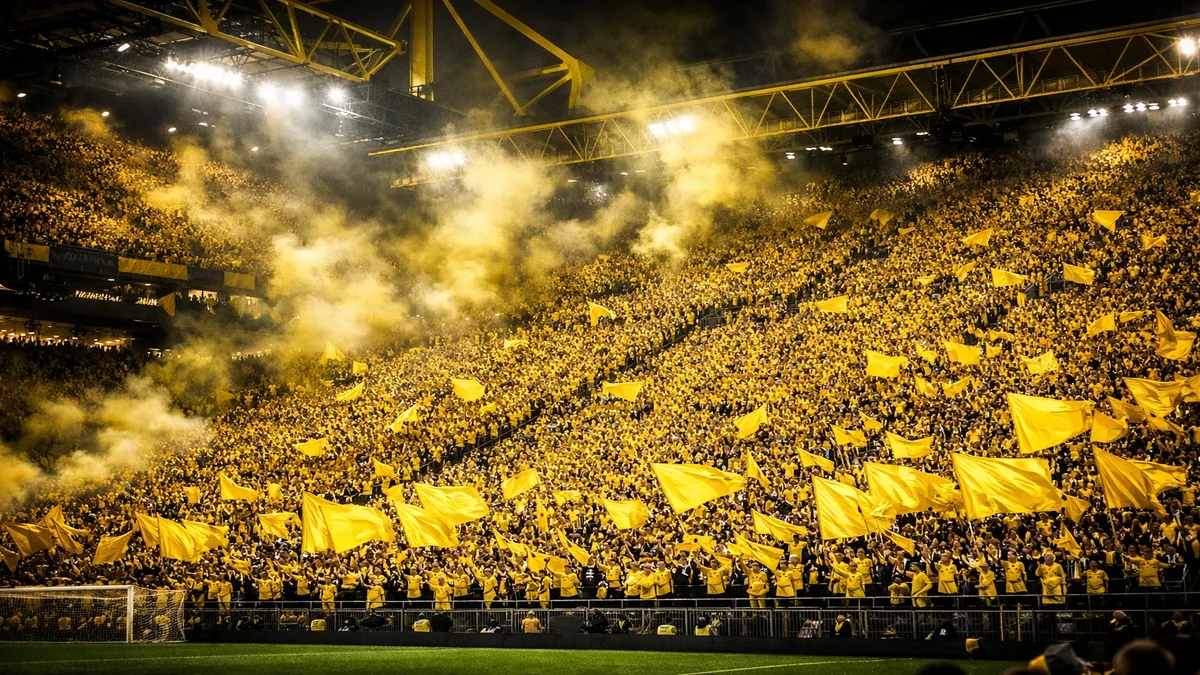
Borussia Dortmund, officially known as Ballspielverein Borussia 09 e.V. Dortmund, is a name synonymous with passionate football, electrifying atmospheres, and a rich tradition of success in German and European football. The Borussia Dortmund history is a captivating narrative of resilience, innovation, and an unwavering connection with its fervent fanbase, making it one of Germany's most beloved and globally recognized clubs. Founded in 1909 by a group of dissatisfied Catholic youth, the club quickly established itself as a formidable force, overcoming early challenges to become a perennial contender for domestic honors and a respected competitor on the international stage. Known for their distinctive black and yellow colors and the iconic "Yellow Wall" at their home stadium, the Signal Iduna Park, Dortmund's journey is marked by numerous Bundesliga titles, DFB-Pokal triumphs, and a memorable UEFA Champions League victory, solidifying its place among Europe's elite.
The Genesis of a Legend: Foundation and Early Struggles

The story of Borussia Dortmund began on December 19, 1909, when a group of eighteen young men, discontent with the local Catholic church's control over their football activities, decided to form their own club. This act of defiance, born out of a desire for independence and a pure love for the game, led to the birth of Ballspielverein Borussia 09 e.V. Dortmund. The name "Borussia" was derived from a local brewery, itself named after the Latin term for Prussia. The club's early years were characterized by financial struggles and the challenges of establishing itself in a competitive football landscape. Despite these hurdles, Dortmund's commitment to developing local talent and fostering a strong community spirit allowed it to gradually gain traction within regional leagues.
The period leading up to and following the World Wars brought immense difficulties, but the club's spirit remained unbroken. Dortmund's first major success came after World War II, when they began to emerge as a significant force in German football. The club's dedication to attacking football and its ability to cultivate a passionate following laid the groundwork for future triumphs. This formative period of Borussia Dortmund history was crucial in shaping its identity as a club deeply rooted in its working-class origins, driven by a collective will to succeed against all odds. The early struggles forged a resilient character that would define the club for decades to come, setting the stage for its eventual rise to national and international prominence.
Eras of Triumph: From Bundesliga Pioneers to European Champions
The Borussia Dortmund history is punctuated by several distinct eras of triumph, each contributing to the club's legendary status. The post-war period saw Dortmund rise to prominence, culminating in their first national championship in 1956, followed by two more in 1957 and 1963. These successes established Dortmund as a leading club in the nascent stages of German professional football. The club was a founding member of the Bundesliga in 1963, marking a new chapter in its development.
One of Dortmund's most significant achievements came in 1966 when they lifted the UEFA Cup Winners' Cup, becoming the first German club to win a major European trophy. This victory signaled their arrival on the continental stage and showcased their ability to compete with the best teams in Europe. However, the late 1970s and 1980s were a period of mixed fortunes, with the club struggling to maintain consistency and even facing financial difficulties. The resurgence began in the 1990s under the astute management of Ottmar Hitzfeld. This era saw Dortmund assemble a formidable squad, featuring stars like Matthias Sammer, Andreas Möller, and Karl-Heinz Riedle. They clinched back-to-back Bundesliga titles in 1995 and 1996, re-establishing themselves as the dominant force in German football.
The pinnacle of this golden era arrived in 1997 when Borussia Dortmund achieved their greatest triumph: winning the UEFA Champions League. In a memorable final against Juventus, Dortmund, considered underdogs, produced a stunning performance to secure a 3-1 victory. This historic achievement cemented their place among Europe's elite and remains a cherished memory for fans. The early 2000s brought further domestic success, but also renewed financial challenges. A new era of revitalization began in the late 2000s with the appointment of Jürgen Klopp as manager. Klopp's high-octane, gegenpressing style of football captivated audiences and brought renewed success, including back-to-back Bundesliga titles in 2011 and 2012, and a DFB-Pokal in 2012. His charismatic leadership and the emergence of talents like Robert Lewandowski, Mario Götze, and Marco Reus created a vibrant and exciting team that reached the Champions League final in 2013. These eras of triumph underscore Dortmund's enduring ability to rise to the occasion and claim their place among football's giants.
A Trophy Cabinet of Black and Yellow: Achievements and Records

Borussia Dortmund's history is adorned with a significant collection of silverware, reflecting its consistent presence at the top tier of German and European football. The club's trophy cabinet proudly showcases a legacy built on hard work, tactical brilliance, and an unbreakable bond with its supporters. Here's a summary of their major honors:
| Competition | Number of Titles |
|---|---|
| Bundesliga | 8 |
| DFB-Pokal | 5 |
| DFL-Supercup | 6 |
| UEFA Champions League | 1 |
| UEFA Cup Winners' Cup | 1 |
| Intercontinental Cup | 1 |
Beyond these major titles, Borussia Dortmund has also achieved numerous other distinctions, including being a consistent participant in European competitions. Their single UEFA Champions League triumph in 1997 stands as a monumental achievement, showcasing their ability to overcome formidable opponents on the grandest stage. The club's consistent success in the Bundesliga, particularly their eight titles, highlights their enduring competitiveness within German football. Each trophy represents a significant chapter in the illustrious Borussia Dortmund history, contributing to a legacy of success that continues to inspire generations of fans and players alike. The club's commitment to developing young talent and playing an attractive brand of football has also earned them widespread admiration.
Architects of the Yellow Wall: Greatest Players & Managers
The vibrant Borussia Dortmund history has been shaped by an array of exceptional talents, both on the pitch and in the dugout. These individuals have not only delivered silverware but have also embodied the spirit and passion of the Schwarzgelben, leaving an indelible mark on the club's identity. Among the pantheon of Dortmund legends, several names stand out for their exceptional contributions:
- Alfred Preißler: A prolific striker from the post-war era, Preißler was a key figure in Dortmund's first national championship wins in the 1950s. His goal-scoring prowess and leadership were instrumental in establishing the club's early dominance.
- Aki Schmidt: A versatile midfielder and captain, Schmidt was a central figure in the 1960s team that won the UEFA Cup Winners' Cup. His dedication and skill made him a true club icon.
- Michael Zorc: "Susi" Zorc is synonymous with Borussia Dortmund. He spent his entire playing career at the club, becoming its record appearance holder and a key player in the 1990s Bundesliga and Champions League triumphs. After retiring, he transitioned into a highly successful role as sporting director, further cementing his legendary status.
- Matthias Sammer: A commanding sweeper and midfielder, Sammer was the defensive lynchpin and inspirational captain of the 1990s golden era. His leadership, tactical intelligence, and powerful performances earned him the Ballon d'Or in 1996 and were crucial to Dortmund's Champions League victory.
- Andreas Möller: An elegant and creative attacking midfielder, Möller was a vital component of the Hitzfeld era. His vision, passing, and ability to score crucial goals were instrumental in Dortmund's domestic and European successes.
- Lars Ricken: A true Dortmund native, Ricken became a club legend for his iconic chip goal in the 1997 Champions League final, just seconds after coming on as a substitute. He spent his entire career at the club, embodying the local spirit.
- Robert Lewandowski: Though he later moved to rivals Bayern Munich, Lewandowski's time at Dortmund under Jürgen Klopp saw him develop into one of the world's most feared strikers. His prolific goal-scoring and tireless work rate were central to Dortmund's back-to-back Bundesliga titles.
- Marco Reus: A modern-day icon, Reus has been the face of Borussia Dortmund for over a decade. His electrifying pace, technical skill, and goal-scoring ability have made him a fan favorite and a consistent performer, despite numerous injury setbacks.
In terms of managerial brilliance, Ottmar Hitzfeld is revered for building the team that conquered Europe in 1997, demonstrating exceptional tactical acumen and man-management skills. More recently, Jürgen Klopp revolutionized the club with his charismatic leadership and exciting brand of football, bringing renewed domestic success and a Champions League final appearance. These figures, both on and off the pitch, have woven the rich tapestry of Borussia Dortmund's history, contributing to its status as a footballing powerhouse with a unique identity.
Enduring Legacy: Borussia Dortmund's Place in Football
Borussia Dortmund's legacy is one of unwavering passion, community spirit, and a commitment to exciting, attacking football that resonates deeply with its global fanbase. From its defiant origins to its numerous domestic and European triumphs, the club has consistently embodied a spirit of resilience and innovation. The Schwarzgelben's enduring appeal lies not just in its impressive trophy cabinet, but in its unique identity as a club deeply connected to its supporters, epitomized by the iconic "Yellow Wall" – the Südtribüne at Signal Iduna Park, the largest standing terrace in Europe. This vibrant fan culture creates an atmosphere unparalleled in world football, making every home game an unforgettable experience. The rivalry with Bayern Munich, known as "Der Klassiker," adds another layer to its rich narrative, creating some of the most anticipated and fiercely contested matches in German football. As Dortmund continues to compete at the highest levels, its history serves as a powerful reminder of its foundational principles and the unwavering support of its global fanbase. The club's journey is a continuous narrative of ambition, struggle, and ultimate glory, ensuring its place as a permanent fixture in the pantheon of footballing giants, a true testament to the power of football as a cultural phenomenon.
FAQ: Borussia Dortmund History
Q: When was Borussia Dortmund founded?
A: Borussia Dortmund was founded on December 19, 1909, by a group of eighteen young men who were dissatisfied with the local church's control over their football activities.
Q: How many UEFA Champions League titles has Borussia Dortmund won?
A: Borussia Dortmund has won the UEFA Champions League once, in 1997, defeating Juventus in the final.
Q: Who are some of Borussia Dortmund's most iconic players?
A: Some of Borussia Dortmund's most iconic players include Michael Zorc, Matthias Sammer, Lars Ricken, Robert Lewandowski, and Marco Reus, all of whom have left a significant mark on the club's history.