Bayern Munich History
Bayern Munich history is a chronicle of unparalleled dominance, strategic brilliance, and a profound impact on German and European football. Founded on February 27, 1900, by eleven football players led by Franz John, the club has evolved from its early days into Germany's most successful and globally recognized football institution. Affectionately known as "Die Roten" (The Reds) or "FC Hollywood" for its star power, Bayern Munich has consistently set the benchmark for excellence, accumulating a record number of Bundesliga titles, numerous DFB-Pokal trophies, and an impressive collection of UEFA Champions League crowns. Their journey is marked by periods of sustained supremacy, iconic players who became legends, and a distinctive philosophy that blends attacking flair with unwavering efficiency. This article delves into the rich and complex narrative of FC Bayern Munich, exploring its origins, the pivotal eras that shaped its identity, its vast array of achievements, and the legendary figures who have contributed to its enduring status as a global footballing powerhouse. From its amateur beginnings to its modern-day commercial might, Bayern Munich's story is one of relentless ambition, strategic innovation, and an unwavering commitment to victory.
Early Foundations and Overcoming Adversity

The origins of Bayern Munich history trace back to February 27, 1900, when a group of eleven football players, led by Franz John, broke away from MTV 1879 Munich to form their own club, FC Bayern Munich. This secession was driven by a desire to focus solely on football, a sport that was rapidly gaining popularity. In its nascent years, Bayern quickly established itself as a prominent club in Munich, winning local championships and attracting a growing fanbase. Their distinctive red and white colors, adopted early on, became synonymous with the club's identity. The club's first major national success came in 1932, when they won their first German championship, defeating Eintracht Frankfurt 2-0 in the final. This early triumph hinted at the potential that lay dormant within the club.
However, the rise of Nazism in Germany brought significant challenges for Bayern Munich. The club's president, Kurt Landauer, who was Jewish, was forced to resign, and many Jewish members and players were expelled. Bayern was derogatorily labeled a "Jewish club," and its progress was severely hampered by the regime. Despite these adversities, the club managed to survive, albeit with reduced resources and under constant scrutiny. The post-World War II era saw Bayern Munich struggling to regain its pre-war prominence. Unlike some other German clubs, Bayern was not initially selected for the newly formed Bundesliga in 1963, a decision that proved to be a significant setback. They had to earn their promotion, which they achieved in 1965. This period of adversity, however, forged a resilient spirit within the club, a characteristic that would become a cornerstone of its future success. The challenges faced in these early decades, from political persecution to sporting setbacks, instilled a deep-seated determination that would later fuel their ascent to the pinnacle of German and European football. The club's ability to overcome these obstacles is a testament to the unwavering commitment of its members and supporters, laying the groundwork for the legendary status it enjoys today.
The Golden Era of the 1970s and Sustained Domestic Dominance
The 1970s marked the true beginning of Bayern Munich's ascent to global footballing elite, ushering in a golden era that would forever define the club's identity. This period was spearheaded by a legendary generation of German players, including Franz Beckenbauer, Gerd Müller, and Sepp Maier, who formed the backbone of a team that dominated both domestically and in Europe. Under the astute leadership of Beckenbauer, often dubbed "Der Kaiser," Bayern Munich achieved an unprecedented hat-trick of European Cup victories from 1974 to 1976. The first triumph in 1974 saw them defeat Atletico Madrid in a replayed final, a moment that firmly established their presence on the European stage. This was followed by victories against Leeds United in 1975 and Saint-Étienne in 1976, cementing their status as the dominant force in European club football. These European successes were complemented by several Bundesliga titles, showcasing their unwavering domestic supremacy.
Following the golden era of the 1970s, Bayern Munich entered a period of sustained domestic dominance, albeit with intermittent European success. The 1980s and 1990s saw the club consistently challenging for and winning Bundesliga titles, establishing themselves as the undisputed champions of Germany. Players like Karl-Heinz Rummenigge, Lothar Matthäus, and Oliver Kahn became synonymous with the club's winning mentality during these decades. While European Cup triumphs were harder to come by, Bayern remained a formidable presence in the UEFA Champions League, reaching several finals and semi-finals. The club's ability to consistently attract and develop top German talent, combined with strategic international signings, ensured their continued competitiveness. This era also saw the club develop a strong financial foundation, allowing them to invest in infrastructure and maintain a competitive edge. The unwavering support of their passionate fanbase, who filled the Olympiastadion week after week, further fueled their success. Bayern Munich's consistent performance during these decades solidified their reputation as a footballing powerhouse, demonstrating their ability to adapt and thrive in an evolving football landscape, always maintaining their position at the summit of German football.
The Modern Treble Era and Global Brand

The 21st century has witnessed Bayern Munich solidify its position as one of the world's most successful and recognizable football brands, characterized by periods of unprecedented dominance and a strategic approach to global expansion. The early 2000s saw the club reclaim European glory, winning the UEFA Champions League in 2001, defeating Valencia in a dramatic penalty shootout. This victory, coupled with continued domestic success, reaffirmed their status as a European elite. However, it was the 2010s that truly ushered in the modern treble era, showcasing Bayern's ability to combine domestic supremacy with continental triumph. The 2012-2013 season stands out as a historic achievement, as Bayern Munich, under the guidance of Jupp Heynckes, became the first German club to win the continental treble, securing the Bundesliga, DFB-Pokal, and UEFA Champions League titles. This team, featuring stars like Arjen Robben, Franck Ribéry, Philipp Lahm, and Bastian Schweinsteiger, played a captivating brand of attacking football that captivated audiences worldwide.
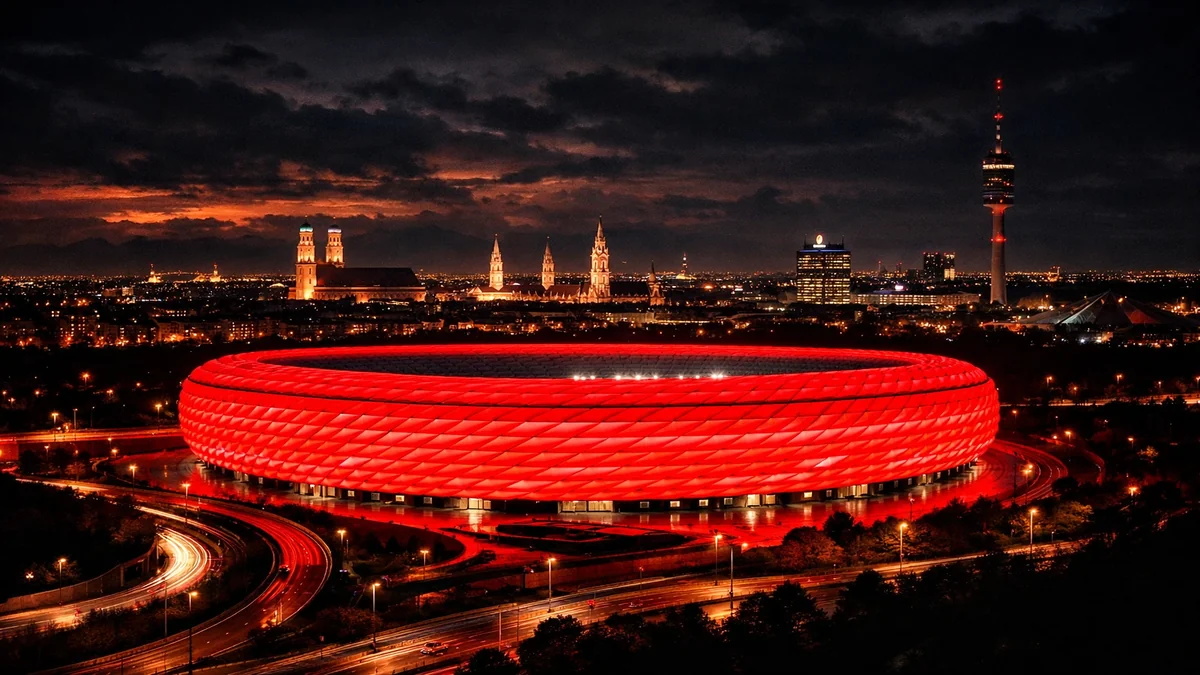
This success was not a one-off. Bayern Munich continued its dominance, winning an unprecedented eleven consecutive Bundesliga titles from 2012-2013 to 2023-2024, a feat unmatched in any of Europe's top leagues. This period of sustained domestic supremacy was punctuated by another historic treble in the 2019-2020 season, this time under Hansi Flick, where they once again lifted the Bundesliga, DFB-Pokal, and UEFA Champions League trophies. This second treble cemented their status as a truly elite club, capable of competing with and overcoming the best teams in Europe. The club's strategic vision has also focused on developing a global brand, expanding its reach into international markets, particularly in Asia and North America. This global outreach, combined with shrewd financial management and a commitment to youth development, has ensured Bayern Munich's continued success both on and off the pitch. The move to the state-of-the-art Allianz Arena in 2005 further symbolized their modern ambition, providing a world-class home for their passionate fanbase and a symbol of their enduring power in the global football landscape. The modern era of Bayern Munich is defined by its relentless pursuit of trophies, its global appeal, and its unwavering commitment to maintaining its position at the pinnacle of world football.
Greatest Players & Managers
The illustrious history of Bayern Munich is adorned with a pantheon of legendary players and visionary managers who have shaped the club's identity and propelled it to unprecedented heights. These individuals have not only contributed to the team's vast success but have also embodied the unique spirit and values of "Mia San Mia" (We are who we are).
Among the greatest players to have worn the iconic red and white, these names stand out for their skill, dedication, and profound impact:
The managerial legacy at Bayern Munich is equally distinguished, with several figures shaping the club's tactical and cultural identity:
- Udo Lattek: Lattek led Bayern to their first three European Cup triumphs (1974-1976) and multiple Bundesliga titles. He was instrumental in building the legendary team of the 1970s.
- Dettmar Cramer: Cramer continued Lattek's success, guiding Bayern to two more European Cups in the mid-1970s, further cementing their continental dominance.
- Giovanni Trapattoni: Though his time was brief, the Italian brought a new tactical discipline and won a Bundesliga title, a DFB-Pokal, and a League Cup.
- Ottmar Hitzfeld: Hitzfeld oversaw a highly successful period, winning five Bundesliga titles and the UEFA Champions League in 2001. He was known for his tactical acumen and ability to manage star players.
- Jupp Heynckes: Heynckes had multiple spells, but his 2012-2013 season was historic, leading Bayern to their first-ever continental treble. He returned in 2017-2018 to stabilize the club and win another Bundesliga title.
- Pep Guardiola: Guardiola's tenure (2013-2016) brought three consecutive Bundesliga titles and a new tactical philosophy, emphasizing possession-based football and fluid attacking play.
- Hansi Flick: Flick's short but incredibly successful spell (2019-2021) saw Bayern win their second continental treble in 2020, playing an aggressive, high-pressing style of football.
Legacy and Current Status
Bayern Munich history is defined by a legacy of unparalleled success, a relentless pursuit of trophies, and a distinctive identity encapsulated by the motto "Mia San Mia" – a declaration of self-confidence, ambition, and a unique way of life. The club is not just Germany's most successful; it is a global footballing superpower, recognized for its consistent performance at the highest level, its shrewd financial management, and its commitment to developing world-class talent. The club's ability to overcome adversity, from its early struggles under Nazism to its relegation from the inaugural Bundesliga, speaks volumes about its institutional strength and the unwavering loyalty of its fanbase. Bayern's legacy is one of setting records, producing legends, and consistently challenging for the highest honors, both domestically and in Europe.
In terms of current status, Bayern Munich remains at the pinnacle of world football. They are perennial favorites for the Bundesliga title, a testament to their deep squad, tactical flexibility, and strong financial position. Their consistent presence in the latter stages of the UEFA Champions League underscores their ambition to add to their European Cup tally. The Allianz Arena, their state-of-the-art home, is a symbol of their modern success and provides a formidable atmosphere for home matches. The club continues to attract and retain world-class players, blending experienced veterans with exciting young prospects from their renowned academy. Financially, Bayern Munich is one of the wealthiest and most sustainably run clubs globally, allowing them to compete with the biggest spenders in the transfer market while maintaining a healthy balance sheet. Their global brand presence continues to expand, further solidifying their commercial might and fan base across continents.
Why it matters: Bayern Munich's story matters because it represents a model of sustained success built on a foundation of strong leadership, strategic vision, and a deep connection to its roots. Their dominance in Germany has elevated the Bundesliga's profile, while their European triumphs have consistently showcased the quality of German football. Bayern embodies a blend of tradition and modernity, constantly adapting to the evolving football landscape while staying true to its core values. Their rivalries, particularly with Borussia Dortmund (Der Klassiker), are central to the drama and passion of German football. Bayern Munich's continued pursuit of excellence, both on and off the pitch, ensures its relevance and significance in the global footballing narrative, inspiring generations of fans and players alike. The club's history is a testament to the fact that consistent success is achievable through a combination of talent, hard work, and an unwavering commitment to a winning philosophy.
FAQ: Bayern Munich History
Q: When was Bayern Munich founded?
A: Bayern Munich was founded on February 27, 1900, in Munich, Germany, making them one of the oldest and most storied clubs in German football history.
Q: How many Bundesliga titles has Bayern Munich won?
A: Bayern Munich has won more than 30 Bundesliga titles, making them by far the most successful club in German football history.
Q: Has Bayern Munich won the Champions League?
A: Yes, Bayern Munich has won the UEFA Champions League six times, most recently in 2020 when they defeated Paris Saint-Germain in the final.