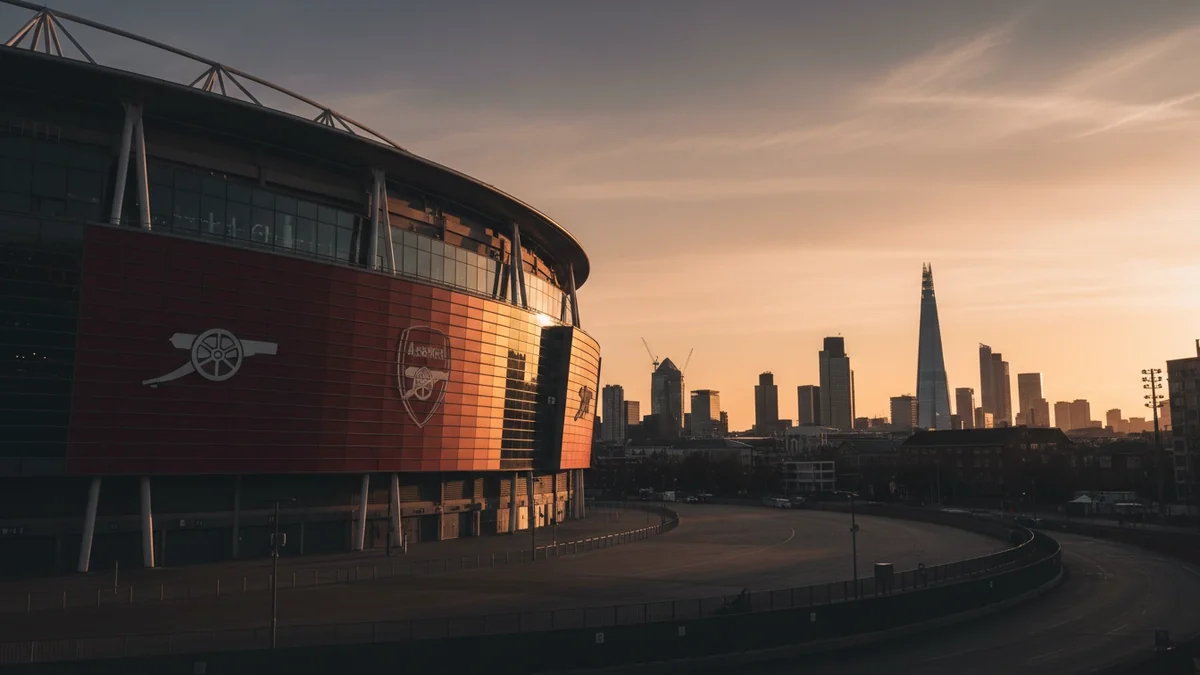
Arsenal FC History
Arsenal Football Club, affectionately known as "The Gunners," stands as one of English football's most storied and revered institutions. Founded in 1886 by a group of munitions workers in Woolwich, South East London, the club has evolved from humble beginnings into a global powerhouse, synonymous with attractive football, iconic players, and a rich tradition of success. With a history spanning over a century, Arsenal has etched its name into the annals of the sport through numerous league titles, FA Cups, and memorable European campaigns. This article delves into the comprehensive Arsenal FC history, tracing its journey from its industrial roots to its current status as a modern footballing giant, exploring the key moments, legendary figures, and defining eras that have shaped its unique identity and enduring legacy in the world of soccer.
Early Years and Formation in Woolwich

The origins of Arsenal Football Club are deeply intertwined with the industrial landscape of late 19th-century London. In October 1886, a group of workers at the Dial Square workshop of the Royal Arsenal in Woolwich decided to form a football team to foster camaraderie and provide recreation. Led by David Danskin, a Scottish mechanical engineer, and former Nottingham Forest player Fred Beardsley, the team initially adopted the name Dial Square. Their inaugural match, a 6-0 victory over Eastern Wanderers on December 11, 1886, marked the birth of what would become a footballing giant. Shortly after, the club was renamed Royal Arsenal, a nod to its workplace and the Royal Oak pub where meetings were held. The club initially played friendly matches, but its ambition quickly grew, leading to its professionalization in 1891 and a subsequent name change to Woolwich Arsenal. This period saw the club join the Football League in 1893, becoming the first Southern club to do so, laying the groundwork for its future prominence. The move from amateur status to professional competition was a significant step, reflecting the growing popularity of football and the club's determination to compete at the highest level. Despite financial struggles that eventually led to relocation, these formative years established the club's identity and its initial fan base in South East London.
The Highbury Era and Herbert Chapman's Vision
The early 20th century brought significant changes that would define Arsenal's trajectory. Facing financial difficulties and dwindling attendances in Woolwich, the club controversially relocated north across the Thames to Highbury in 1913, settling into its iconic new stadium. This move, orchestrated by chairman Henry Norris, was met with resistance but proved pivotal for the club's survival and future success. The post-World War I era saw Arsenal controversially promoted to the First Division, a decision that remains a point of contention in English football history. However, it was the appointment of Herbert Chapman as manager in 1925 that truly ushered in Arsenal's golden age. Chapman, a visionary tactician, revolutionized the club with innovative strategies, including the famous
WM formation, improved training methods, and a focus on youth development. Under Chapman, Arsenal dominated English football, winning their first major trophy, the FA Cup, in 1930, followed by five First Division titles in the 1930s. His reign, though tragically cut short by his death in 1934, laid the tactical and structural foundations for Arsenal's future triumphs, establishing a legacy of innovative football and sustained success. The club became known for its disciplined yet attacking style, attracting a loyal following and cementing its place as one of England's premier clubs. The Highbury stadium, with its grandstands and iconic clock, became a fortress and a symbol of Arsenal's growing stature.
Post-War Resilience and Double Success

The period following World War II presented new challenges and opportunities for Arsenal. Despite the disruption caused by the war, the club quickly re-established itself as a force in English football. Under the management of Tom Whittaker, who had served as Chapman's assistant, Arsenal continued its winning ways, securing two more First Division titles in 1948 and 1953, along with another FA Cup in 1950. These successes demonstrated the club's resilience and the enduring quality of the foundations laid by Chapman. However, the late 1950s and 1960s saw a relative decline in Arsenal's fortunes, as the club struggled to maintain its earlier dominance, often finishing in mid-table positions. This period was characterized by a search for identity and a struggle to adapt to the changing dynamics of English football.
The turning point came with the appointment of Bertie Mee as manager in 1966. Mee, a former physiotherapist, brought a new sense of professionalism and tactical discipline to the club. His tenure culminated in one of Arsenal's most celebrated achievements: the First Double in the 1970-71 season, winning both the First Division title and the FA Cup. This historic triumph, achieved with a blend of experienced players and emerging talents, marked a glorious return to the club's winning traditions and re-established Arsenal at the pinnacle of English football. The team, featuring legendary figures like Charlie George, Frank McLintock, and George Armstrong, displayed a gritty determination and a flair for dramatic victories that endeared them to a new generation of fans. The Double cemented Mee's place in Arsenal folklore and set a new standard for future teams.
The George Graham Era and European Glory
The 1980s saw Arsenal undergo another significant transformation with the appointment of former player George Graham as manager in 1986. Graham, known for his tactical astuteness and defensive solidity, instilled a new level of discipline and professionalism into the squad. His tenure brought a renewed period of success, characterized by a pragmatic yet effective style of play. Arsenal famously won the First Division title in dramatic fashion in 1989, with Michael Thomas scoring a last-minute goal against Liverpool at Anfield to snatch the title on goal difference. This iconic moment is etched in the memories of Arsenal fans and is considered one of the greatest league finishes in English football history. Graham's team followed this with another league title in 1991, losing only one game throughout the entire season, showcasing their defensive prowess and consistency.
Under Graham, Arsenal also achieved European success, winning the European Cup Winners' Cup in 1994. This triumph, secured with a memorable 1-0 victory over Parma in Copenhagen, marked the club's second major European trophy and demonstrated their ability to compete with the continent's best. The team of this era featured a formidable defense, often referred to as the
"famous back four" of Dixon, Bould, Adams, and Winterburn, protected by the formidable David Seaman in goal. Graham's reign, while successful, also had its controversies, leading to his departure in 1995. Nevertheless, he left an indelible mark on the club, instilling a winning mentality and adding significant silverware to Arsenal's trophy cabinet, setting the stage for the next transformative period in the club's history.
The Arsène Wenger Revolution and the Invincibles
The arrival of Arsène Wenger in 1996 marked a revolutionary period for Arsenal Football Club, fundamentally altering its identity and ushering in an era of unprecedented success and stylistic innovation. The Frenchman, relatively unknown in English football at the time, transformed Arsenal into one of Europe's most attractive and formidable teams. Wenger introduced groundbreaking changes to training methods, diet, and player recruitment, emphasizing technical skill, tactical intelligence, and a fluid, attacking brand of football. His vision saw Arsenal win their second Double in 1998, securing both the Premier League title and the FA Cup, a feat he repeated in 2002.
The pinnacle of Wenger's tenure came in the 2003-04 season, when Arsenal achieved the extraordinary feat of going an entire Premier League season unbeaten, earning them the moniker "The Invincibles." This legendary team, featuring stars like Thierry Henry, Patrick Vieira, Dennis Bergkamp, and Robert Pires, played a breathtaking style of football that captivated audiences worldwide. The Invincibles' record of 49 consecutive league matches without defeat remains a monumental achievement in English football. This period also saw Arsenal consistently compete in the UEFA Champions League, reaching the final in 2006, where they narrowly lost to Barcelona. Wenger's commitment to developing young talent and his unwavering belief in attacking football not only brought trophies but also established Arsenal as a global brand admired for its progressive approach. The move from Highbury to the state-of-the-art Emirates Stadium in 2006, though initially impacting the club's financial flexibility, was a testament to Wenger's long-term vision for Arsenal's growth and ambition.
Post-Wenger Era and Modern Challenges
Following Arsène Wenger's departure in 2018, after 22 years at the helm, Arsenal entered a new chapter, grappling with the challenge of transitioning to a post-Wenger era while maintaining its competitive edge. The club appointed Unai Emery, who led them to the Europa League final in his first season, but ultimately departed in 2019. Mikel Arteta, a former Arsenal captain, took over in December 2019, tasked with rebuilding the squad and restoring the club's identity. Under Arteta, Arsenal has focused on a youth-centric approach, combining promising academy graduates with strategic signings. The club secured the FA Cup in 2020, providing a significant morale boost and a tangible reward for their efforts. While the Premier League title has remained elusive in recent years, Arsenal has shown signs of resurgence, consistently challenging for top-four finishes and demonstrating a clear tactical philosophy. The club continues to invest in its squad and infrastructure, aiming to reclaim its position at the very top of English and European football. The challenges of competing against financially powerful rivals and adapting to the ever-evolving tactical landscape of modern football remain, but Arsenal's commitment to its values and its passionate fanbase provide a strong foundation for future success.
Greatest Players & Managers
Arsenal's rich history is illuminated by a constellation of greatest players and managers who have left an indelible mark on the club, shaping its identity and contributing to its enduring legacy. These individuals not only achieved remarkable success but also embodied the spirit and values of Arsenal Football Club.
Legendary Players:
- Thierry Henry: Widely regarded as Arsenal's greatest player, Henry redefined the role of a modern striker during his time at the club (1999-2007, 2012). His blistering pace, exquisite skill, and clinical finishing saw him become Arsenal's all-time leading goalscorer with 228 goals. A key member of "The Invincibles," Henry won two Premier League titles and two FA Cups, captivating fans with his elegance and goal-scoring prowess. His statue outside the Emirates Stadium is a testament to his iconic status.
- Dennis Bergkamp: The Dutch maestro (1995-2006) brought a new level of artistry and intelligence to Arsenal's attack. Known for his sublime first touch, visionary passing, and spectacular goals, Bergkamp was the creative fulcrum of Wenger's early successful teams. He won three Premier League titles and four FA Cups, and his influence on the pitch was immeasurable, earning him the nickname "The Non-Flying Dutchman" due to his fear of flying.
- Patrick Vieira: A towering presence in midfield (1996-2005), Vieira was the embodiment of Arsenal's power and passion. His leadership, athleticism, and ability to dominate the center of the park were crucial to the club's success under Wenger. He captained "The Invincibles" and won three Premier League titles and four FA Cups, becoming one of the most respected midfielders of his generation.
- Tony Adams: "Mr. Arsenal" (1983-2002) was a one-club man and a true legend, renowned for his exceptional leadership and defensive prowess. As captain for 14 years, he led Arsenal to four league titles, three FA Cups, two League Cups, and the European Cup Winners' Cup. His dedication and commitment to the club were unwavering, making him an enduring symbol of Arsenal's defensive solidity.
- Ian Wright: A prolific goalscorer (1991-1998), Wright endeared himself to Arsenal fans with his infectious enthusiasm and predatory instincts. He became the club's all-time leading goalscorer (a record later broken by Henry) and won the Premier League, two FA Cups, and the League Cup. His passion for the game and his knack for scoring crucial goals made him a fan favorite.
- Liam Brady: An elegant and gifted midfielder (1973-1980), Brady was a rare talent whose vision and technical ability set him apart. Though his time at Arsenal was relatively short, he won the FA Cup in 1979 and is remembered as one of the most naturally gifted players to wear the red and white.
- Herbert Chapman: The architect of Arsenal's first golden age (1925-1934), Chapman revolutionized the club with his tactical innovations and professional approach. He laid the foundations for sustained success, winning two First Division titles and an FA Cup, and his influence continues to be felt in modern football.
- George Graham: A pragmatic and successful manager (1986-1995), Graham instilled a winning mentality and defensive solidity, leading Arsenal to two league titles, two League Cups, an FA Cup, and the European Cup Winners' Cup. His teams were known for their resilience and tactical discipline.
- Arsène Wenger: The longest-serving and arguably most transformative manager (1996-2018), Wenger revolutionized Arsenal with his attacking philosophy, focus on youth development, and innovative methods. He led the club to three Premier League titles, including the "Invincibles" season, and seven FA Cups, establishing Arsenal as a global footballing powerhouse.
Legacy Managerial Figures:
Legacy, Current Status, and Future Outlook
Arsenal Football Club's legacy is one of innovation, resilience, and a commitment to playing attractive football. From its working-class origins in Woolwich to its global stature today, the club has consistently strived for excellence, enduring periods of both triumph and challenge. The contributions of legendary figures like Herbert Chapman, Arsène Wenger, Thierry Henry, and Tony Adams have woven a rich tapestry of history, defining Arsenal's identity as a club that values both success and style. The move to the Emirates Stadium marked a new era, symbolizing the club's ambition to compete at the highest level while maintaining its core values.
In its current status, Arsenal is undergoing a period of rejuvenation under Mikel Arteta, focusing on a blend of experienced leadership and exciting young talent. The club has demonstrated a clear vision for the future, emphasizing tactical discipline, fluid attacking play, and a strong team ethic. While the immediate goal is to consistently challenge for major domestic and European honors, the long-term outlook for Arsenal is one of continued growth and development. The club's robust academy system, passionate global fanbase, and commitment to sustainable success provide a strong foundation. The future will undoubtedly bring new challenges and opportunities, but Arsenal's rich history and unwavering ambition suggest that "The Gunners" will continue to be a significant force in world football, building upon their storied past to create new chapters of glory.
FAQ: Arsenal FC History
Q: When was Arsenal Football Club founded?
A: Arsenal Football Club was founded in October 1886 by a group of munitions workers in Woolwich, South East London, initially under the name Dial Square.
Q: What is "The Invincibles" season?
A: "The Invincibles" refers to Arsenal's legendary 2003-04 Premier League season, during which they went an entire league campaign unbeaten, winning 26 games and drawing 12, a monumental achievement in English football history.
Q: Who are some of Arsenal's most iconic players?
A: Some of Arsenal's most iconic players include Thierry Henry, Dennis Bergkamp, Patrick Vieira, Tony Adams, and Ian Wright, all of whom played pivotal roles in the club's most successful eras and are celebrated for their contributions.