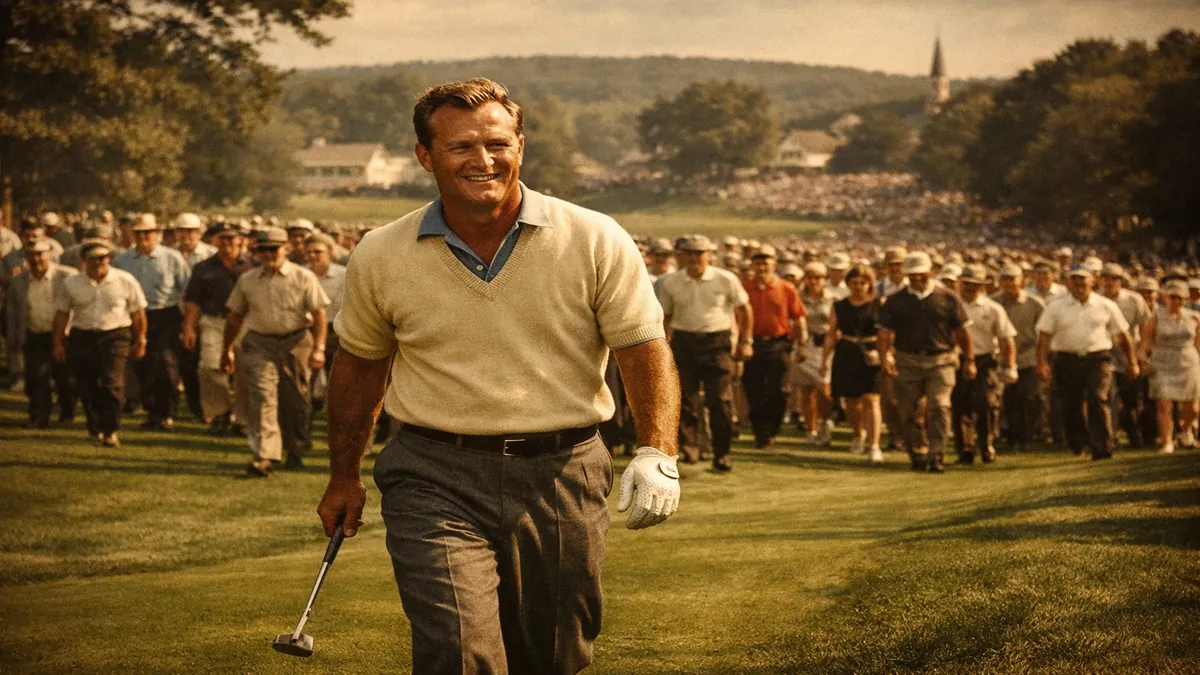
Arnold Palmer Biography
The Arnold Palmer biography tells the story of a man who transcended the sport of golf, becoming a global icon whose charisma, aggressive playing style, and humble demeanor captivated millions. Known affectionately as "The King," Palmer was a transformative figure who, alongside Jack Nicklaus and Gary Player, ushered in golf's modern era, making it a mainstream spectator sport. His legendary career, marked by numerous victories including seven major championships, was characterized by a swashbuckling approach that endeared him to fans worldwide. This comprehensive article explores the life, career, and enduring legacy of Arnold Palmer, delving into his formative years, his rise to superstardom, his distinctive playing style, and the profound impact he had on golf and popular culture, solidifying his place as one of the most beloved athletes of all time.
Early Life and the Genesis of a Legend

Arnold Daniel Palmer was born on September 10, 1929, in Latrobe, Pennsylvania, a small steel town southeast of Pittsburgh. His connection to golf was established from birth, as his father, Milfred "Deacon" Palmer, was the club professional and course superintendent at Latrobe Country Club. Growing up on the course, young Arnold learned the game from his father, who instilled in him not only the fundamentals of golf but also a strong work ethic and a deep respect for the game. Deacon Palmer, a stern but loving teacher, taught Arnold a powerful, self-taught swing that would become his trademark. Arnold spent countless hours practicing, honing his skills on the very course his father maintained, developing a fearless approach to the game that would define his professional career.
Palmer's amateur career was marked by significant success, showcasing his burgeoning talent. He attended Wake Forest University on a golf scholarship, where he continued to excel, winning numerous collegiate events. However, his college career was tragically interrupted by the death of his close friend and teammate, Bud Worsham, in a car accident. This profound loss led Palmer to leave Wake Forest and join the U.S. Coast Guard, where he served for three years. During his time in the Coast Guard, he continued to play golf, maintaining his competitive edge. Upon his return to civilian life, he resumed his amateur career, culminating in a victory at the 1954 U.S. Amateur Championship, one of the most prestigious amateur titles in golf. This triumph convinced him to turn professional later that year, a decision that would forever change the landscape of golf. His early life experiences, from the disciplined instruction of his father to the resilience forged during personal tragedy and military service, all contributed to the formation of the iconic figure he would become.
A Career of Unprecedented Popularity and Dominance
Arnold Palmer's professional career, which officially began in 1954, quickly ascended to superstardom, particularly in the late 1950s and 1960s. His aggressive, go-for-broke style of play, combined with his rugged good looks and engaging personality, resonated deeply with the American public, creating a phenomenon known as "Arnie's Army." This loyal legion of fans followed him enthusiastically, cheering his every shot and transforming golf into a popular spectator sport. Palmer's breakthrough major championship came at the 1958 Masters, a tournament he would win four times (1958, 1960, 1962, 1964). His battles with rivals like Jack Nicklaus and Gary Player became legendary, producing some of the most thrilling moments in golf history and captivating television audiences. He was the leading money winner on the PGA Tour between 1960 and 1963, a period during which he won 29 times, showcasing his consistent dominance.
Palmer's influence extended far beyond the golf course. He was one of the first athletes to truly understand and leverage his commercial appeal, pioneering the concept of athlete endorsement. His partnerships with companies like Hertz, Rolex, and Pennzoil set the standard for sports marketing and significantly increased the financial viability of professional golf. He played a crucial role in the establishment of the modern PGA Tour and was instrumental in popularizing The Open Championship (British Open) among American players, which had previously been less of a priority. His victory at the 1960 U.S. Open, where he famously came from seven strokes back in the final round, is considered one of the greatest comebacks in golf history and epitomized his fearless approach. Even as his competitive dominance waned in the late 1960s, Palmer remained an immensely popular figure, continuing to draw crowds and maintain a significant presence in the golf world. His career was a masterclass in not only winning but also in connecting with people, making him a beloved figure whose impact on the sport is still felt today. He played on the U.S. Ryder Cup team six times from 1961 to 1973, often serving as a captain, further cementing his leadership role in the sport.
Illustrious Achievements and Records

Arnold Palmer's trophy cabinet is filled with an impressive array of titles, reflecting a career of sustained excellence and competitive fire. His most significant achievements include seven major championships:
- The Masters Tournament: 1958, 1960, 1962, 1964 (4 wins)
- U.S. Open: 1960 (1 win)
- The Open Championship (British Open): 1961, 1962 (2 wins)
In addition to his major victories, Palmer amassed 62 PGA Tour wins, placing him fifth on the all-time list. He was the first golfer to earn $1 million in career prize money on the PGA Tour, a significant financial milestone at the time. Palmer also won the Vardon Trophy for lowest scoring average four times and was named PGA Player of the Year twice. His remarkable consistency saw him win at least one PGA Tour event every season from 1955 to 1971, a streak of 17 consecutive years. He was inducted into the World Golf Hall of Fame in its inaugural class in 1974. His record in the Ryder Cup was also stellar, playing on six winning U.S. teams and serving as captain twice. These achievements underscore his status as one of golf's all-time greats, a player who consistently performed at the highest level and delivered memorable victories.
Playing Style & Course Management
Arnold Palmer's playing style was as legendary as his personality: aggressive, daring, and often described as "swashbuckling." He was known for his powerful, self-taught swing and his willingness to take risks, particularly with his driver. Palmer believed in attacking the course, often attempting shots that other players deemed too risky, a philosophy that thrilled his fans and often paid off with spectacular results. His approach to the game was characterized by a desire to make birdies and eagles, rather than playing conservatively for pars. This aggressive mindset, combined with his incredible recovery skills, allowed him to turn potential bogeys into pars or even birdies, often escaping trouble with audacious shots from difficult lies.
While he might not have possessed the textbook precision of a Ben Hogan or the strategic calculation of a Jack Nicklaus, Palmer's course management was driven by an unwavering belief in his ability to pull off any shot. He had an innate feel for the game and an uncanny ability to perform under pressure, particularly with his putter. His famous "Palmer charge" was a testament to his mental toughness and his ability to rally from behind, often making a string of birdies in the final holes to snatch victory. This fearless approach, while sometimes leading to high scores, more often resulted in thrilling victories that cemented his reputation as a crowd favorite. Compared to a player like Jack Nicklaus, who was known for his meticulous planning and conservative strategy, Palmer was more instinctual, relying on his raw talent and competitive fire. This contrast in styles made their rivalry all the more compelling, as fans were treated to two different, yet equally effective, paths to golfing greatness. Palmer's ability to connect with the crowd and feed off their energy was also a unique aspect of his mental game, often performing his best when the pressure was highest and the fans were most engaged.
Legacy and Enduring Impact
Arnold Palmer's legacy is immense and multifaceted, extending far beyond his impressive record of victories. He is widely credited with popularizing golf in the television age, transforming it from an elite pastime into a mainstream sport with mass appeal. His charisma, approachable demeanor, and aggressive playing style created "Arnie's Army," a devoted fan base that followed him passionately and helped to define the modern sports fan experience. Palmer was a pioneer in sports marketing, leveraging his fame into lucrative endorsement deals that set the standard for future athletes. He played a crucial role in the creation of the PGA Tour as we know it today and was instrumental in raising the profile of The Open Championship among American golfers.
Beyond his playing career, Palmer was a successful businessman, establishing Arnold Palmer Enterprises, which managed his vast array of business interests, including golf course design, a golf apparel line, and the famous Arnold Palmer beverage. He was also a dedicated philanthropist, establishing the Arnold Palmer Hospital for Children and the Winnie Palmer Hospital for Women & Babies, among other charitable endeavors. His impact on golf is so profound that the PGA Tour's Arnold Palmer Invitational is named in his honor, and he was posthumously awarded the Congressional Gold Medal. Palmer's enduring influence lies in his ability to connect with people, his unwavering sportsmanship, and his role in making golf accessible and exciting for millions. He was more than just a golfer; he was a cultural phenomenon, a true king of sports whose legacy continues to inspire and shape the game he loved. His life story is a testament to the power of personality, talent, and a genuine connection with the public, ensuring that the name Arnold Palmer will forever be synonymous with golf's golden age and its enduring appeal.
FAQ: Arnold Palmer Biography
Q: How many major championships did Arnold Palmer win?
A: Arnold Palmer won a total of seven major championships during his career, including four Masters titles, one U.S. Open, and two Open Championships.
Q: What was Arnold Palmer's nickname?
A: Arnold Palmer was affectionately known as "The King" by his fans and the wider golf community.
Q: What was Arnold Palmer's impact on the popularity of golf?
A: Arnold Palmer is widely credited with popularizing golf in the television age, attracting a massive fan base known as "Arnie's Army" and transforming the sport into a mainstream spectacle through his charismatic personality and aggressive playing style.