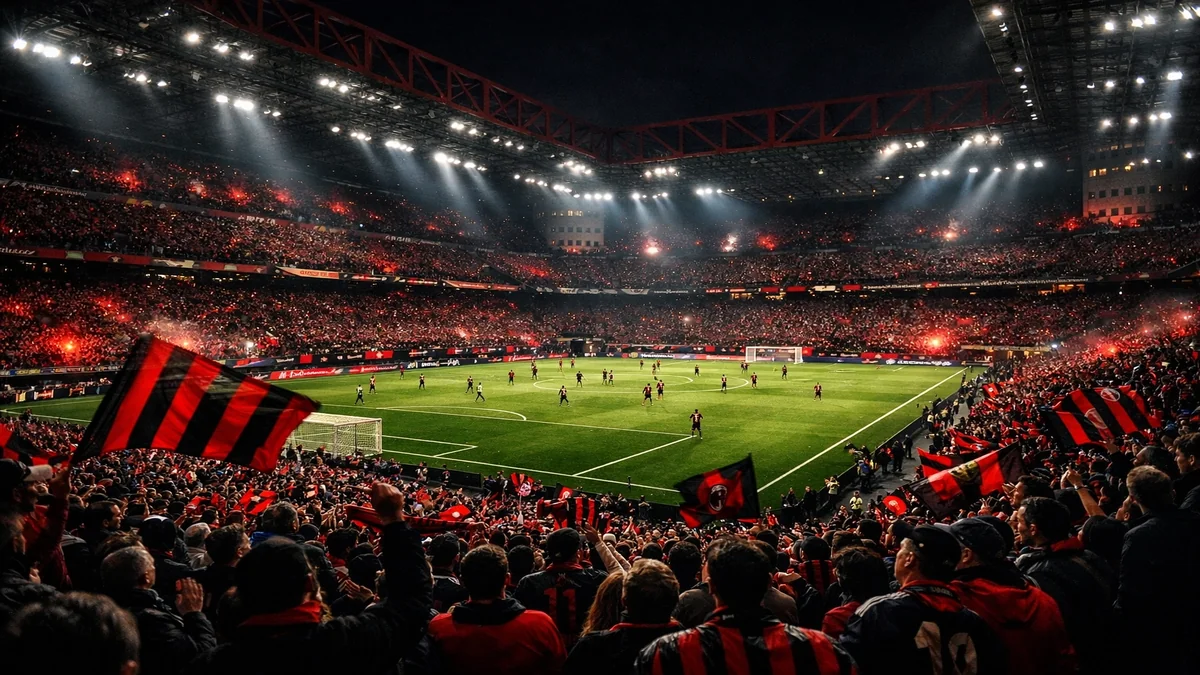
AC Milan History
Associazione Calcio Milan, universally known as AC Milan, stands as a monumental pillar in the landscape of global football, distinguished by a legacy of unparalleled success, iconic players, and a fervent rivalry that defines Italian football. The AC Milan history is a tapestry woven with threads of innovation, resilience, and an unwavering pursuit of excellence, making it one of the most revered clubs worldwide. Founded in 1899 by English expatriates, the club quickly established itself as a dominant force, not only in Italy but also on the European stage. This foundational spirit of ambition and international outlook has propelled AC Milan to numerous Serie A titles, Coppa Italia triumphs, and a remarkable seven UEFA Champions League crowns, solidifying its status as a true footballing giant.
The Genesis of a Legend: Foundation and Early Triumphs

The story of AC Milan begins on December 16, 1899, when a group of English expatriates, led by Herbert Kilpin and Alfred Ormonde Edwards, established the Milan Foot-Ball and Cricket Club. Kilpin, a passionate footballer, famously declared, "We will be a team of devils. Our colors will be red as fire and black to strike fear into our opponents!" This bold declaration set the tone for a club that would embody passion, aggression, and an unyielding will to win. The club's early years were marked by rapid success, clinching its first Italian championship just two years after its inception in 1901, breaking the dominance of Genoa.
The early 20th century saw AC Milan continue to assert its authority, securing two more national titles in 1906 and 1907. However, an internal dispute in 1908 over the signing of foreign players led to a schism, resulting in the formation of Football Club Internazionale Milano (Inter Milan), thus igniting one of football's most intense and enduring rivalries, the Derby della Madonnina. Despite this split, AC Milan continued to thrive, navigating the complexities of early Italian football and laying the groundwork for future generations of success. This formative period of AC Milan history was crucial in establishing its identity as a pioneering club, driven by a blend of English sporting tradition and Italian flair, destined for greatness.
Eras of Grandeur: From Sacchi's Immortals to Ancelotti's European Dominance
The AC Milan history is punctuated by several golden eras, each leaving an indelible mark on the club's illustrious narrative. One of the most celebrated periods arrived in the late 1980s and early 1990s under the revolutionary management of Arrigo Sacchi. Sacchi's Milan, featuring the legendary Dutch trio of Marco van Basten, Ruud Gullit, and Frank Rijkaard, alongside Italian stalwarts like Paolo Maldini, Franco Baresi, and Alessandro Costacurta, redefined modern football with its aggressive pressing, zonal marking, and fluid attacking play. This team, often dubbed
The Immortals," achieved unprecedented success, winning back-to-back European Cups in 1989 and 1990, along with a Serie A title in 1988. Their style of play was not only effective but also aesthetically pleasing, influencing football tactics across Europe and beyond. Sacchi's meticulous approach to training and his emphasis on collective effort transformed AC Milan into a formidable force, capable of dominating both domestically and internationally. The tactical innovations introduced during this period cemented AC Milan's reputation as a trailblazer in football, setting new standards for team performance and strategic depth.
Following Sacchi's departure, Fabio Capello continued the club's success, leading Milan to four Serie A titles in five years and another Champions League final. The mid-1990s saw Milan maintain its status as a European powerhouse, showcasing a blend of defensive solidity and attacking prowess. The turn of the millennium brought a new era of dominance under Carlo Ancelotti. From 2001 to 2009, Ancelotti's AC Milan, featuring stars like Andriy Shevchenko, Kaká, Andrea Pirlo, and Paolo Maldini, became a consistent contender for European honors. This period saw the Rossoneri clinch two UEFA Champions League titles in 2003 and 2007, along with a Serie A title in 2004. Ancelotti's ability to manage a squad of superstars and implement a balanced, attractive style of play ensured that AC Milan remained at the pinnacle of European football. The club's consistent presence in major finals and its ability to perform under pressure underscored its enduring quality and strategic depth. These eras of grandeur are testament to AC Milan's enduring commitment to excellence and its ability to adapt and innovate while maintaining its core identity.
A Legacy Etched in Silverware: Achievements and Records

AC Milan's illustrious history is vividly reflected in its extensive collection of trophies, marking it as one of the most successful football clubs globally. The Rossoneri's trophy cabinet is a testament to decades of relentless pursuit of glory, both on the domestic and international stages. Here's a summary of their major honors:
| Competition | Number of Titles |
|---|---|
| Serie A (Scudetto) | 19 |
| Coppa Italia | 5 |
| Supercoppa Italiana | 7 |
| UEFA Champions League | 7 |
| UEFA Cup Winners' Cup | 2 |
| UEFA Super Cup | 5 |
| FIFA Club World Cup | 1 |
AC Milan's seven UEFA Champions League titles are a particular source of pride, placing them second only to Real Madrid in the competition's history. This remarkable achievement highlights the club's consistent ability to perform at the highest level of European football. Beyond these major accolades, AC Milan has also been a consistent presence in the upper echelons of Italian football, demonstrating a sustained period of competitiveness and excellence. The club's commitment to developing world-class talent and its strategic vision have been key factors in its enduring success. Each trophy adds another layer to the rich AC Milan history, reinforcing its status as a footballing institution with a global reach and an unparalleled legacy of triumph.
Architects of Glory: Greatest Players & Managers
The rich tapestry of AC Milan history has been woven by an extraordinary cast of characters, both on the field and in the dugout. These individuals have not only contributed to the club's vast trophy haul but have also defined its identity, embodying the Rossoneri spirit of elegance, power, and passion. Among the pantheon of AC Milan legends, several names shine brightest for their profound impact:
- Paolo Maldini: Perhaps the ultimate one-club man, Maldini spent his entire 25-year career at AC Milan, becoming an icon of loyalty, leadership, and defensive prowess. He won an astonishing seven Serie A titles and five UEFA Champions League trophies, epitomizing the club's golden eras. His elegance, tactical intelligence, and unwavering commitment made him one of the greatest defenders of all time.
- Franco Baresi: A defensive maestro and captain for many years, Baresi was the bedrock of Milan's formidable defense during the Sacchi and Capello eras. His exceptional reading of the game, tackling ability, and leadership inspired a generation. He won six Serie A titles and three European Cups, cementing his place as one of football's most revered liberos.
- Marco van Basten: A striker of sublime skill and grace, Van Basten was the spearhead of Sacchi's
- Gunnar Nordahl: A legendary Swedish striker from the 1950s, Nordahl is AC Milan's all-time leading scorer in Serie A. Known for his incredible goal-scoring instincts and physical presence, he was a key member of the famous Gre-No-Li trio (Gren, Nordahl, Liedholm) and won two Serie A titles.
- Kaká: The Brazilian attacking midfielder was the orchestrator of Ancelotti's Champions League-winning side in 2007. His dazzling dribbling, incisive passing, and crucial goals earned him the Ballon d'Or in 2007. He was a symbol of Milan's elegance and attacking flair in the mid-2000s.
Immortals. His prolific goal-scoring, acrobatic finishes, and elegant style earned him three Ballon d'Or awards. Despite a career cut short by injury, his impact on AC Milan and European football was immense, winning three Serie A titles and two European Cups.
In terms of managerial brilliance, Arrigo Sacchi stands as a revolutionary figure, whose tactical innovations transformed AC Milan into a global powerhouse. His philosophy of total football and relentless pressing set new standards for the game. Fabio Capello continued Sacchi's legacy, maintaining Milan's dominance with a more pragmatic but equally effective approach. More recently, Carlo Ancelotti guided the club to two Champions League triumphs, showcasing his ability to manage star players and build cohesive, winning teams. These individuals, through their talent, leadership, and vision, have indelibly shaped the AC Milan history, contributing to its enduring status as a footballing giant.
Enduring Legacy: AC Milan's Place in Football
AC Milan's legacy is one of enduring passion, tactical innovation, and a relentless pursuit of excellence that has captivated generations of football fans worldwide. From its pioneering foundation by English expatriates to its numerous domestic and European triumphs, the club has consistently embodied a spirit of ambition and a commitment to playing beautiful, attacking football. The Rossoneri's global appeal is not merely a consequence of its overflowing trophy cabinet, but also stems from its rich cultural identity, its iconic red and black stripes, and the unforgettable moments of glory etched into the collective memory of its supporters. The intense rivalry with Inter Milan, the Derby della Madonnina, remains one of the most compelling narratives in world football, a spectacle that transcends mere sport and embodies the very soul of Milanese identity. This rivalry, born from a fundamental disagreement over the club's direction, has fueled decades of unforgettable clashes, each adding another layer to the complex and captivating AC Milan history. As the club continues to evolve and compete on the grandest stages, its foundational principles of innovation, resilience, and a deep connection with its fanbase ensure its continued prominence as a true footballing institution. AC Milan's journey is a continuous testament to the power of sport to inspire, unite, and create lasting legends, solidifying its place as one of the most cherished and successful clubs in the annals of football.
FAQ: AC Milan History
Q: When was AC Milan founded?
A: AC Milan was founded on December 16, 1899, by English expatriates Herbert Kilpin and Alfred Ormonde Edwards, initially as the Milan Foot-Ball and Cricket Club.
Q: How many UEFA Champions League titles has AC Milan won?
A: AC Milan has won the UEFA Champions League (formerly European Cup) seven times, making them the second most successful club in the competition's history.
Q: Who are some of AC Milan's most iconic players?
A: Some of AC Milan's most iconic players include Paolo Maldini, Franco Baresi, Marco van Basten, Gunnar Nordahl, and Kaká, all of whom have significantly contributed to the club's legendary status.